
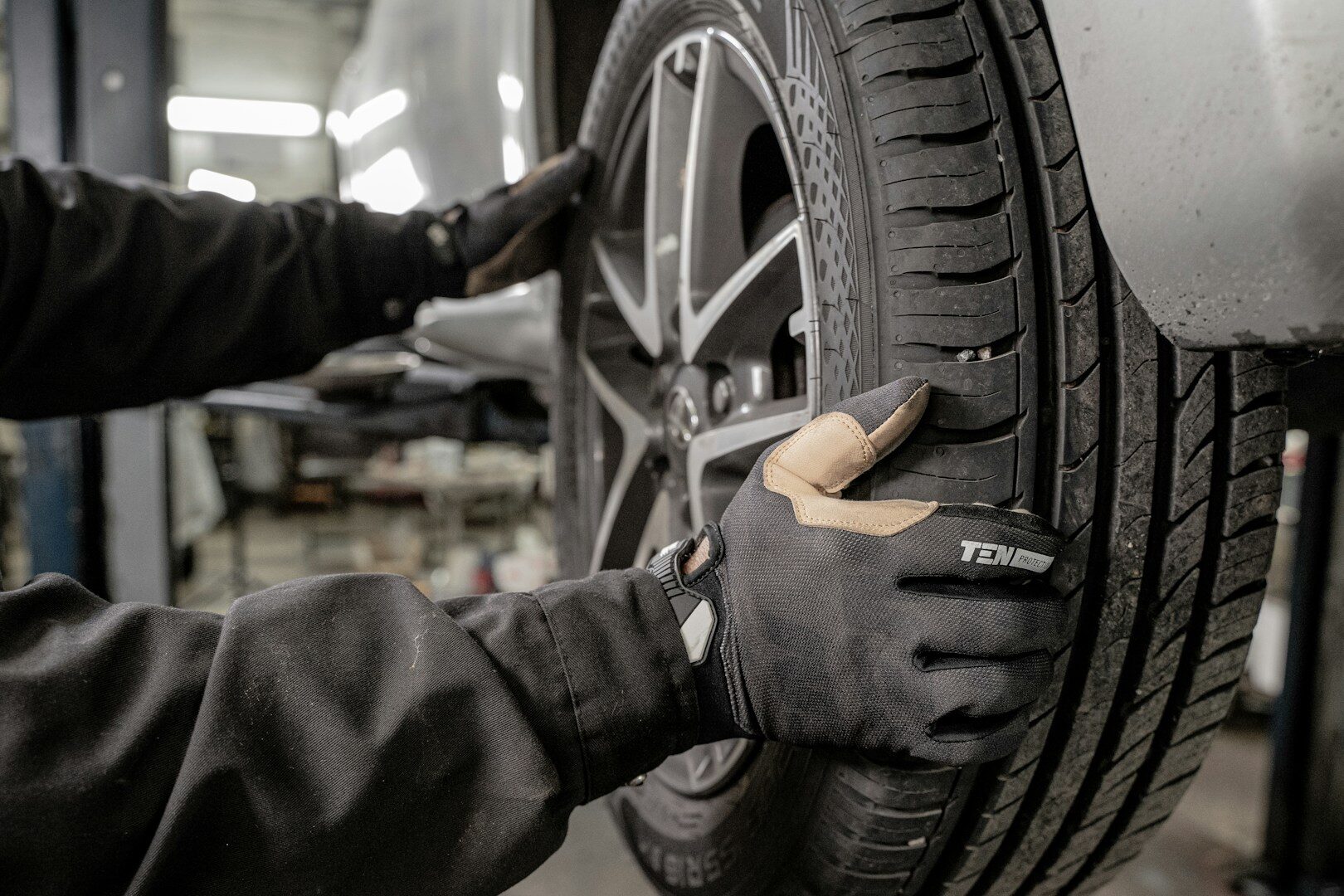
Two Tuffy Tire & Auto Service locations in Fort Wayne, Indiana, are still open. The bays are still full, the phones still ring, and a customer dropping off a car for an oil change this week has no reason to think anything is wrong. But the company that owns those two shops, Automotive Solutions Inc., filed for Chapter 11 bankruptcy protection on July 7 in federal court in Indiana, and the creditor list attached to that filing tells a far more interesting story than “small shop falls behind on bills.” It is, in miniature, the same story a Nasdaq-listed company more than a thousand stores larger has been negotiating with its own lenders for the better part of a year.
According to the bankruptcy petition, Automotive Solutions listed between $1 million and $10 million in both assets and liabilities, with just over $1.1 million in property against more than $2 million in debt. The company, owned by president Kenneth W. Smith, operates two Tuffy locations on Dupont Road and Coldwater Road. Tuffy itself traces back to 1970, when it launched in Detroit as Tuffy Muffler; the Toledo, Ohio-based chain now runs 118 franchised locations across 14 states, mostly in the Midwest and Southeast.
The Creditor List Tells the Real Story
The interesting part isn’t that the shop owes money. It’s who it owes money to. The largest creditor is Newtek Small Business Finance, owed more than $1.4 million. Newtek isn’t a bank in the traditional sense; it’s one of the largest nonbank lenders certified by the U.S. Small Business Administration to issue federally guaranteed 7(a) loans. That guarantee typically covers 75 to 85 percent of a loan balance if a borrower defaults, which means a chunk of that $1.4 million is effectively backstopped by taxpayers, not just Newtek’s balance sheet. The SBA itself shows up separately on the creditor list too, owed more than $515,000, a second layer of federal exposure sitting on top of the first.
Then there’s Snap-on Credit LLC, owed a comparatively modest $31,000. That name matters more than the number. Snap-on Credit is the captive finance arm of the tool company, and it’s how a huge share of independent shops pay for the equipment modern repair work actually requires: lifts, diagnostic scanners, ADAS calibration rigs, the increasingly expensive hardware needed to service anything built in the last five years. Shops finance tools the way people finance cars, in monthly payments, for years. When a shop fails, the tool lender ends up standing in bankruptcy court right next to the bank, a small detail that says a lot about how thin the margins are before a single wrench is ever turned.
The Same Problem, a Lot More Zeroes
Automotive Solutions runs two stores. Monro, Inc. runs more than 1,100 of them, under banners like Monro Auto Service, Tire Choice and Mr. Tire, and trades on Nasdaq under the ticker MNRO. It is not a struggling franchisee by any normal definition. Yet buried in Monro’s most recent quarterly report to the SEC is language describing almost the identical problem, just scaled up.
On May 23, 2025, Monro’s board approved the closure of 145 underperforming stores, roughly one in ten of its locations, after concluding they had failed to hit acceptable profitability. That same day, the company also signed what its SEC filing calls a “Fifth Amendment” to its credit facility, extending a covenant relief period through the first quarter of fiscal 2027 and lowering the minimum interest coverage ratio its lenders require, in steps, from 1.55-to-1 down to as low as 1.00-to-1. A Fifth Amendment implies there were four before it. Covenant relief isn’t something a public company volunteers in a press release; it’s what happens when lenders agree to loosen the rules rather than force a technical default.
The store closures cost $14.8 million to execute, which is most of the reason Monro posted an $8.1 million net loss for the quarter. Here’s the detail that should surprise anyone assuming this is a story about collapsing demand: comparable store sales, meaning sales at the locations that stayed open, actually rose 5.7 percent over the same quarter a year earlier. The stores that survived were doing fine. The losses came from unwinding a footprint that had grown too large, too fast, during the years when tire and repair chains, Monro included, rolled up independent shops using cheap acquisition debt. The bill for that expansion came due at the same time interest rates did.
The Volume Numbers Don’t Support a Collapse, Either
National tire demand backs this up. Total U.S. tire shipments fell from 337.3 million units in 2024 to 336.3 million units in 2025, the first annual decline in six years, according to the U.S. Tire Manufacturers Association’s own February 2026 forecast. That same forecast projects a rebound to 338.9 million units in 2026, which would be a new record. Look closer at the numbers, though, and the rebound is modest: projected 2026 passenger replacement tire shipments sit barely half a percent above 2019 levels, despite seven more years of vehicles on the road and rising average mileage per car. Passenger original-equipment shipments remain roughly 10 percent below where they sat in 2019. Tires aren’t wearing out any faster or slower than they used to. The market stopped growing years ago, and a lot of shop expansion was financed as if it hadn’t.
That’s the real story hiding inside a two-bay bankruptcy filing in Fort Wayne. This isn’t a tire demand problem. It’s a debt problem, and it surfaced at both ends of the industry at once, in a franchisee’s SBA paperwork and in a public company’s credit agreement, because both were financed on the assumption that a flat market would keep behaving like a growing one.
For car owners, none of this means repair shops are disappearing. It means the ones left standing are more likely to be owned by a bigger operator carrying more corporate overhead, or a debt structure now managed by a bankruptcy court instead of a bank. It’s also a reminder that basic upkeep costs far less than any shop’s survival plan assumes: rotating your tires on schedule and understanding how long tires actually last both stretch the life of a set that would otherwise get replaced, and refinanced, sooner. Regulatory pushes like California’s proposed tire efficiency rule, meant to squeeze a little more fuel economy out of replacement tires, only add cost pressure from the other direction. And anyone who has wondered how much to trust the shop doing the work should remember that a shady mechanic isn’t the only risk worth watching for; a shop’s solvency matters just as much as its honesty.
Five years from now, the exact number of Tuffy or Monro locations that opened or closed this year won’t matter much. What will matter is whether the industry actually deleveraged during this stretch or just refinanced its way through it. Monro’s covenant relief runs out in the first quarter of fiscal 2027; how the company performs once its lenders stop grading on a curve will be the real test. The tires didn’t stop wearing out. The financing behind the shops that sell them did.