
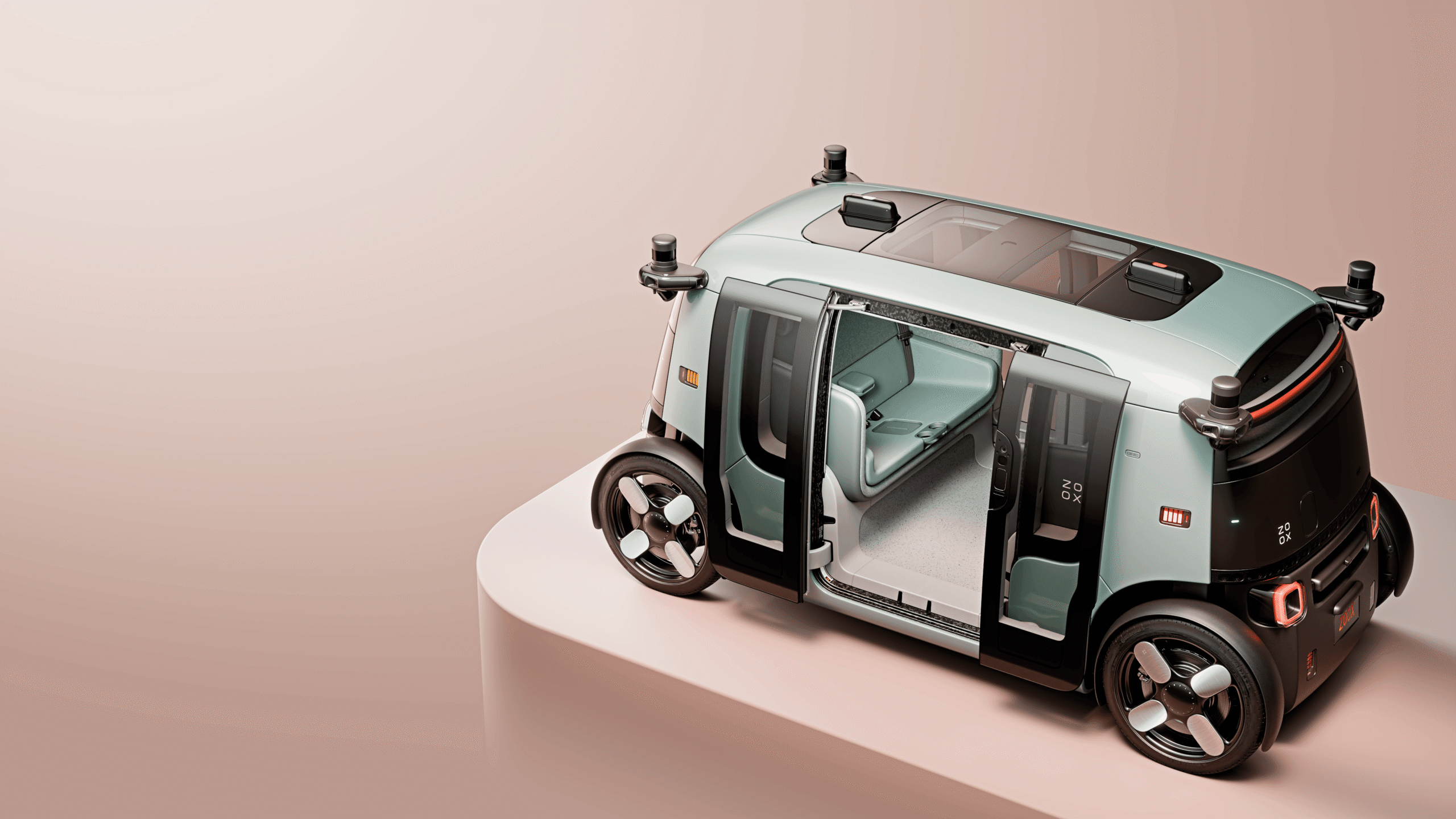
The federal government just gave an Amazon-owned company permission to charge people money for rides in a car with no steering wheel, no brake pedal, and no driver’s seat. That will be the headline everywhere else.
It’s not the real story.
The real story is buried in the same announcement: the agency policing that decision just admitted it hasn’t finished writing the rulebook those cars are supposed to follow. NHTSA didn’t approve Zoox against an existing federal safety standard for autonomous vehicles. It approved Zoox because no such standard exists yet, and won’t for years.
On July 30, the National Highway Traffic Safety Administration rolled out a package of AV policy moves directed by Transportation Secretary Sean Duffy. The centerpiece is a temporary exemption letting Zoox commercially deploy up to 2,500 robotaxis a year for two years, under what the agency calls an adaptable oversight structure. Three other pieces of that same announcement matter more than the exemption itself.
NHTSA is funding a three-year, five-million-dollar research partnership with SAE’s Industry Technologies Consortia, a project nicknamed A2SCEND, specifically to build the first-ever federal performance standards for autonomous vehicles. Read that again. Zoox is already selling rides. The rules it’s ultimately supposed to meet are still being drafted, on a multi-year timeline, by a consortium that hasn’t finished its work.
That’s the first moment worth pausing on. Every federal motor vehicle safety standard on the books, the ones covering mirrors, lighting, braking, tire placards, sun visors and warning labels, was written assuming a human being sits behind a wheel. Zoox’s pod has no wheel to sit behind. So instead of meeting those standards, it gets exempted from them, one clause at a time, through a narrow provision called Part 555 that Congress originally built for automakers testing small batches of experimental vehicles, not for a nationwide ridehailing fleet. NHTSA’s own release lists FMVSS 101, 108, 111, 126, 201 and 208 as standards it now intends to rewrite for exactly that reason. Regulators are, right now, rewriting the federal sun-visor rule because a car with nobody in the driver’s seat doesn’t need one, and current law says it must have one anyway.
The second moment is buried in one dry sentence about an interim final rule. NHTSA is now letting exemptions apply retroactively to vehicles built before the exemption was even granted. Normally a manufacturer waits for approval before building the fleet that depends on it. This rule removes the wait. It lets a company manufacture first and collect the paperwork later.
That sounds like a minor administrative fix. It isn’t.
It’s a capital advantage wearing a compliance disguise. Building thousands of purpose-built robotaxis, vehicles with no conventional controls that can’t simply be resold as ordinary cars if an exemption falls through, is an expensive bet on a regulatory outcome that hasn’t happened yet. Amazon, which has owned Zoox since 2020, can afford to make that bet. A smaller AV company hoping to scale past a demo fleet without Amazon’s balance sheet generally can’t. This rule doesn’t just streamline paperwork. It rewards whoever has the cash to build ahead of permission.
Which is the real thesis here. This announcement isn’t really about Zoox winning the right to drive. It’s about who gets to build ahead of the rulebook while everyone else waits for it to be finished.
Zoox’s cap of 2,500 vehicles a year sounds generous until you compare it with what’s already on American roads. Waymo has been running a driverless commercial fleet for years and is still racking up ordinary-car headaches like parking tickets in Austin at a scale that makes 2,500 look like a rounding error. Waymo is also already manufacturing a next-generation robotaxi at an Arizona plant now caught up in a separate Washington fight over banning Chinese-made cars. The industry is moving fast enough that manufacturing decisions and federal policy fights are now colliding in real time. Zoox’s cap isn’t really about unleashing volume. It’s about establishing the reference case the eventual national performance standard gets built around.
That template covers more than hardware. NHTSA says its guidance rewrite, the first since 2017, will finally address how a driverless car should behave after a crash, how it should respond to remote assistance, and how it interacts with police and firefighters. Cities have already had robotaxis freeze in intersections during active emergencies, forcing officers to improvise ways to physically move a car with no wheel for them to steer. Formal federal guidance on that problem is arriving only now, years after the cars themselves.
There’s a smaller footnote worth catching. The same release mentions NHTSA is separately reviewing an exemption request from Robomart for a low-speed delivery vehicle that carries no human occupant at all, seeking relief from FMVSS 500. Zoox needed an exemption because nobody steers it. Robomart needs one because nobody rides in it, period. The same regulatory pipeline built for one robotaxi is quietly becoming the on-ramp for an entire category of vehicles that were never meant to carry a person at all.
None of this happens in a vacuum. A single federal AV performance standard, once it exists, will likely start overriding the patchwork of state rules companies have been navigating city by city, a shift that mostly benefits whoever already has the legal and financial muscle to operate nationally, and mostly squeezes the smaller, state-approved operators who found footholds in friendlier jurisdictions.
Zoox didn’t just win permission to sell rides in a car with no steering wheel. It won permission to do that while the rulebook governing it is still being written around it. Getting the first exemption in Washington is the easy part. Writing the standard everyone else eventually has to meet is the harder trick, and right now, nobody has actually finished it.