
Alpine’s American plan is one of those stories where the paperwork tells you more than the interviews do.
Go back to June 2023, when Renault Group gathered press and investors at Enstone and laid out where its sports car brand was going. The press release is unambiguous: a seven-model range by 2030, including a roadster and an all-new A310, both on Alpine’s own APP platform. Break-even in 2026. Over €8 billion in revenue by 2030. An operating margin above 10 percent. And a world expansion phase from 2027, “backed by a line-up tailored to new markets including the USA.”
Now read what Renault Group published on 10 March 2026, when it launched futuREady, the plan that replaces Renaulution. Alpine gets three bullet points. Launch the next-generation A110 on APP. Build on the A290 and A390 to attract new customers. Develop limited series like the A110 R Ultime. No roadster. No A310. No America.
Then check the appendix, where the Group states its market-presence ambition: 55 percent of the global market, “excluding USA, Canada and China.” The named growth hubs are India, South America and South Korea. North America isn’t deprioritized in that document. It’s outside the frame entirely.
What changed in between
A month before futuREady, Alpine issued a release that most people filed under motorsport news because it announced the brand’s exit from the World Endurance Championship after 2026. The headline was the racing decision. The first sentence was the real story: Alpine Cars is revising its development plan, and optimisation and prioritisation of projects is needed.
Related Articles
- Stellantis Keeps Losing Workers Inside the Buildings It’s Already Trying to Get Rid Of
- Ford Is Now Planning For Chinese Automakers To Land In America
CEO Philippe Krief’s explanation in that release is blunt by press-release standards — he says the automotive industry and particularly the EV market are “growing slower than expected,” and that the brand had to take decisive action for a sustainable future. The Viry-Châtillon site was rebranded Alpine Tech and pointed at selling engineering services to outside businesses. An employment protection plan was announced alongside it.
Companies that are eighteen months from opening a new continent do not usually spend that period trimming project lists and shopping their engineering capacity to third parties.
The volume math nobody wants to say out loud
Alpine had a genuinely good 2025. Renault Group’s sales results put the brand at 10,970 registrations, up 139.2 percent, past 10,000 for the first time. The A290 hot hatch did 8,198 of those. The A110 managed 2,681 and led the two-seat sports coupé category in Europe. Distribution reached 169 Alpine Store and Atelier Alpine sites across 25 countries.
That is a real business. It is also roughly the annual output of a mid-sized specialty manufacturer, spread across a continent where Alpine already has brand equity, a factory, and a parts network. Exporting that to a market with none of those things is not a scaling exercise. It’s a second company.
Why a US launch costs more than shipping cars
Here’s the part enthusiasts consistently underrate. Europe uses whole-vehicle type approval: an authority signs off on a design, and that certificate travels. The United States uses manufacturer self-certification against the Federal Motor Vehicle Safety Standards, and under 49 U.S.C. 30112(a) a vehicle built after an applicable standard takes effect cannot be permanently imported unless it complies and the original manufacturer certifies it, as NHTSA lays out in its importation FAQs.
“Self-certification” sounds cheap. It isn’t. It means Alpine would have to run its own US-specific validation and destructive testing program, and stand behind the results with recall liability attached. Add EPA and CARB certification for the powertrain, a federalized lighting and marking package, and separate crash validation for a car built to a different regulatory logic. For a brand selling five figures of cars globally, that per-model cost lands on a very small denominator.
Then there’s the tariff. Under the Federal Register notice implementing the US-EU trade framework, EU-origin autos carry a combined 15 percent ad valorem rate. Alpine builds in France. The A390 GTS opened for order at €78,000 including VAT per Alpine’s own order announcement. Do the arithmetic on a French-built, tri-motor performance EV landing in a market where the buyer’s alternative is a domestically assembled crossover, and the pricing problem announces itself.
What would even come here
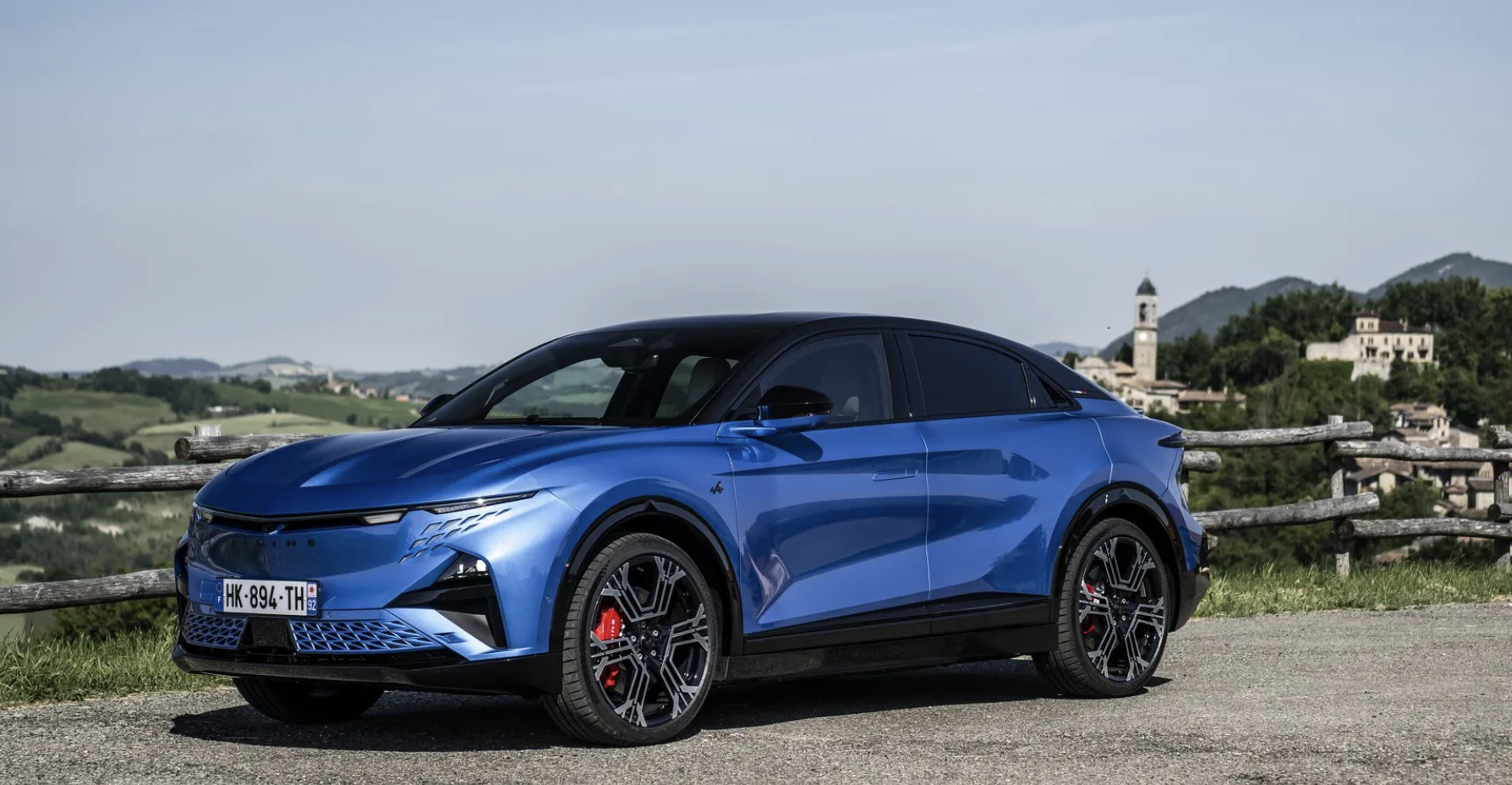
The current garage doesn’t translate cleanly. The A290 is a B-segment hot hatch built off the Renault 5 — a category American buyers have spent thirty years declining to purchase. That leaves the A390, a five-seat fastback with one wound-rotor motor at the front and two permanent-magnet motors at the rear, one per wheel, feeding Alpine’s patented Active Torque Vectoring. Alpine quotes 470 hp and up to 824 Nm in GTS form with a 3.9-second 0-100 km/h, or 4.8 seconds and up to 555 km WLTP from the 89 kWh battery in GT trim.
That’s a legitimately interesting piece of engineering — independent rear-wheel motor control is how you make a two-tonne EV rotate like something lighter, and it’s the same trick expensive flagships use. It’s also a Macan EV competitor from a brand with zero US service network, which is a hard sell at any price.
Related Articles
- What Really Happens If You Never Change Your Oil: A Timeline
- Porsche Sold 24,000 Fewer Cars and Made a Third More Money — Here’s How
The third model, the electric A110 on APP, is the one that would actually matter to American enthusiasts. It’s also the one futuREady confirms is still coming.
The practical read
If you’re an enthusiast waiting to buy an Alpine in the States, watch filings rather than interviews. Homologation leaves a public trail well before cars reach showrooms: EPA certification data and NHTSA manufacturer identification submissions surface roughly a year ahead of a launch. Until something with an Alpine VIN shows up in those systems, the brand’s American arrival remains a stated intention, and stated intentions have already slipped once.
Meanwhile, the 2023 target of seven models by 2030 has quietly become three plus a next-generation A110. Renault Group’s own strategic plan draws its map with North America outside the borders. Alpine may well cross the Atlantic eventually. But the company’s paperwork currently describes a European specialty brand consolidating around what works — and there’s no shame in that. It’s just a different story than the one told at Enstone three years ago.
Images Via: Alpine