
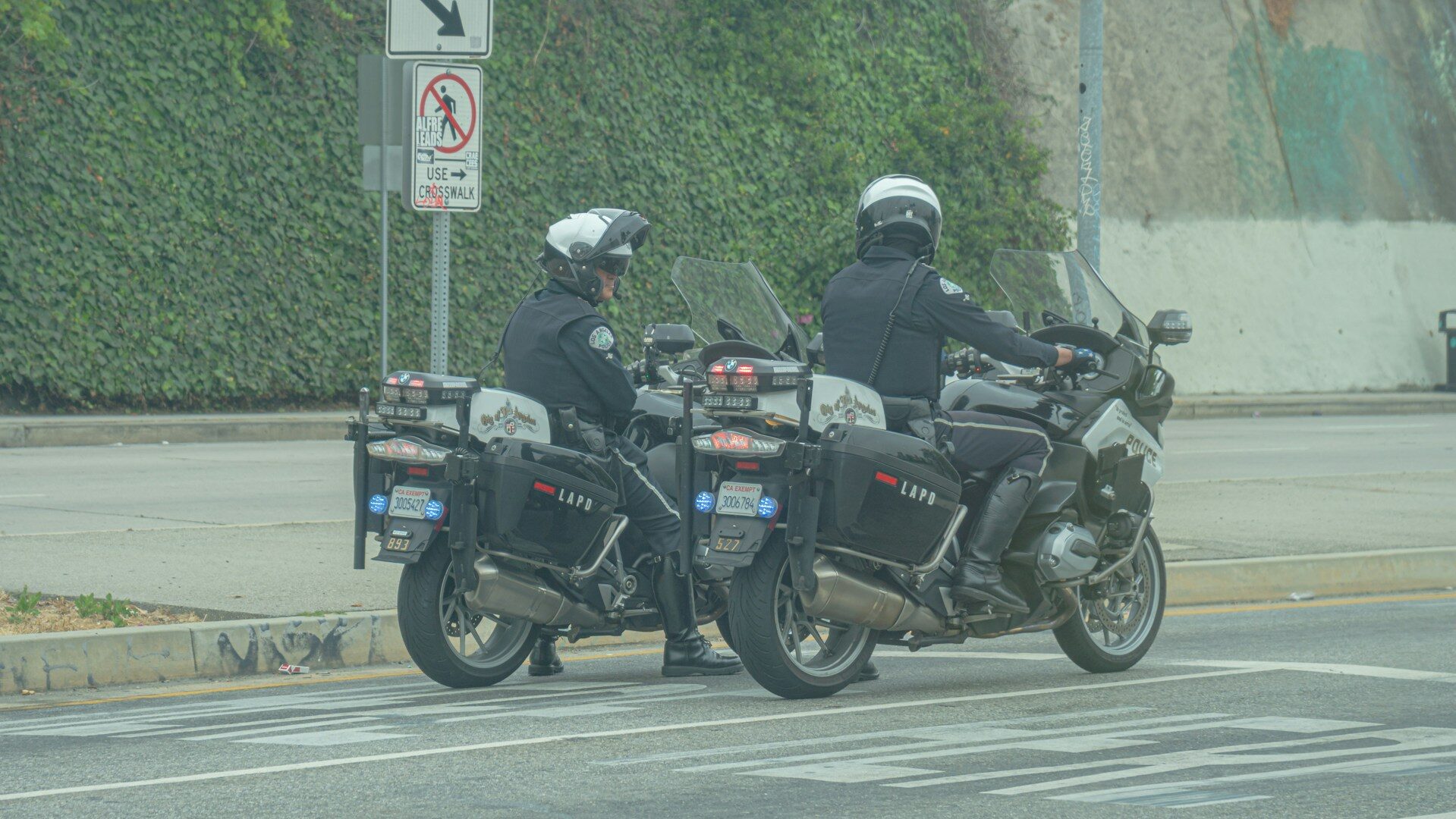
California has run this play before, just never on speeders. For thirty-five years the state has had a legal tool that lets it pull a driver’s license before a judge ever weighs in, running on a completely separate timeline from whatever happens in court. Historically, that tool was reserved for drunk driving. As of this past December, it isn’t anymore.
On December 22, 2025, the California DMV and California Highway Patrol announced a pilot program called FAST, short for Forwarded Actions for Speeding Tickets. Under the program, any citation for driving faster than 100 mph is automatically routed to the DMV’s Driver Safety Branch, whether or not the driver has ever gotten so much as a parking ticket before. Driver Safety can suspend or revoke a license based on that review alone. It does not need a conviction, and it does not wait for one. The court case continues on its own schedule. The administrative case runs in parallel, on the DMV’s schedule, and can finish first.
The scale behind the announcement is real. CHP officers write roughly 1,600 citations a month for triple-digit speeds, more than 18,000 in 2024 alone, and the California State Transportation Agency says speeding is a factor in 32 percent of the state’s traffic deaths. It’s also not the first time California has leaned this hard into a single sweep; two years ago, CHP wrote 11,000 speeding tickets in a single day. Read those numbers next to how casually the 100 mph threshold gets crossed. This isn’t triple digits in a stripped-out track car. It’s triple digits in whatever a driver happened to be in that day, and on a modern highway, that covers a lot more vehicles than anyone driving one likes to admit.
Buyer’s guide: Best Radar Detectors in 2026
Here’s the detail that gets lost in almost every write-up of this program: driving over 100 mph in California is an infraction. Not a misdemeanor, not a felony, the same legal classification as a broken taillight or an expired registration tag, and it carries a fine capped in the hundreds of dollars. Yet a single infraction, with no conviction required, can now trigger a process that ends a person’s legal ability to drive. That mismatch, a minor charge paired with a major and immediate consequence, is the actual story, and it barely has anything to do with triple-digit speeds.
It has more to do with where California borrowed the idea. In 1990, the state adopted what’s known as the Administrative Per Se law, which lets the DMV suspend a license the moment someone is arrested for DUI, independent of any criminal conviction, in cases that make up roughly 95 percent of DUI arrests statewide. That law has survived three and a half decades of legal challenges because it doesn’t punish a crime. It manages a driving privilege, and the state has always had broader authority to revoke a privilege than it does to punish a person criminally. FAST takes that exact legal reasoning and points it at ordinary speeding, using a lower bar, a written citation instead of an arrest, and the same short fuse: drivers get a window, reported at 10 days, to request a hearing before the DMV’s action takes effect. That’s the identical clock DUI defendants have been racing for a generation.
None of that is illegal, and courts have already upheld the underlying framework. But it’s worth sitting with the fact that California didn’t need new legislation to pull this off. It needed an old idea and a fresh category of citation to point it at.
There’s a second story tangled up in this one, and it’s about the cars doing the chasing rather than the ones getting chased. CHP’s enforcement push leans on a fleet of 100 low-profile Dodge Durangos, painted in muted civilian colors and stripped of the light bars and push bumpers that make a patrol car obvious at a glance. CHP paired them with what it calls its existing high-performance fleet of Dodge Chargers and Ford Explorers.
Read that pairing carefully. Dodge stopped building the Charger Pursuit after the 2023 model year. The V8 sedan that generations of speeders recognized in a rearview mirror isn’t in production anymore, and the reborn Charger, sold now as an EV or a turbocharged six-cylinder, was never engineered as a pursuit-rated police package.
The Charger didn’t disappear from CHP’s shopping list because officers stopped wanting one. It disappeared because Dodge stopped building one.
CHP’s remaining Chargers are a fixed, aging inventory with no factory pipeline behind them, which is a big part of why the agency is buying stealth SUVs instead of sedans. The pursuit sedan didn’t vanish because police lost interest in it. The business case for building one collapsed, and that shift in product strategy is still working its way through dealer lots today.
For anyone who owns a fast car, or just a car capable of going faster than they’d admit under oath, FAST changes the math on what one bad decision costs. A suspended license doesn’t just mean calling a rideshare. Insurers treat a suspension as a red flag that can follow a driver for years, and commercial or rideshare drivers can lose their income over it. Driving anyway turns a paperwork problem into a criminal one, as a McLaren driver in Chicago found out this year. California has already shown it’s willing to move fast and wide with this kind of enforcement.
Most coverage of this program will frame it as a crackdown on reckless driving. It is one. But the more interesting fact is buried in the state’s own paperwork: California didn’t invent a new power to do this. It just found a new place to use an old one.