
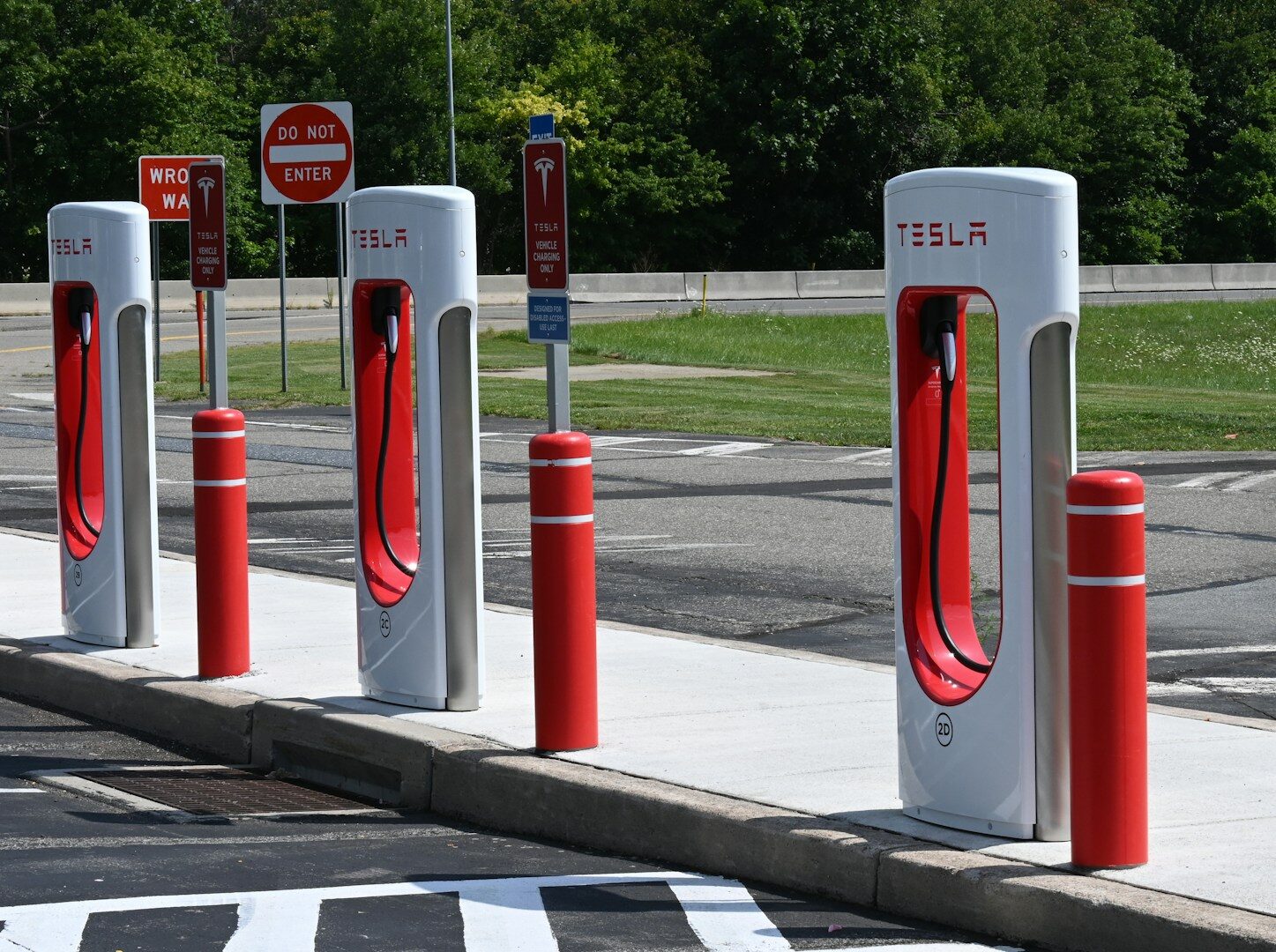
Forget air-gapped security discussions. Forget the naive assumption that physical charging hardware couldn’t be turned into an attack vector. A research team just demonstrated something far more unsettling: a single compromised charger becomes a worm that autonomously spreads to other vehicles and charging networks—without needing a driver to do anything after the initial connection.
The researchers presented their findings at Black Hat. They showed how they could compromise a Tesla’s charging hardware through its cable, then watch that infected Tesla automatically compromise chargers made by Autel and ChargePoint through Bluetooth. No human involvement. No secondary attack. Just autonomous propagation through an ecosystem nobody designed with security in mind.
This is the real story hiding behind “hackers demonstrated EV vulnerability.” This isn’t about Tesla specifically. This is about the entire EV charging infrastructure being fundamentally insecure by architecture.
The Attack That Reveals an Industry Secret
Here’s what happened technically, and why it matters: The researchers found they could compromise the charger by exploiting a SWCAN communication protocol that runs over the Control Pilot line—essentially the data channel that’s supposed to safely negotiate power delivery between the charger and vehicle. The vulnerability wasn’t some obscure edge case. It was a basic memory corruption bug: an out-of-bounds write in the firmware signature verification on the charger’s ARM microprocessor.
Signature verification. The one place security is supposed to be bulletproof. And it was leaking memory like a sieve.
That matters because it means the charger’s bare-metal firmware—which has zero operating system protection and runs with full hardware access—could be compromised. Once compromised, the charger could inject malicious code into any vehicle plugged into it via WiFi. Then here’s the part that should keep electrical engineers awake: the infected vehicle, now compromised through its infotainment system, could use its onboard wireless capabilities to compromise other chargers it encountered.
One charger. Multiple vehicles. Multiple manufacturers. Autonomous spread. That’s a worst-case scenario for infrastructure security, and nobody catches it until researchers present it at a security conference.
Why This Vulnerability Existed at All
This isn’t a Tesla engineering failure, specifically. This is an industry-wide architectural failure. The EV charging ecosystem was built by engineers optimizing for power delivery, interoperability, and speed to market. Security was bolted on as an afterthought, if it was considered at all.
Consider what’s actually plugged into that charging hardware: a computer with wireless capabilities and firmware that can be remotely updated. Nobody designing the first generation of these chargers was asking “what if someone exploits the upgrade path?” They were asking “will this charge the car fast and reliably?”
The vulnerability the researchers found—a signed integer parsed incorrectly in a firmware header—is exactly the kind of bug that modern fuzzing tools find automatically. The researchers demonstrated this: using conventional fuzzing on the physical hardware, they could test roughly one input every few seconds. Using a technique called firmware rehosting (basically running the firmware in an emulator), they could test over 1,000 inputs per second.
Hours of fuzzing would have caught this. The fact that it survived through binary analysis and source code review suggests the charger firmware was never fuzzed at all. It was reviewed, but not tested against adversarial input.
That’s not incompetence. That’s the result of an industry that prioritized getting EVs to market before infrastructure matured, and then built the infrastructure without assuming it might become a target.
The Infrastructure Nobody Controls
Here’s where it gets worse: Who’s actually responsible for the security of these chargers?
Tesla owns and maintains some of their Superchargers. But many public chargers are owned by third parties—Autel, ChargePoint, Electrify America, regional utilities, shopping centers. These organizations rarely have automotive-grade security teams. They don’t update firmware the way automotive OEMs do. They don’t coordinate security research the way carmakers increasingly do.
The researchers were careful to note they demonstrated this in a lab using Pwn2Own devices—specialized testbed equipment, not production hardware on actual networks. They didn’t attack public charging infrastructure. They want to be clear about that.
But the underlying fact remains: the architecture allows what they demonstrated. A single vulnerable charger in a network of interconnected charging points, vehicles with wireless capabilities, and manufacturers that don’t share security infrastructure creates a vector nobody fully controls or monitors.
When the electricity grid and vehicle network intersect at a charger you don’t own, plugged into infrastructure you don’t manage, running firmware you can’t update quickly, secured by nobody in particular—that’s not a vulnerability. That’s an uncontrolled experiment in cross-sector infrastructure security.
What Actually Matters Here
The technical fix is straightforward: properly fuzzed firmware, secure-by-default hardware design, segmented networks between charging hardware and vehicle systems. Some of this is already happening—Tesla and other OEMs are clearly paying attention to security researchers and updating their approach.
But the structural problem is harder. Every EV charger is essentially a connected computer that needs security patching, monitoring, and threat intelligence sharing. The industry built it like appliances. They need to start building it like infrastructure.
That’s not a Tesla problem. That’s an industry problem. And until charging hardware is treated with the same security rigor as the vehicles themselves—coordinated updates, threat sharing, security audits, hardened firmware—we’re going to keep finding vulnerabilities that cross manufacturer boundaries and propagate through infrastructure nobody really owns.
The researchers showed this works in a lab. The real question is: what happens when someone does this for real? Not to break things, but because the architecture makes it possible. And because charging infrastructure exists at the intersection of power grids, vehicle networks, and wireless signals that nobody is coordinating to keep secure.