
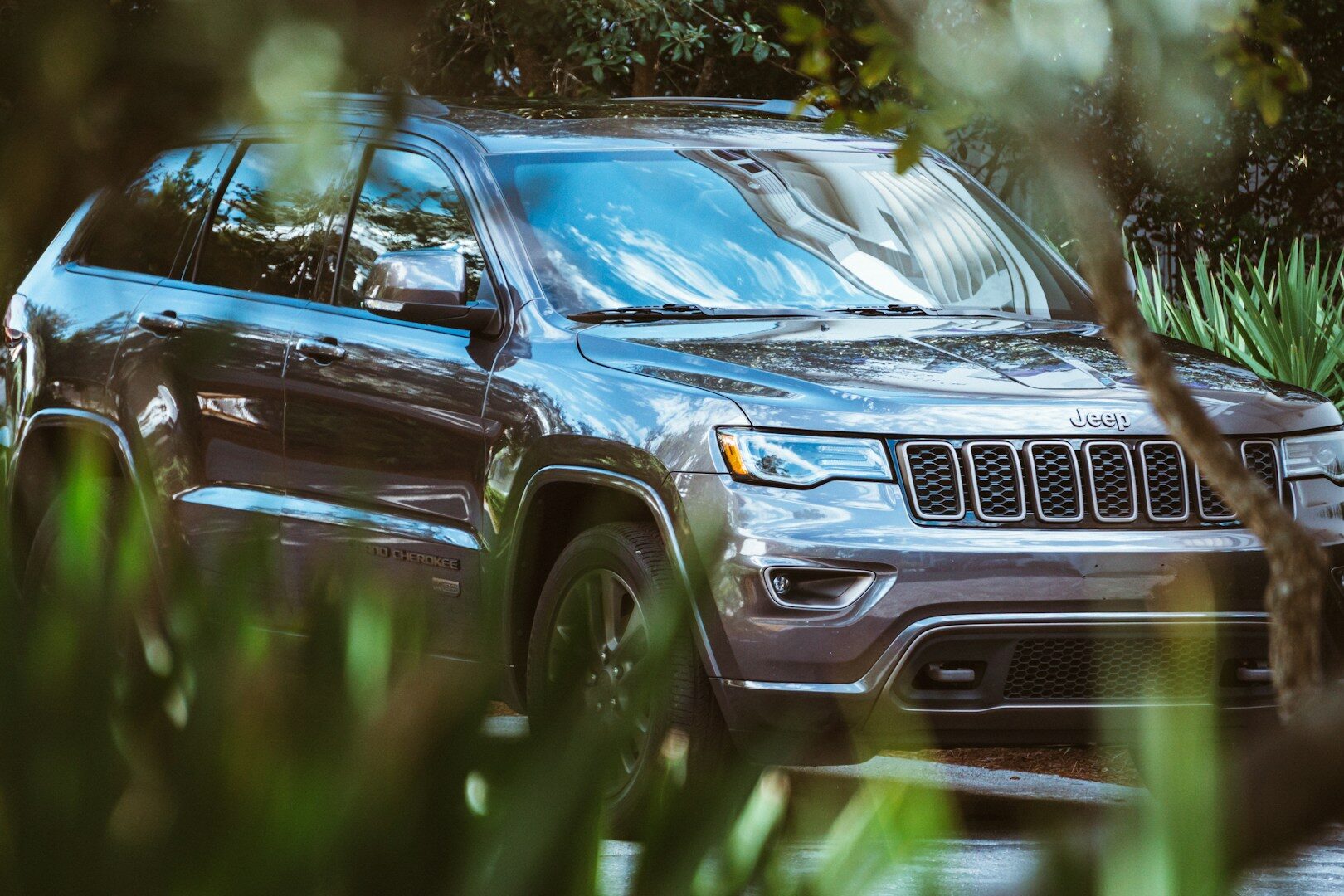
There are two ways to read what Stellantis said about Belvidere on August 14. One is that a shuttered Illinois assembly plant finally has a product with a name on it. The other is that the reopening slipped again, and the thing replacing the old date is a vehicle architecture that won’t exist in production anywhere on earth until 2027. Both readings are correct, which is what makes this interesting rather than just another press release about job counts.
Here’s the shape of it. The next-generation Jeep Cherokee will be the first U.S.-built vehicle on STLA One. Pilot production at Belvidere is targeted for the first half of 2028; retail production for the second half of 2029. Investment climbs past $800 million, up from the $600 million Stellantis committed last October, with more than $60 million already spent through July on stamping, body, paint and general assembly work. Governor JB Pritzker’s office confirmed the figures and said the state’s Department of Commerce and Economic Opportunity is still finalizing an incentive package, praising Stellantis for “positioning Illinois at the center of its next generation of automotive innovation.” The Jeep Compass, which Stellantis named for Belvidere in the $13 billion U.S. plan alongside a 2027 launch and roughly 3,300 jobs, went unmentioned.
What STLA One actually is
Strip away the branding and this is platform consolidation of an unusually aggressive kind. Stellantis says STLA One folds five existing platforms into one scalable architecture spanning B, C and D segments, targeting 20 percent cost efficiency and, by 2030, half the company’s global volume riding on three platforms with up to 70 percent component reuse. Chief Engineering and Technology Officer Ned Curic called it “a clear example of a truly modular strategy,” and the engineering rationale is sound: common interfaces, per-energy optimization so a combustion variant isn’t dragging around EV packaging penalties, and shared electronics.
The hardware list is the part enthusiasts should actually care about. STLA One is 800-volt capable. It scales LFP chemistry rather than nickel-heavy cells. It uses cell-to-body integration, meaning the battery becomes structure instead of a box bolted underneath. And it’s the first Stellantis platform slated to carry STLA Brain, STLA SmartCockpit and steer-by-wire.
Related Articles
- Houston Won ‘Worst Road Rage City in America.’ Here’s What Your Insurance Won’t Cover.
- The White House’s Auto Manufacturing Victory Lap Included a Company That Doesn’t Make Cars
That last item deserves a pause. Steer-by-wire deletes the mechanical column linkage between your hands and the front tires, replacing it with sensors, actuators and redundant power and data paths. Done well, it enables variable ratios, a flat-floor packaging win and steering feel tuned entirely in software. Done poorly, it’s a warranty department’s nightmare, because there’s no mechanical fallback to limp home on. It also drags the whole vehicle into a stricter functional-safety regime than a rack-and-pinion car ever needed.
Why launching a new architecture at a cold plant is the hard part
The eighteen-month gap between pilot and retail production is the most informative number in the announcement, and most people will skim past it. Pilot production isn’t a soft opening. It’s tooling tryout, fixture qualification, weld and sealer validation, supplier part approvals, and building enough real vehicles on real line equipment to shake out fit issues before anyone can sell one. Eighteen months of it means Stellantis is budgeting for problems — sensible, given they’re simultaneously commissioning a plant that’s been dark since February 2023 and debuting an architecture with steer-by-wire and structural batteries on it.
Belvidere is not a greenfield site. Construction began in 1964 and the first car came off the line in July 1965. Under Fiat Chrysler the plant received a $700 million body shop for the Dodge Dart, then another $350 million to retool for the Cherokee, which started production in June 2017 with more than 3,800 people across two shifts. Some of that infrastructure is reusable. Body shops built around a specific vehicle’s geometry generally are not, and a platform designed for cell-to-body integration wants very different framing stations than one built for a compact sedan.
Ownership consequences you’ll feel later
Structural battery packs are a genuine tradeoff. Bonding cells into the body cuts weight, cost and part count — and makes serious pack damage a body-repair problem rather than a module-swap problem. Insurers have already learned this lesson on other structural-pack vehicles: moderate underbody impacts that would once have meant a few thousand dollars in components can push a car to a total-loss determination because the pack can’t be economically separated from the structure. If you plan to keep a 2030-model-year Cherokee for a decade, that’s your residual value math, not a footnote.
The 800-volt system matters for your independent shop too. High-voltage work above 400 volts narrows the pool of technicians qualified to touch it and raises the tooling bar — insulated tools, proper service disconnect procedure, isolation testing. The upside is real: faster DC charging and thinner, lighter conductors for the same power. LFP, meanwhile, buys thermal stability and cycle life at the cost of cold-weather performance and energy density, which is a defensible trade in a mainstream SUV and a poor one in a range-topping performance vehicle.
The labor clock nobody is talking about
The UAW’s 2023 Stellantis agreement runs through April 30, 2028. Under that contract the union secured the right to strike over product and investment commitments — a provision it has already used as leverage on Belvidere once. Pilot production in the first half of 2028 lands within days of that expiration. Retail production in the second half of 2029 lands squarely inside whatever contract replaces it. Anyone reading this as purely a product story is missing where the negotiating chips sit.
Related Articles
- Volkswagen Wanted Tariffs to Keep Out Cheap Chinese EVs. The Cheapest One in Germany Showed Up Wearing Four Rings.
- Six Defendants Allegedly Stole $4 Million in Rental Cars. The Going Rate Was $2,000 Each.
There’s also a stranded federal thread. The Department of Energy awarded $334.8 million through the Domestic Auto Manufacturing Conversion Grant program in July 2024, explicitly to convert Belvidere for electric vehicle production and build a battery facility. The battery plant is gone and the product plan has moved twice since. Whatever Belvidere becomes, it will not be the plant that money was awarded for.
Practical takeaway
If you want a Cherokee, buy the one that exists. The current car is built in Toluca, Mexico, and will be a mature, well-sorted product by the time its replacement reaches a showroom in 2030. The Belvidere Cherokee is a first-of-architecture vehicle at a first-of-architecture plant, with steer-by-wire and a structural pack in the mix. First-year buyers of any all-new platform are, in the most literal sense, part of the validation program.
For the workers, the honest read is a real product commitment attached to a date that has now moved from 2025 to 2027 to 2029, depending on which announcement you’re counting from. Concrete is being poured and equipment is being assessed, which is more than existed a year ago. It is also still, at minimum, three model years from anyone getting paid to build a car.
Images Via: Stellantis