
Dallas didn’t buy a single new vehicle to build one of the more sweeping property-surveillance operations any American city is currently running. That detail keeps getting buried under the privacy outrage, and it’s the actual story here.
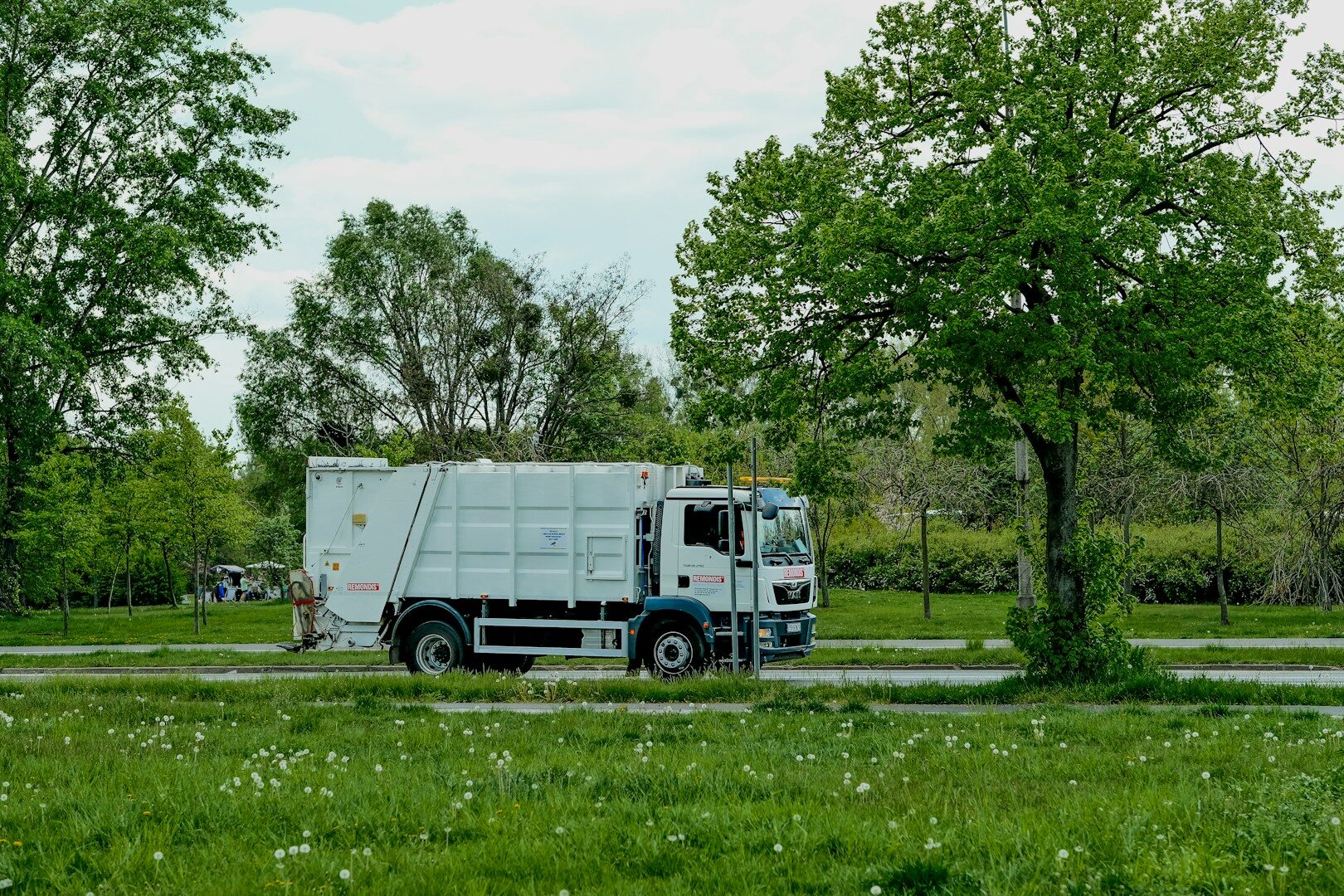
Since April, the city has had AI-powered cameras mounted on the fleet trucks that already run bulk-trash and brush-collection routes down every residential street in Dallas on a fixed schedule. According to city records NBC 5 Investigates obtained through an open-records request, those cameras photographed tens of thousands of homes over roughly four months and flagged at least one possible code violation, things like overgrown grass, peeling paint, and illegal dumping, at more than 21,000 properties. Each flagged address gets run through an algorithm called PASS AI, built by a company called City Detect, and assigned a blight score from 1 to 4.
The contract behind all of it runs three years and roughly $2.5 million. For a city budget, that’s a rounding error. The number that should actually catch a car person’s attention isn’t the price tag. It’s everything Dallas didn’t have to buy to make this work. No new trucks. No new routes. No new fuel budget or driver hours. The trucks were already going to be there.
That’s the real story. This isn’t a piece about privacy law, even though a Dallas council member is now trying to defund the program and a national civil-liberties group has weighed in. It’s a piece about what happens once a city government realizes its ugliest, least glamorous vehicles are also its cheapest data-collection tool, and about a business model that’s already spreading to other cities on exactly that pitch.
Fifty Trucks And One Very Revealing Number
City officials originally pitched the program as an efficiency play. When the contract was announced, Code Compliance Director Chris Christian described it as a way to stretch a short-staffed inspection team further, catching problems officers would otherwise have to drive around hunting for block by block.
A different number surfaced only after NBC 5 Investigates pressed the city on how it defines success. A spokesperson said the only measurable goal on record before the cameras went live was “5,200 courtesy notices per year” once the program reached full rollout, not cleaner blocks, not fewer complaints, but a specific volume of enforcement paperwork. That’s the kind of detail a records request finds and a press release never mentions.
The notices are already climbing toward that number. Between April and early August, the city sent roughly 500 courtesy notices tied to camera detections. By early September, that had jumped to 1,800. Notices left unaddressed can turn into fines.
The Cheapest Sensor Network Is One You’re Already Paying For
Mapping a city block by block used to require a dedicated vehicle: a car, or a contracted Google Street View rig, whose entire job was to drive and photograph. That’s a real line item: mileage, fuel, a driver’s salary. City Detect’s pitch, laid out on its own site, skips that step entirely. The company says it leverages fleet vehicles cities are already running, letting cameras piggyback on routes and mileage a city has budgeted for trash pickup anyway. It even markets the approach as an emissions win relative to standalone inspection drives. The side effect is that the marginal cost of surveillance drops close to zero, because the diesel was already being burned whether or not a camera was watching.
That idea is bigger than Dallas. City Detect’s own case studies point to deployments in Stockton and Cathedral City, California; Lancaster, California; Prescott Valley, Arizona; and Anniston, Alabama, with officials in Huntsville, Alabama, and Cape Coral, Florida, both publicly weighing similar pitches. What’s actually being sold isn’t a camera. It’s a way to convert a sunk cost, a truck that’s driving your street no matter what, into a data stream with enforcement value. Once a city accepts that logic, there’s no reason it stops at trash trucks. Mail carriers, transit buses, water-meter readers, and mosquito-spray crews all run the same fixed, repeating routes for free.
A Duty Cycle Nobody Designed These Cameras For
Computer-vision cameras built for driver-assistance systems in ordinary cars are almost always windshield-mounted, climate-controlled, cleaned by wipers, and calibrated to one fixed sightline. The cameras City Detect straps to the side of a bulk-waste truck live rougher lives: constant vibration off a heavy chassis, a full Texas summer with no climate control, and whatever grime a truck hauling other people’s yard debris picks up over an eight-hour shift. That’s a genuinely tougher environment for consistent image quality than almost any consumer ADAS camera has to survive, which may be why City Detect frames its blight score as an aid for a human reviewer rather than an automatic finding. Code officers, not the algorithm, still decide which flagged properties get a notice, according to the city’s statement to NBC 5.
City Detect’s chief executive has said the system blurs faces and license plates and isn’t tied to any law-enforcement database. Maybe so. But mechanically, a camera bolted to a fleet vehicle to watch the street it drives down is the same basic category of device this publication has covered in a very different context, from a press-fleet Range Rover flagged nationwide over a single mistyped plate digit to the patchwork of vendor-written rules now governing that entire industry state by state. Dallas’s trucks aren’t reading plates for police. They’re one more entry in a fast-growing list of vehicles that exist, in part, to watch the road under them, built and regulated largely by the companies selling the hardware.
Who The Trucks Are Actually Watching
NBC 5’s mapping of the flagged addresses found that some of the ZIP codes with the most detections sit in economically challenged parts of southern Dallas, the same neighborhoods where new development has been creeping in for years. That pattern is exactly what worries Daniel Woislaw, an attorney with the Institute for Justice, who told NBC 5 that “blight is often used by cities around the country as a pretext,” pointing to cities that have used blight designations to justify handing properties over to private developers. Dallas hasn’t done that with any camera-flagged property. But once a formal blight score exists in a city database, tied to an address instead of a person, the label outlives whatever originally triggered it.
It’s also what pushed Dallas City Council member Chad West to introduce a budget amendment stripping the camera program’s funding, a proposal that landed on the council agenda alongside a separate push to cut the city’s license-plate-reader budget. Two council members, two camera programs, one shared instinct: a city quietly expanding what its vehicles watch deserves a vote, not just a procurement contract.
None of that changes the more interesting fact sitting underneath the outrage. Dallas didn’t need a surveillance state’s budget to build a surveillance state’s coverage. It needed forty-some trucks it already owned, a camera bracket, and a subscription. The lesson for every other city, and every fleet manager reading this, isn’t that a garbage truck is spying on your yard. It’s that the moment a vehicle is already driving your street for free, somebody, somewhere, is going to find a way to bill you for what it sees.
Top photo: Egor Komarov on Unsplash.