
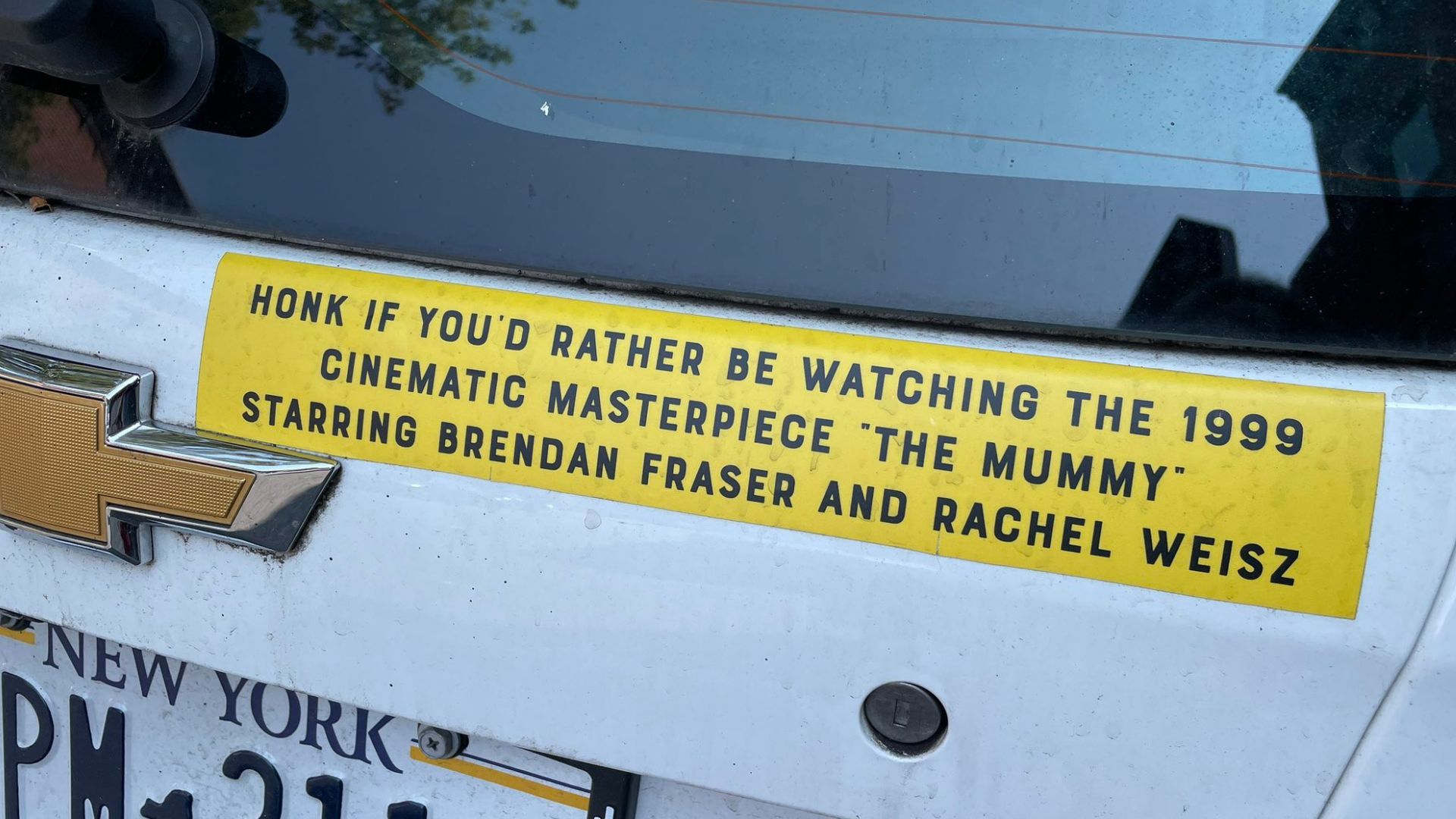
Somewhere in the City of Long Beach code sits a list of flags a resident is allowed to display. Nations are on it. Governmental subdivisions are on it. Religious and fraternal organizations are on it. So are corporations.
Political candidates are not.
That list was written in 1989, in a chapter of the municipal code titled “Advertising, Signs and Posting Bills,” and it has quietly become the pivot point of a federal civil rights case that has been grinding through the Eastern District of New York since the spring of 2021. On August 31, that case reached the stage where the money stops being the interesting part.
Both sides went to a federal judge and asked for a ruling.
What actually changed
The public docket in Wasserman v. City of Long Beach, NY, case number 2:21-cv-02466, reads like an endurance test. Filed May 3, 2021. Assigned to Judge Joanna Seybert, referred to Magistrate Judge James M. Wicks. Multiple changes of counsel. A complaint amended so many times the magistrate had to order the city to say whether it consented to the latest version. Another amended complaint landed on May 11 of this year.
Then the pace picks up. Pre-motion conference letters in mid-June. A scheduling order on July 21. And on August 31, three filings in a single day: a motion for summary judgment, a memorandum in support, and a motion for partial summary judgment.
The docket does not publicly identify which party filed which motion, and the briefs themselves are not in the free public archive, so treat the specifics as unconfirmed. What the docket does establish is the posture. This case has left the settlement phase.
Earlier this year the City Council approved $50,000 to make it go away. Michael Wasserman turned the money down and said he wanted at least twice that, which at the time looked like a negotiating position. We covered it that way ourselves. It reads differently now.
Why the filing date matters more than the dollar figure
Summary judgment is a specific request. It tells the court there is no genuine dispute about the facts, and that on those undisputed facts one side wins as a matter of law. When motions come from both directions on the same day, both sides are effectively saying the same thing: stop gathering evidence, read the ordinance, and tell us what it means.
That is the part a settlement would have prevented. A payout closes a file. It produces a check, a release, and a docket entry. It produces no reasoning, no interpretation, and nothing that binds the next city that tries the same enforcement.
A settlement buys quiet. A summary judgment ruling buys a written opinion, and opinions outlive the council members who voted for the check.
The exemption list is the problem
According to the complaint on file with the court, Wasserman was cited in March 2021 under Chapter 3 of the Long Beach code, adopted February 21, 1989. The operative section, 3-7(d), bars signs on public streets and property. The exemption section, 3-3(e), spares flags, emblems and insignia belonging to a nation, a governmental subdivision, a religious or fraternal organization, or a corporation.
Read that carve-out as a driver rather than a lawyer. A contractor can fly a company banner off the bed of a work truck and land inside the exemption. A lodge can fly its emblem. A candidate cannot, because candidates were not a category anyone thought to list in 1989.
That is the constitutional trap. In Reed v. Town of Gilbert, decided in 2015, the Supreme Court struck down an Arizona sign code that sorted signs into categories and gave each category different treatment. A regulation is content based, the Court held, when it applies to particular speech because of the topic discussed or the message expressed, and content-based rules are presumptively unconstitutional.
Translated to the curb: if an officer has to read what is on your vehicle before deciding whether to write the summons, the rule has already wandered into the hardest constitutional territory there is.
New York already answered this question, and the answer was about seeing, not saying
Here is the thing most drivers never learn until a ticket shows up. New York State has regulated what goes on your vehicle for decades, and every one of those rules is about visibility.
Vehicle and Traffic Law section 375 prohibits posters or stickers on windshields and rear windows unless the commissioner authorized them. It bars signs and other nontransparent material on the windshield, sidewings and side windows forward of the driver. It makes it unlawful to operate with any object hung or placed so as to obstruct the operator’s view through the glass.
Not one of those provisions asks what the sticker says. They ask whether you can see through it.
And the state made that framework deliberately exclusive. Section 1600 declares the Vehicle and Traffic Law applicable and uniform throughout the state, and forbids a local authority from enacting or enforcing any local law in conflict with it unless the state expressly says otherwise.
So the legislature drew a line around vehicles and drew it at the sight lines. When a municipal sign chapter reaches a flag mounted on a truck, it is drawing a second line, in a different place, on a completely different principle, using a body of law written for storefronts, telephone poles and pasted handbills. Whether a court lets it do that is precisely what is now on the table.
The seam on the back of your car
There is a legal boundary on every vehicle in America, and almost nobody has been told where it is.
In Walker v. Texas Division, Sons of Confederate Veterans, decided the same year as Reed, the Supreme Court held that specialty license plate designs are government speech. Texas could refuse a design outright, because, as the majority put it, when government speaks it is not barred by the Free Speech Clause from determining the content of what it says.
So the rectangle of aluminum bolted to your bumper is the government talking. The sheet metal around it is you. That seam runs across the back of every car on the road, and the plate has already become the most surveilled object on your vehicle. The Long Beach case is an argument about how far past the bolt holes the government’s voice is allowed to reach.
Who this actually touches
It would be easy to file this under politics and move on. That would be a mistake, because a sign ordinance that reaches vehicles reaches a lot of vehicles.
It reaches the rideshare driver running an ad panel. The enthusiast with sponsor decals and a club plaque. The dealer flying pennants over the front row. The tradesman with a lettered van who, under the Long Beach exemption as quoted in the complaint, is the single best protected speaker on the street. The most commercial message on the block is the one the 1989 code explicitly waves through.
The ownership math is not trivial either. A full vinyl wrap is a four-figure job, and removal is billed by the hour. If a municipality can order a display stripped as an illegal sign, that bill lands on the vehicle owner, not the city. There is no line on a standard auto policy for being told to take your truck back to the wrap shop.
This is the same pattern we keep running into: a statute written for one situation gets pointed at drivers, and the enforcement reality turns out to be nothing like the drafting.
The city is not without a case
Long Beach has consistently framed this as ordinary code enforcement rather than censorship, and that argument is not frivolous. American municipalities have regulated signage for more than a century on traffic safety and aesthetic grounds, and courts have generally been far more tolerant of rules about where a sign may sit than rules about what it may say.
If the city can persuade the court that the summons turned on location, a display in the public right of way, and not on the words, its odds improve considerably. The exemption list is the part that will be hard to explain out loud.
Nothing has been decided. Summary judgment motions get denied all the time, and cases settle on the courthouse steps every week.
What to remember
Forget the dollar figures. Forget the flags, which are the least interesting thing in the file.
The $50,000 was never a valuation of what Wasserman put on his vehicles. It was the price of never having to explain a 37-year-old ordinance in front of a federal judge. He declined the offer, and now the explanation happens anyway, in writing, with a case number attached to it.
Long Beach offered $50,000 to make a question go away. Questions do not cash checks.
So where should the line actually sit? If you can still see out of every window, is what you display on your own vehicle any of city hall’s business, or does a town get a say in what rolls down its streets? Tell us where you would draw it.