
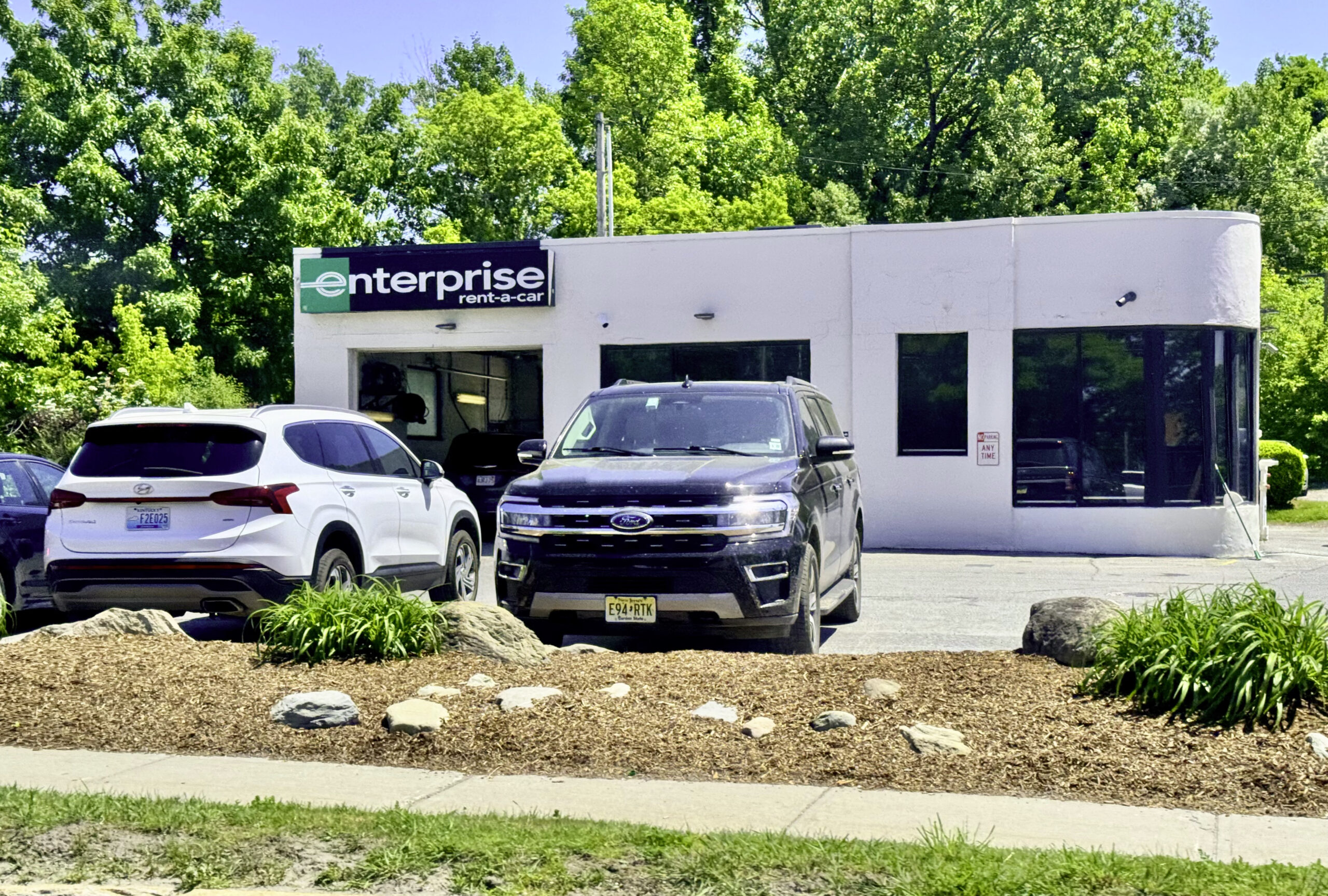
Jose Arce did not choose the rental company. He did not choose the car, did not negotiate the daily rate, and did not make the reservation. According to a class action complaint filed August 21 in the U.S. District Court for the Northern District of Illinois, Allstate did all four.
Then Allstate looked at the bill that arrangement produced and declined to pay $85.22 of it.
Eighty-five dollars is not a number that commands attention, which is exactly why it deserves some. The suit brought by Arce and an Alabama driver named Daniel Jackson is not really an argument about what a Mazda CX-5 costs for eight days. It is an argument about a claims process in which one company selects the vendor, negotiates the price, defines the vehicle class, books the car, and then decides after the fact how much of its own arrangement was reasonable — while the person holding the invoice is the only party in the chain with no contract and no leverage.
Allstate has not been found liable of anything. These are allegations in a complaint that has yet to be tested, and the company’s stated position, quoted below, is that the claimant chose a bigger vehicle than it agreed to cover. But the paperwork described in the filing is worth reading closely, because it explains something most drivers never learn until the week their car is sitting in a body shop.
Two drivers, neither at fault, $177.60 short
Arce’s Tesla Model 3 was struck in New Rochelle, New York, in September 2025 by a driver Allstate insured and who the complaint says was entirely at fault. Allstate wrote to him that it would cover “property damage, including loss of use,” along with out-of-pocket expenses reasonably attributable to the crash. It pointed him to Enterprise and, the complaint alleges, set up the reservation itself.
He took what Enterprise had waiting under that reservation: a 2025 Mazda CX-5, a midsize SUV, for eight days at $36.60 per day. The charge came to $352.46. Allstate reimbursed $267.24.
Jackson’s claim follows the same shape. His Toyota Prius was damaged in Alabama in April 2026 by an Allstate insured. Allstate’s letter told him it would “consider a daily vehicle rental reimbursement rate up to $[28.31] per day for a(an) [intermediate] vehicle” — brackets in the original, which tells you the letter came out of a template. He rented a Nissan Altima for 24 days at $32.04 per day, was charged $824.73, and was reimbursed $732.35.
Two people who did not cause a crash, $177.60 short between them.
When Arce complained to the New York Attorney General’s office, Allstate replied that it had “agreed to address an intermediate sized vehicle with a daily rate of $27.75 plus tax,” and that Arce had “elected to obtain a larger vehicle.”
That sentence is where this gets interesting.
“Intermediate” is not a word you can look up
Ask Enterprise’s own website what an intermediate car is and you will not get a straight answer, because Enterprise does not rent one. Its U.S. car lineup runs Economy, Compact, Midsize, Standard, Full Size and Premium. The only class on the consumer site carrying the word “intermediate” is Intermediate Electric.
So where does the term come from? From ACRISS, the Association of Car Rental Industry Systems Standards, whose four-character vehicle codes were adapted from a classification scheme originally built for airline booking systems. In that code the first letter is the size category, and I stands for Intermediate. Enterprise’s Midsize car is ICAR. Its Intermediate Electric is ICAE. The word is perfectly real. It just lives on the trade side of the counter, not the customer side.
Which means an at-fault driver’s insurer can tell you in writing that it will pay up to a set amount per day “for an intermediate vehicle,” and you have no practical way to confirm whether the car in front of you qualifies. You cannot look that class up on the rental company’s site under that name. The complaint presses exactly this point on Arce’s behalf, noting that both vehicles Enterprise offered him were SUVs rather than cars at all.
Here is the part that should bother anyone who has ever signed a rental agreement after a wreck. The vehicle class is the single variable that controls the payout, and it is the one variable written in a vocabulary the claimant cannot check.
The disputed money sits below the discount, not above the market
The instinct is to assume these two rented something indulgent. The complaint’s numbers point the other way.
Arce was charged $36.60 per day. When plaintiffs’ counsel priced a comparable midsize SUV in his market this August for an equivalent eight-day window, the cheapest option available came in above $510 and a directly comparable vehicle totaled $631.96. Jackson’s Altima ran $32.04 per day; counsel’s comparison booking in his market for a similar stretch topped $1,264. Those comparisons were run months after the rentals, so they are a market check rather than a same-day quote — but the gap is not subtle.
Put plainly: the rate Allstate negotiated had already cut the going retail price roughly in half. The Enterprise paperwork, according to the filing, identified the rate source as “ALLSTATE INS-EXPRESS RENTALS.” That is Allstate’s own commercial rate plan.
So the fight is not between the open market and a reasonable cap. It is between Allstate’s negotiated rate and a second, lower internal number applied after the car was already back on the lot. Allstate captured the volume discount. The claimant was left with the remainder.
Everyone in that transaction has a contract except the driver who got hit
Look at which claims the lawsuit brings, and which it does not. There is no breach-of-contract count, because Arce and Jackson have no contract with Allstate. They were never its customers. They are third-party claimants, which in insurance terms means the company owes them money on behalf of somebody else — the at-fault driver whose liability it agreed to cover.
That distinction sounds academic and is anything but. A policyholder who feels shortchanged has contractual remedies and, in most states, a bad-faith claim. A third-party claimant usually has neither. So the complaint reaches for what is left: breach of the implied covenant of good faith and fair dealing, and, in the alternative, promissory estoppel — the argument that Allstate made a promise, the drivers relied on it, and they ended up worse off for having done so. Layered on top are state consumer-protection statutes, New York’s General Business Law Section 349 for Arce and Alabama’s Deceptive Trade Practices Act for Jackson, who sent the 15-day written demand that Alabama law requires. Allstate declined to settle a week later.
Regulators are an uneven backstop. New York’s Department of Financial Services has advised that Regulation 64’s claim-handling standards reach third-party liability claims arising from accidents inside the state — and also that the regulation stops applying once a lawsuit has been filed. Alabama has no identical rule. The practical protection available to a driver in this exact situation depends heavily on which state line the collision happened to fall inside. If you have ever wondered why two identical-looking coverage situations resolve completely differently, this is one of the reasons.
Loss of use is a real legal right. It simply is not a contract, and that changes everything about how hard it is to collect.
Why the daily rate keeps getting more important
A daily cap only matters if the rental runs long. Increasingly, it does.
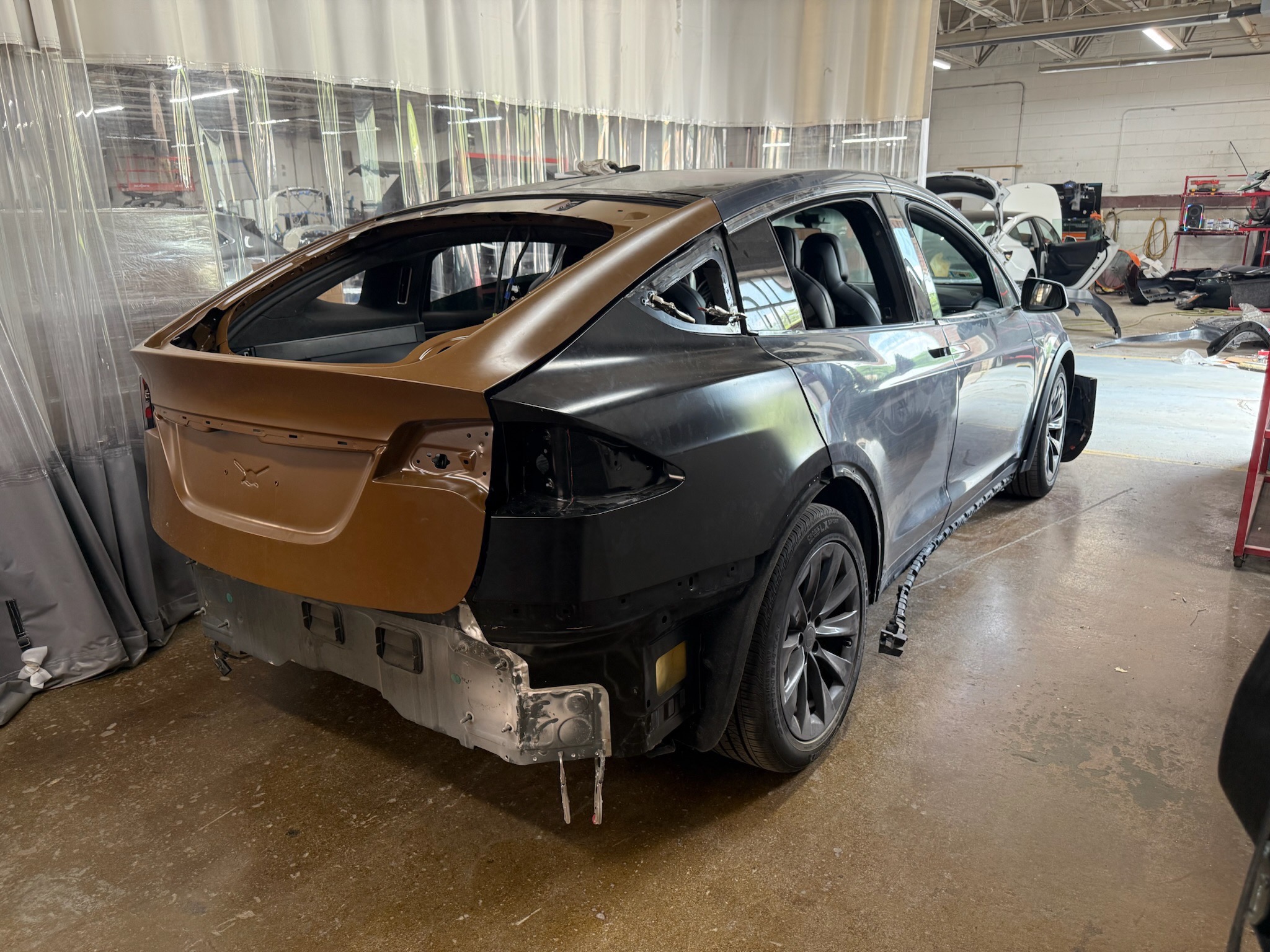
CCC Intelligent Solutions, whose software sits under a large share of American collision estimating and claims work, reported in its 2026 Crash Course that 28.3% of repairable estimates now include at least one calibration — the sensor-alignment procedures required after work anywhere near a camera, a radar unit or a windshield. The same data put total-loss frequency at 23.1% of claims as of the end of March, an industry high. Calibrations add equipment, steps and scheduling dependencies to jobs that used to be pure sheet metal, which is a big part of why driver-assist hardware keeps getting blamed for repair bills it did not create. Parts availability stretches things further. Jackson’s Prius took 24 days.
Multiply a few dollars a day across that kind of duration, and across a claim population, and the arithmetic changes character entirely. A $3.85 daily gap is a rounding error to one driver and a line item to an insurer. Allstate reported $3.2 billion in net income for the second quarter of 2026 alone on $9.6 billion in quarterly auto premiums earned, with a property-liability combined ratio of 86.6, according to its earnings release. That is a strongly profitable quarter by any standard in the business.
None of that is an accusation. It is a description of why disputes like this almost never get litigated one at a time. No attorney takes an $85 case. Small claims court costs a day of work and a filing fee. A shortfall that is modest, per-claim and generated by template letters is, structurally, a shortfall that only a class action can test — which is the entire reason the mechanism exists, and a big part of why the economics of car insurance feel so one-directional from the driver’s seat.
The reservation is not the authorization
That is the sentence to carry out of this. The reservation and the authorization are two different numbers, and only one of them is printed on the agreement you sign.
If you are ever the driver who did not cause the crash — and plenty of you will be — the most useful ninety seconds you will spend is at the counter, before you take the keys. Get the insurer’s authorized daily rate and the exact vehicle class in writing, then hold it against the rate printed on the rental agreement in front of you. If the two do not match, that is a conversation to have while you still have the option of declining the car, not six weeks later with a check in your hand.
Enterprise’s own customer guidance is straightforward about the principle: take a class above what the insurer authorized and “you may have to pay out of pocket for the difference.” That is a fair rule. It only functions if the claimant is told the authorized class in language a human being can verify.
Whether Arce and Jackson prevail is a separate question, and no court has ruled on a thing. But the practice they describe does not require anybody to behave badly for a driver to come up short. It only requires a system in which the party that negotiates the price and the party that decides the payout are the same party, and the party that actually gets billed is not in the room. Anyone who has worked through the aftermath of a total loss will recognize the shape of it.
Have you ever been handed a rental after a wreck you did not cause, only to find the insurer’s reimbursement came up short of the bill — and did you fight it, or just eat the difference?