
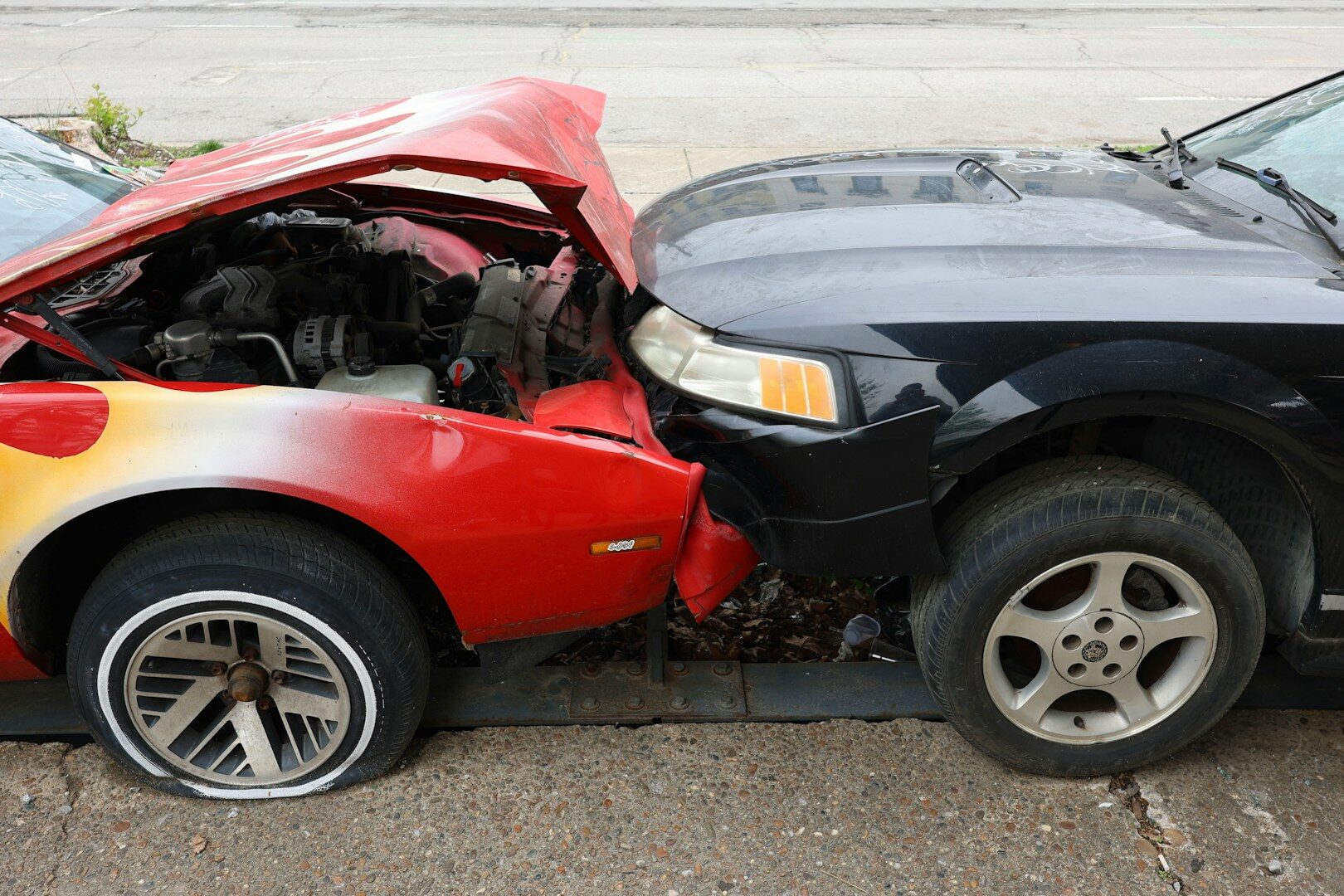
Every enthusiast has had the moment. Somebody taps your front bumper in a parking lot, the cover looks fine, and the estimate comes back north of three grand. Behind that painted plastic sits a radar module, a couple of ultrasonic pucks, maybe a corner lidar, and a camera up in the windshield header that now has to be recalibrated because the shop breathed on the car. So the obvious conclusion is that driver-assistance hardware is what’s eating your wallet.
New analysis from the Highway Loss Data Institute says the obvious conclusion is mostly wrong — and the proof is buried in a coverage type most drivers never think about.
The number that gives the game away
Start with what everyone expects. In an HLDI comparison of otherwise identical 2017–22 model year vehicles with and without a driver-assistance bundle, collision claim severity — the dollar figure needed to settle a claim — ran roughly 10% higher on the equipped cars. Fine. Sensors cost money, calibration costs money, that tracks. iihs
Here’s where it falls apart. Property damage liability claim severity, the coverage that pays for the other guy’s car when you hit him, was 15% higher on the crash-avoidance-equipped vehicles. Read that again. Your car’s radar module has no bearing whatsoever on what it costs to fix the Corolla you rear-ended. There’s no mechanism by which owning blind spot detection makes you preferentially collide with other sensor-equipped vehicles. iihs
Related Articles
- Toyota’s All-Hybrid Camry Keeps Losing Its Blinkers, And This Is Its Fourth Recall Since Launch
- GM Just Invented a New Way to Owe Money for Parts It Hasn’t Bought Yet — And Wall Street Won’t See the Bill for Years
What’s actually happening is a composition problem, and it’s the kind of thing that trips up anyone reading an average without asking what’s in the denominator. Crash avoidance systems are extremely good at eliminating the cheap crashes — parking lot scuffs, 8-mph rear-enders in stop-and-go, the low-consequence stuff that historically made up the bulk of claims volume. Kill off the $1,400 claims and the survivors skew toward higher-speed, higher-damage events. The average goes up because the bottom of the distribution got deleted, not because the remaining repairs got more expensive.
Which is exactly why severity is a terrible metric to judge this on alone. HLDI’s same study found claim frequency about 10% lower for collision and nearly 40% lower for PDL on the equipped vehicles. Multiply frequency by severity and overall losses came out roughly 5% lower under collision and almost 30% lower under PDL. Every crash that never happened is also a deductible you never paid.
So what did drive the 40% increase?
Because BLS data does show vehicle repair prices climbing more than 40% since 2020, well ahead of general inflation. Sensors are a contributor, not the driver. A few things that matter more than most owners realize:
Mass and structure. The market has gone from Civics and Malibus to Grand Highlanders and Ridgelines. Heavier vehicles carry more kinetic energy into the same impact, which means deformation reaches farther into the structure. On modern unibodies with hot-stamped boron steel and aluminum closures, that often means non-repairable sectional replacement rather than pull-and-fill.
Headlights. A sealed-beam round from 1978 cost about as much as dinner. A matrix LED module with individually addressable segments, a leveling motor, and its own control unit is a four-figure part on plenty of mainstream cars — and it’s mounted right where the bumper crumples.
Powertrain complexity. Nearly two-thirds of new vehicles now carry all-wheel or four-wheel drive and more than half are turbocharged, hybrid, or fully electric. Every one of those adds parts in the crush zone: intercoolers, charge piping, transfer cases, high-voltage cabling that requires a documented de-energizing procedure before a tech can touch anything nearby.
Trim-level inflation. Power seats with occupant-detection modules, panoramic glass, 12-speaker audio with amps in the quarter panel. Content that lived on an S-Class in 2005 is standard on a compact crossover now.
The real repair problem is calibration, not the sensors
This is where the story gets genuinely useful for owners, and where the industry still has homework.
IIHS surveyed vehicle owners about crash-avoidance repairs and found the failure mode isn’t parts cost — it’s the aftermath. About two-thirds of owners whose repair involved a windshield replacement, and nearly three-quarters of those whose repair followed crash damage, reported problems with the technology after the job was finished. Fewer than half of owners who had work done for other reasons ran into trouble. iihs
Glass is the clearest illustration. A plain windshield replacement can run as little as $250, but HLDI found vehicles with front crash prevention were far more likely to have glass claims of $1,000 or more — the delta being calibration. iihs
And calibration is harder than it sounds. Static procedures demand a level floor, specific lighting, measured distances to a target board, correct ride height and tire pressures, and a full fuel or ballast spec. Dynamic procedures require driving at a set speed on marked roadway in decent weather. IIHS notes that calibration software updates frequently, tools go stale, and there’s no standardization across manufacturers — every OEM has its own targets, its own tolerances, its own scan tool licensing. iihs
Translation for you: a shop that nails paint match may still be guessing on a forward-facing camera. Ask, before you authorize the repair, whether calibration is being performed in-house or sublet, and get the post-scan report and calibration certificate in writing. If the shop shrugs, that’s your answer.
Two things this changes about buying and owning
The opt-out is closing. NHTSA’s FMVSS No. 127 requires AEB, pedestrian AEB, and forward collision warning on all light vehicles by September 1, 2029. The agency projects at least 360 lives saved and 24,000 injuries prevented annually. Whatever you think of mandates, the “buy the base trim without the sensors” strategy has a shelf life.
Related Articles
- Hiroshi Okuda’s Real Legacy Isn’t the Prius. It’s Teaching Toyota to Build Where It Sells
- What Florida’s eVTOL Test Site Actually Means For Drivers
Spec rear AEB specifically. This is the most actionable finding I’ve seen in a while. HLDI’s Mazda analysis of 2015–23 vehicles found the most basic bundle cut PDL claim rates 13%, while the most comprehensive bundle cut them 39%. Rear AEB stood out because reverse parking-lot hits are enormously common and almost never serious. Moore’s advice was blunt: “If you’re worried about rising repair costs, the smartest thing you can do is get a vehicle with rear AEB and make sure it is turned on.” iihs
That last clause matters. A frustrating repair experience is exactly the scenario that tempts an owner to permanently disable a system in the settings menu — and a switched-off sensor delivers zero benefit while you keep paying the insurance and repair-cost consequences of owning it.
The honest summary: yes, the crash you have will cost more to fix on a sensor-laden car. But you’re statistically having fewer of them, and the arithmetic lands in your favor. The place to be annoyed isn’t the hardware. It’s an industry that still hasn’t standardized how to put that hardware back into calibration after somebody clips your bumper in a grocery store parking lot.