
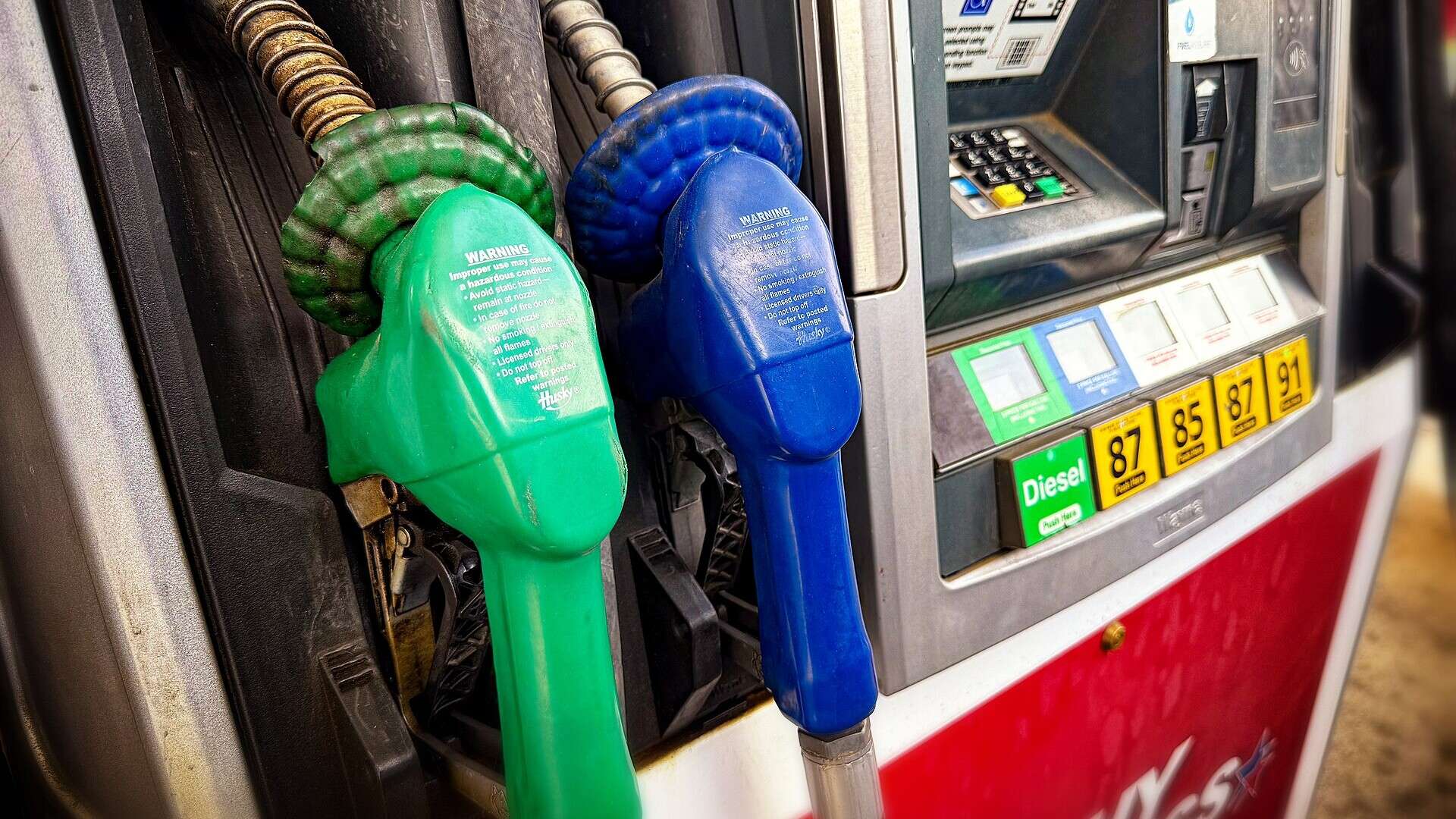
For every 11 to 13 gallons of distillate a U.S. refinery pulls out of a barrel of crude, it also makes 19 to 20 gallons of gasoline, according to the Energy Information Administration. That ratio is the reason a ban on diesel exports, which President Trump says he is still weighing, would probably reach the far larger number of Americans who burn gasoline before it does much for the people who burn diesel.
Trump said it himself in the Oval Office on Sept. 30. A ban could bring diesel prices down, he told reporters, but it could also have a “negative impact” on gasoline, Reuters reported. His energy secretary has gone further and said publicly that it would not work at all. That leaves an unusual situation: a policy the president keeps alive, his own cabinet argues against, and the refining industry is lobbying to kill, while the price it is meant to fix sits at levels the country has never seen.
Diesel’s $6.529 record and how it got there
The national average for on-highway diesel reached $6.529 a gallon in the EIA’s survey for the week of Sept. 21, the highest in the agency’s weekly series. The previous peak, $5.810, came on June 20, 2022. A week later, the Sept. 28 reading slipped to $6.382, still $2.628 above the same week last year. Regular gasoline averaged $4.465.
The climb started with the war. Israel and the United States began striking Iran on Feb. 28, according to a U.K. House of Commons Library briefing, which counted a 95% drop in crude tanker traffic through the Strait of Hormuz, a route that normally carries about a fifth of the world’s petroleum. Diesel averaged $3.809 the week of Feb. 23. It crossed $4.85 two weeks later and has not been back under $4.50 since. Attacks on Gulf infrastructure, including the drone strike on Saudi Arabia’s East-West pipeline, and the war in Ukraine have kept pressure on the fuel the rest of the world also needs for trucks, tractors, ships and generators.
Washington has already pulled several levers. On March 11, the Energy Department committed 172 million barrels from the Strategic Petroleum Reserve to a 400-million-barrel release coordinated with International Energy Agency members. The Department of Homeland Security waived the Jones Act on March 17, and the waiver has been extended twice; under Customs and Border Protection guidance, covered cargo must be loaded by 11:59 p.m. Eastern on Nov. 15. On Sept. 29, the Energy Department asked for bids on an exchange of up to 40 million more barrels of reserve crude, due Oct. 6 with deliveries in November and December.
All of that is crude oil or shipping. None of it is diesel in a tank. The only federal stockpile of finished distillate, the Northeast Home Heating Oil Reserve, holds 1 million barrels at four terminals between South Portland, Maine, and New York Harbor. On an average September day, U.S. exporters shipped more than that.
How much diesel the U.S. ships abroad
The EIA’s four weekly estimates for September put distillate exports between 1.33 million and 1.61 million barrels a day. Over the same weeks, domestic demand, which the EIA measures as product supplied, ran between 3.50 million and 3.98 million barrels a day. Averaged across the month, exports came to about 40% of what Americans used, by The Auto Wire’s math. For comparison, exports for all of 2025 averaged slightly over 1.3 million barrels a day, and diesel was the country’s largest transportation-fuel export, the EIA reported in March. Mexico took 17% of it. Brazil, the Netherlands and the United Kingdom were all major buyers, and U.K. volumes set an annual record.
Farm-state Republicans see a simple fix: stop the ships and keep the fuel. The way a refinery works makes that harder than it sounds.
A refinery can’t make diesel without making gasoline
Crude goes into a distillation column and comes out in cuts by boiling range. Refiners can shift the mix at the margins with catalysts, cracking units and crude selection, but they cannot run a plant for diesel alone. Using the EIA’s yield figures, each gallon of distillate comes with somewhere between 1.5 and 1.8 gallons of gasoline, plus jet fuel and heavier products. U.S. plants were already running at about 94% of capacity in mid-September, according to EIA figures cited by Reuters, so there is little room to squeeze out more of anything.
Energy Secretary Chris Wright laid out what happens next at an event in New York on Sept. 23. “If you can’t export the diesel that comes out of our refineries, you run out of places to store it, and you have to reduce US refining, which would put upward pressure on gasoline prices and jet fuel prices,” he said, according to Reuters. He also said, “The blunt tool of banning diesel exports definitely doesn’t work.” Thirty-six industry and business groups, the American Petroleum Institute and the U.S. Chamber of Commerce among them, sent the White House a letter warning that “Export bans would lead to less fuel production, tighter supplies, and rising costs for American families, farmers, and truckers.”
The coalition has an obvious commercial interest in open export markets. Wright’s storage argument, though, comes down to tank capacity, and the yield ratio comes from the EIA. A Gulf Coast refiner that can’t sell surplus diesel to Mexico or Rotterdam has two choices: drop its domestic price hard enough to move the extra barrels, which is what ban supporters are counting on, or cut crude runs. Cutting runs means less gasoline. Most of the cars and light trucks in American driveways run on gasoline, so even a small rise at the gas pump would reach far more households than a drop in diesel would.
Diesel’s highest prices are far from the export docks
The EIA’s regional numbers for Sept. 28 show where the pain is. Gulf Coast diesel averaged $5.955, the cheapest in the country, because that is where the refineries and export docks are. The Midwest was at $6.526, above the East Coast’s $6.137, which goes some way toward explaining why farm-state Republicans have been the loudest voices for a ban. The West Coast averaged $7.357, and California $8.181.
California’s diesel sits $2.23 above the Gulf’s even with the Jones Act waived, which means foreign-flagged tankers can already carry fuel between U.S. ports. Barrels that stay in Texas because of a ban do not appear in Los Angeles or Boston on their own; they need pipelines, ships and, in California’s case, fuel made to that state’s specifications. The gap between Gulf and West Coast prices is about logistics and refining capacity, and an export ban changes neither.
Which law would allow a diesel export ban
The law a president once could have used is gone. Section 103 of the Energy Policy and Conservation Act of 1975 let the White House restrict exports of petroleum products, coal and natural gas by rule. Congress repealed that section on Dec. 18, 2015, in the same spending law that ended the 40-year ban on crude exports. What replaced it, 42 U.S.C. 6212a, bars federal officials from restricting crude exports except in narrow cases, including a declared national emergency, and caps those restrictions at one year at a time unless renewed. It says nothing about diesel. None of the public statements I found from the White House or the Energy Department name the authority a diesel ban would rest on. A ban without clear statutory footing would be an easy target for a lawsuit.
The same argument played out four years ago under the other party. In 2022, when diesel last set records, the Biden administration urged refiners to hold back exports while talk of formal limits circulated in Washington. API and the American Fuel & Petrochemical Manufacturers wrote to then-Energy Secretary Jennifer Granholm on Oct. 4, 2022, urging the administration to “disavow a refined product export ban or export restrictions,” according to API. No ban followed, and diesel’s 2022 record stood until this September.
The ban’s best use so far is as leverage on Europe
On Oct. 1, Reuters reported, citing three unnamed sources, that the administration had asked France and Germany to release 120 million barrels of diesel from their emergency stockpiles over six months, and threatened a U.S. export ban if they refused. Spread over six months, 120 million barrels works out to roughly 650,000 barrels a day, The Auto Wire’s math, or a bit less than half of what the U.S. currently exports. Europe built those stockpiles for this kind of emergency. European buyers also take a meaningful share of American diesel, which gives the threat its weight.
Seen this way, the export ban is worth more to the White House as a threat than as a policy. Carried out, it risks pushing up gasoline prices about a month before the midterms. Held in reserve, it may pry diesel loose from European tanks and add supply to a world market that sets the price Americans pay anyway. Interior Secretary Doug Burgum has warned that a ban could invite retaliation from fuel-exporting countries, and Agriculture Secretary Brooke Rollins has pushed for action on prices, Reuters reported, so the internal argument is still running.
What diesel and gasoline drivers should watch
For owners of diesel heavy-duty pickups, including the 2027 Silverado HD and Sierra HD that will offer GM’s new 8.3-liter Duramax, the year-over-year jump comes to about $79 more for a 30-gallon fill. Everyone else pays indirectly. The EIA says it does not calculate fuel surcharges, but notes that many shippers and truckers plug its weekly diesel average into their pricing formulas. That number ends up in what it costs to haul new cars to dealers, parts to repair shops and, as we’ve covered, almost everything else.
Four dates and data points will show where this goes. Bids for the 40-million-barrel reserve exchange are due Oct. 6. Europe’s answer on the 120 million barrels will show whether the threat worked. The Jones Act waiver’s loading deadline of Nov. 15 falls after the Nov. 3 elections, and whether it gets a third extension will say a lot about how worried the administration still is. And every Monday, the EIA’s diesel average will show whether the slide from the $6.529 peak is holding. If a ban arrives, the first number to check is the gasoline price on the same EIA page, followed by any Federal Register notice saying which law the administration is relying on.
If Washington had to choose, should it keep American diesel at home and accept the risk of higher gasoline prices, or keep exports flowing and let the world market bring diesel down on its own schedule?
Top photo: Diesel and gasoline nozzles share a pump island. Photo: Tony Webster, CC BY 2.0, via Wikimedia Commons.