
The drones that hit Saudi Arabia’s East-West Pipeline were aimed at crude oil. The damage is showing up somewhere else: in the fuel that moves nearly everything the car business sells, services, and ships.
That fuel is diesel. And this attack landed on the one piece of infrastructure that was supposed to keep Gulf barrels, and the diesel refined from them, flowing while the Strait of Hormuz stays shut.
What happened
On Thursday, Sept. 10, drones struck the pipeline, which runs about 1,200 kilometers from the kingdom’s eastern oil fields to the Red Sea port of Yanbu. Saudi Arabia’s Foreign Ministry said the next day that several drones launched from Iraq had targeted the line in the Riyadh and Medina areas, causing injuries and material damage, and that the pipeline had been shut as a precaution. Riyadh has blamed Iranian-backed militias operating in Iraq. Baghdad responded by removing a military commander and opening an investigation into its Maysan Operations Command.
By Sept. 14, the Associated Press was reporting, through two regional officials who were not authorized to speak publicly, that repairs, including to a major pumping facility, could take three to five weeks. Brent crude climbed above $109 a barrel. Before the strike, the line had been moving somewhere between 2.6 million and 4 million barrels a day.
The outage turned out shorter than that worst case, at least on paper. Reuters reported on Sept. 22, citing three people briefed on the matter, that the pipeline had restarted at a low rate and that Yanbu loadings could resume. Getting back to full flow is another matter; the same reporting put a return to roughly 4 million barrels a day six to eight weeks out. Saudi Aramco has not commented publicly.
Why this pipeline carries so much weight
The East-West line was built in 1981 for exactly this scenario: a way to get Saudi crude to market without sailing it through Hormuz. Under normal conditions that detour is a backup. This year it has been the main road.
According to the U.S. Energy Information Administration, about 20 million barrels a day moved through Hormuz in 2024, equal to roughly a fifth of everything the world burns. The East-West pipeline’s nameplate capacity is 5 million barrels a day, stretchable to about 7 million by converting lines that normally carry natural gas liquids. Before the war, the EIA estimated the unused bypass capacity of Saudi Arabia and the UAE combined at only about 2.6 million barrels a day.
With Hormuz closed since late February, the Gulf’s bypass routes were never big enough to replace the strait. The attack hit one of the few there are.
The weak point isn’t the pipe
A handful of drones can idle a 1,200-kilometer line because they went after the pumps, not the pipe.
A long crude line doesn’t flow on its own. Pump stations spaced along the route keep pushing the oil forward against friction and elevation. Steel pipe is comparatively simple to patch. A pump station is a building full of large rotating machinery, electrical gear, and controls, and replacements for that kind of equipment are not sitting in a warehouse. Knock one station out and the entire line runs only as fast as the remaining stations can push it. That is why a “restart at a low rate” is not the same thing as a recovery.
A fuel line with a pinhole is an afternoon job. A dead fuel pump strands the vehicle, and the new pump is on backorder.
This has happened before. In May 2019, drones hit East-West pipeline infrastructure and briefly shut it down. Yemen’s Houthis claimed that attack, but U.S. officials later concluded it had come from southern Iraq, a finding Iraq’s prime minister disputed at the time. Seven years later, the same asset was hit from the same direction. The difference is that Riyadh is now naming Iraq itself.
Follow the diesel, not the gasoline
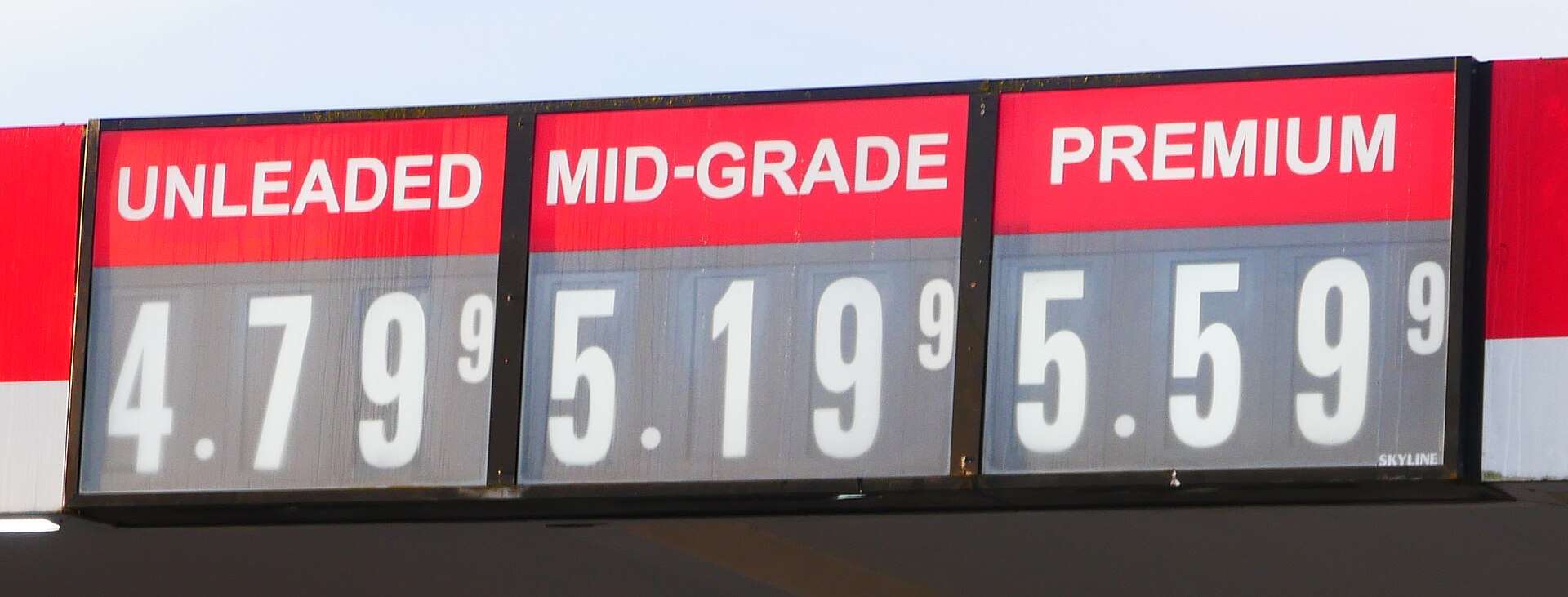
Most drivers will judge this story at the pump, and the gasoline numbers are bad enough. The EIA’s weekly survey put regular at a national average of $4.478 a gallon on Sept. 21, up almost 16 cents in a week and about $1.31 higher than a year earlier. That is the continuation of a squeeze The Auto Wire has been tracking, one that record U.S. crude production hasn’t been able to stop.
Diesel is worse. The same survey had on-highway diesel at $6.529, up more than 24 cents in a week and $2.78 over last year. That’s a gap of roughly $2.05 a gallon over gasoline. The EIA noted days earlier that diesel had already reached its highest nominal price since the agency began tracking it in 1994, with U.S. distillate inventories running 13% below their five-year seasonal average and domestic refineries working at around 97% of capacity.
Diesel’s run-up started before this attack, driven by tight supply worldwide, including lost output from Russia, China, and the Middle East. What the drones did was hit the most obvious way out.
The EIA’s September Short-Term Energy Outlook, finalized Sept. 3, before the strike, forecast diesel crack spreads (the refiner’s margin over crude) above $2 a gallon from August through November. Its path to relief depends on tankers moving normally through Hormuz again by year’s end, which would let Saudi and Kuwaiti refineries ship more distillate. The agency also warned that if Middle East flows stay constrained past 2026, distillate prices would likely beat its forecast into mid-2027.
So the government’s forecast for cheaper diesel depends on the same region that just showed it can’t keep its bypass open. And the Red Sea side is not a safe harbor either: the AP reported that Yemen’s Houthis have taken the Greater and Lesser Hanish islands, north of the Bab el-Mandeb strait that many Yanbu cargoes must pass through.
Why the car business feels diesel first
Almost nothing in the auto industry moves without diesel. New vehicles leave assembly plants on rail cars pulled by diesel locomotives and on car-hauler trucks. Parts ride to plants, distribution centers, and dealer service departments on diesel. Tires, batteries, and fluids come in by truck. As the EIA notes, higher diesel raises the cost of road and rail freight for all goods.
None of that appears as a separate line on a window sticker. Automakers bundle transportation into a destination charge, and parts suppliers fold freight into what they bill. When fuel costs stay elevated for months, that pressure has to go somewhere, and it tends to reach buyers slowly and without a label.
Then there are the people who fill up with diesel themselves. Owners of heavy-duty pickups, including buyers eyeing new engines like GM’s 8.3-liter Duramax, are paying more than $2 a gallon above gasoline drivers. That spread has been reshaping the used market for months, which is why used diesel values have been sliding while used EV prices climb, a divergence that held into September. Anything that delays the Gulf’s diesel relief pushes in the same direction.
Watch diesel
The pipeline is running again, slowly. Brent will rise and fall with every headline out of Hormuz talks. None of that changes the basic lesson of Sept. 10: the world’s backup plan for Gulf oil is a single line of pump stations in the desert, and it can be reached from another country with drones.
For car owners, that makes diesel the number to watch, even if you have never owned a diesel vehicle.
Gasoline sets what it costs to drive your car. Diesel sets what it costs to get that car, and every part it needs, to you.
Are higher freight and diesel costs already showing up in what you pay for parts, service or a new vehicle where you live?