
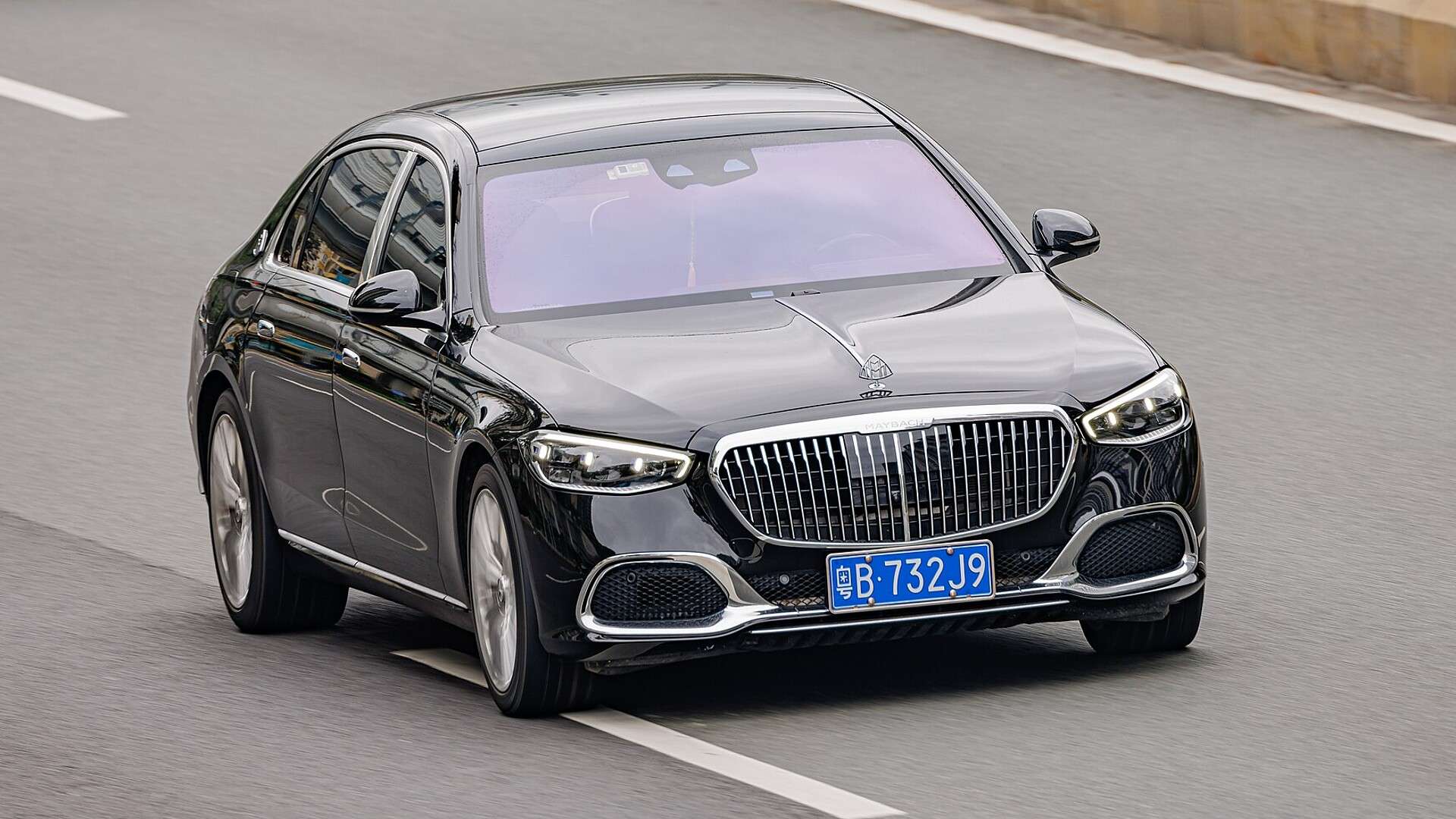
Mercedes-Benz sold 53,900 Top-End cars worldwide between July and September, 21% fewer than a year earlier. That figure, tucked into a table near the bottom of the company’s third-quarter sales release on Wednesday, will say more about Mercedes’s earnings this month than the battery-electric record the company put in its headline.
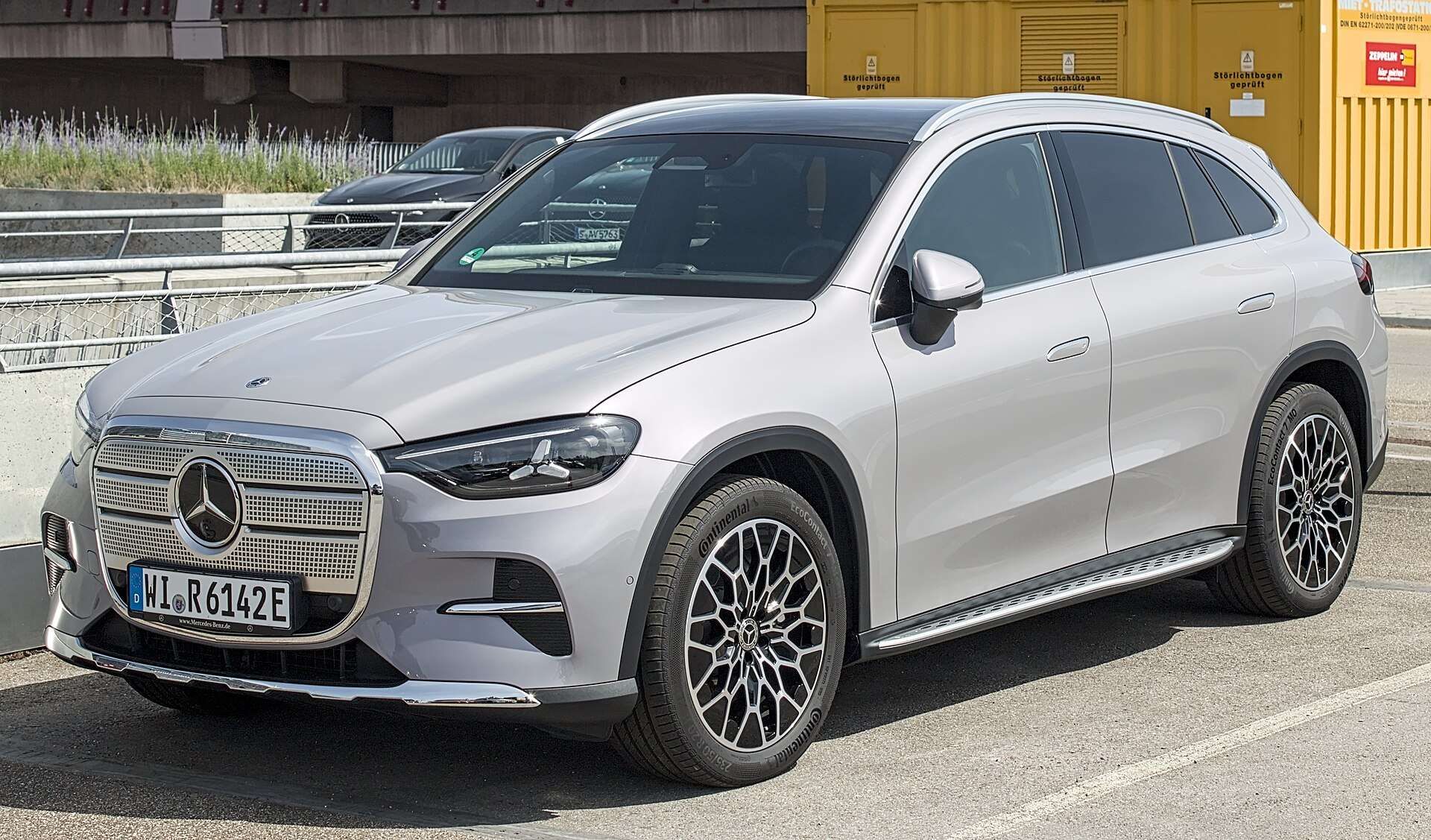
The record is real. Mercedes-Benz Cars delivered 68,400 battery-electric vehicles in the quarter, up 61% from a year earlier, and EVs reached 16.8% of its global car sales. The problem is where the growth is coming from and where the losses are. Mercedes is adding small and midsize electric cars in Europe while losing the large, expensive cars it used to sell in China, and the second group is the one that paid for the business.
Mercedes’s third-quarter numbers by market and segment
The Mercedes-Benz Group sold 491,700 cars and vans in the third quarter, down 6% year on year. The car division accounted for 407,200 of them, down 8%. Sales in China fell 31% to 86,800 cars. Outside China, car sales rose 1%.
Europe grew 5% to 168,700 cars, led by Germany, up 13%. U.S. sales rose 6% to 75,300 and are up 12% over the first nine months. Mercedes said the battery-electric versions of the GLC, the CLA family, the GLB and the GLA are sold out in Europe for the rest of 2026, and that its Bremen, Rastatt and Kecskemét plants are running three shifts to keep up. Mathias Geisen, the board member responsible for sales, put it this way in the release: “Our new electric models GLC, CLA, GLB and GLA are sold out in Europe for the rest of the year, with order books extending into 2027.”
Mercedes publishes percentage changes rather than last year’s unit totals, so I worked backward from its figures. The results are approximate because the company rounds everything and calls the numbers preliminary. A year ago, China accounted for roughly 126,000 of about 442,600 Mercedes cars, or 28% of the total. This quarter it was 21%. Europe added about 8,000 cars year over year and the U.S. about 4,300. China subtracted about 39,000. The EV gain was about 26,000 vehicles. The Top-End loss was about 14,300.
Mercedes’s Top-End share fell below its own target
Mercedes defines Top-End as every Mercedes-AMG and Mercedes-Maybach model plus the G-Class, S-Class, GLS, EQS and EQS SUV. When the company reported second-quarter results on July 28, it gave a full-year target of 14% to 15% of car sales for that group. In the third quarter, Top-End made up 13.2%. A year earlier, by my math, it was about 15.4%.
Mercedes says Top-End was “around 14%” of sales for the first nine months. The exact figure from its own table is 173,500 of 1,244,400 cars, or 13.9%. If fourth-quarter volume matches the third quarter’s, Mercedes needs about 57,700 Top-End sales to finish the year at 14%. That is 14.2% of the quarter and about 7% more than it just sold.
Mercedes doesn’t publish profit by model, but it has said plainly what the mix shift costs. Its car division earned an adjusted return on sales of 4.0% in the second quarter, down from 5.1% a year earlier and inside a full-year guidance range of 3% to 5%. Among the reasons, the company listed pressure in China and “a less favourable model mix.” In 2023, the same division posted an adjusted return on sales of 12.6% on adjusted EBIT of €14.3 billion. Its adjusted EBIT for the second quarter of this year was €909 million.
The reason is mostly arithmetic. A plant’s costs for buildings, tooling, engineering and salaried staff are largely fixed. Each car carries a share of those costs, and a car selling for several times the price of a CLA covers its share many times over. When the expensive cars fall away, the cheaper cars have to carry more of the fixed costs, and the margin falls even if the cheaper cars are selling well.
The China slump reaches a German factory and the balance sheet
The loss of Top-End sales lands on specific plants. The S-Class, its long-wheelbase version and the Mercedes-Maybach S-Class are built at Factory 56 in Sindelfingen, according to the company’s description of the hall when it opened in 2020. Fewer Top-End sales mean less work on that line in Germany. The timing is awkward: Mercedes said in July it had stepped up productivity measures with a focus on its German sites, and it has since tied the future of two German factories to longer hours without extra pay.
China also hurts Mercedes through its accounting. Mercedes builds cars in China, including the locally produced GLE L SUV it launched in mid-September, and it accounts for its Chinese investments under the equity method. Under that method, Mercedes doesn’t book the venture’s revenue. It books its share of the venture’s profit, and it carries the stake on its balance sheet at a value tied to the profits it expects to collect. When those expectations fall, the stake has to be written down. In the second quarter, Mercedes recorded impairments of €704 million on “Chinese equity-method investments.” That cut the car division’s reported EBIT to €49 million, compared with €783 million a year earlier. No cash left the company in the quarter, but the write-down means Mercedes now expects less money from China for years to come.
Mercedes says the GLC and E-Class made up almost two-thirds of its China sales last quarter and held up better than the market overall. Mercedes isn’t the only German luxury maker paying for China’s slowdown. Volkswagen has written down the value of Porsche twice in a year, with China a large part of the reason.
What sold-out electric models mean for buyers in Europe and the U.S.
A sold-out car needs no incentives. If you order an electric GLC in Europe now, you are joining an order book Mercedes says runs well into 2027, so there is little reason for a dealer to discount it. For Mercedes, that kind of pricing helps offset some of the margin lost on the cheaper mix. It doesn’t make up for the Maybachs that didn’t sell.
In the U.S., the newest products are big SUVs from Alabama. The new GLE, GLE Coupé and GLS arrived at U.S. dealerships in September, and the GLE and GLS are built at the company’s plant in Tuscaloosa. The GLS is a Top-End model, so U.S. GLS demand is one of the few places Mercedes can win back Top-End share quickly. The electric CLA went on sale in more markets in the quarter, including the U.S., and its sales rose 24% from the second quarter.
The van business was steadier. Mercedes-Benz Vans sold 84,400 units, up 1%, and electric van sales rose 12% to 9,600. China has almost disappeared from the van numbers: Mercedes sold 1,100 vans there, down 78%.
Mercedes’s Oct. 28 results and the fourth-quarter Top-End test
Mercedes holds a pre-close call with analysts on Oct. 8 and publishes third-quarter results on Oct. 28. Three numbers will matter. The first is whether the car division’s adjusted return on sales stays inside its 3% to 5% range. The second is whether Mercedes keeps its 14% to 15% Top-End target or lowers it. The third is whether another impairment on its Chinese holdings follows the €704 million one.
The new S-Class gives Mercedes some help. Outside China, S-Class sales more than doubled from the second quarter as the new model ramped up. But one in five Mercedes cars is still sold in China, and the company itself blamed China first for the 21% Top-End decline. The Oct. 28 report will show whether a record EV quarter came with a car-division margin above the second quarter’s 4.0%.
Is Mercedes better off chasing volume with electric CLAs and GLCs in Europe, or should it be fighting harder to win back the Chinese buyers who once bought its S-Classes and Maybachs?