
In 2023, the California Department of Motor Vehicles found time to write to Loren Chow. The letters warned that his wages could be garnished, his property seized and a lien placed on his home, all over late registration fees on a Nissan SUV, according to an investigation published Oct. 19 by CalMatters.
That SUV had been totaled the previous June, when a loaded semitruck struck it from behind near Fresno. Chow’s wife, Jenny, was killed.
The man driving the truck, Baljit Singh, still held his license while those letters were going out. The DMV didn’t suspend it until 2024, after he had been convicted of manslaughter in two different counties for two different deaths.
One branch of the state’s driving bureaucracy, in other words, worked exactly as designed. The other one waited.
Two fatal crashes, 11 months apart
CalMatters built its investigation from court files, DMV driving records and California Highway Patrol reports. According to that reporting, Singh’s first fatal crash happened in July 2021 on Merle Haggard Drive in Kern County. His semi drifted across the median on the way to an Amazon distribution center and killed a 26-year-old motorcyclist.
CHP investigators alleged that Singh had been driving past the 12-hour legal limit and was fatigued. They also reported finding pages of his logbook torn into small pieces inside an overhead compartment. The CHP recommended a vehicular manslaughter charge.
The DMV knew about the crash, CalMatters reported. It didn’t need to wait for a court. California Vehicle Code section 13800 lets the department investigate any licensee who “has been involved as a driver in an accident causing death or personal injury,” and that investigation can end in suspension or revocation. Nothing happened.
Eleven months later, in June 2022, the Chows were driving home from a college visit with their 17-year-old son. Singh’s red Freightliner was hauling fertilizer from Missouri at 65 mph. It hit the back of the family’s SUV and flipped it. Law enforcement said Singh caused the crash by driving too fast.
“The death was completely avoidable,” Loren Chow told CalMatters. The family has an active civil lawsuit against Singh, trucking companies and vehicle manufacturers. Singh and his attorney did not respond to CalMatters’ requests for comment.
The math problem
The broader failure CalMatters found comes down to something much smaller than a missed investigation. It’s a multiplication problem.
California tracks dangerous drivers with a point system. Under Vehicle Code section 12810(d)(1), a vehicular manslaughter conviction is worth two points. Section 12810.5(b)(2) adds one rule: if the violation happened behind the wheel of a Class A or Class B vehicle, each point counts one and one-half times. So a trucker convicted of manslaughter in a big rig should get three points.
CalMatters reviewed court filings and DMV records for more than 130 commercial license holders charged with vehicular manslaughter from 2019 to early 2024. In almost every DMV record it reviewed, the conviction appeared as two points, the number an ordinary car driver gets.
Point totals matter. The same statute already gives Class A and B drivers a higher limit before the DMV presumes they’re negligent operators: six points in 12 months, compared with four for everyone else. The multiplier is written in right next to that more forgiving threshold. According to CalMatters, the DMV said it relies on courts to tell it when a conviction involved a commercial vehicle so it can assign the right count.
Still licensed
On paper, the penalties are clear. Vehicle Code section 15300 bars a driver from operating a commercial vehicle for one year after a first conviction for causing a death under the state’s vehicular manslaughter statutes. Section 13351 says the DMV “immediately shall revoke” a person’s driving privilege after a vehicular manslaughter conviction (the lowest-level misdemeanor version is the one exception), and it can’t reinstate that privilege for three years.
CalMatters found that nearly half of the 130-plus drivers in its review still held a valid Class A or Class B license as of late May. About a dozen had gotten unsafe-driving tickets in commercial vehicles after a crash in which they killed someone.
Another case from the investigation shows how long a record can sit untouched. In 2018, semi driver Marco Rodriguez drifted onto the shoulder of Interstate 10 in the Inland Empire. His truck’s side mirror struck and killed Jon Israel, a tow truck operator who was checking his overheating truck’s radiator. Rodriguez was convicted of manslaughter. His attorney told CalMatters the charge was a misdemeanor. Over the next several years, his record picked up three speeding tickets in commercial vehicles and one lane violation. The DMV renewed his trucking license in March 2026.
CalMatters asked about his case in July. After that, the DMV disqualified Rodriguez from commercial driving for one year, which is the same penalty section 15300 sets for the conviction he’d gotten years before. According to CalMatters, he’ll be eligible to drive trucks again next summer.
What the DMV says
The DMV declined CalMatters’ interview request and wouldn’t discuss specific drivers. In an emailed statement, spokesperson Jonathan Groveman said the department had “recently updated” how it handles fatal crashes and manslaughter convictions as part of a modernization effort. During that process, he said, the department found some cases that had never been reviewed and has processed or is now processing them. He also said the DMV relies on police agencies and courts to report information on time.
Shortly after CalMatters sent its list of drivers, the department acted against about a dozen of them, either suspending licenses or removing commercial driving privileges.
Under federal size and weight rules, a fully loaded tractor-trailer on the interstate can weigh up to 80,000 pounds. The licensing side of the DMV, by its own account, often waits for a court to send the right paperwork before it acts on the people driving those trucks.
The registration side doesn’t wait for anyone. The DMV’s own website says a renewal “cannot be completed” if the owner has unpaid parking or toll violations on record. That block is built into the system and happens automatically. As Loren Chow learned, the system also kept track of fees owed on a car that no longer existed.
Should the DMV wait for a court to tell it a manslaughter conviction happened in a big rig, or should a fatal crash report be enough to start the clock?
Sources: CalMatters’ “License to Kill” investigation by Lauren Hepler and Robert Lewis (Oct. 19, 2026); California Vehicle Code sections 12810, 12810.5, 13351, 13800 and 15300; California DMV published registration guidance. Case details about Baljit Singh and Marco Rodriguez are attributed to court and DMV records as reviewed and reported by CalMatters.
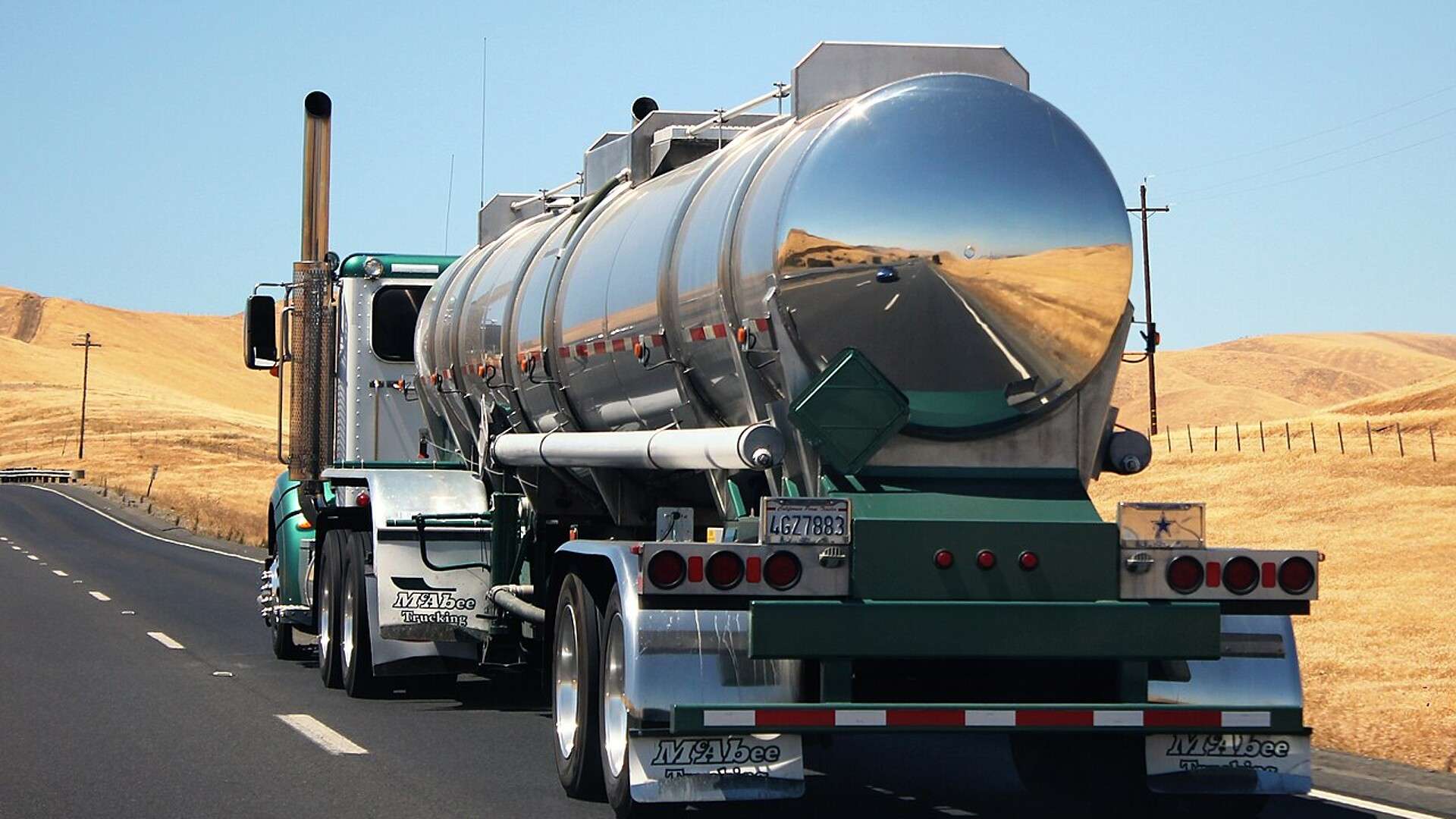
Lead image: A tanker truck on Interstate 5 in Fresno County, California. The truck in this photo is not connected to any crash in this story. Photo by Carlos ZGZ via Wikimedia Commons (CC0 public domain dedication).