
Chevrolet Corvette
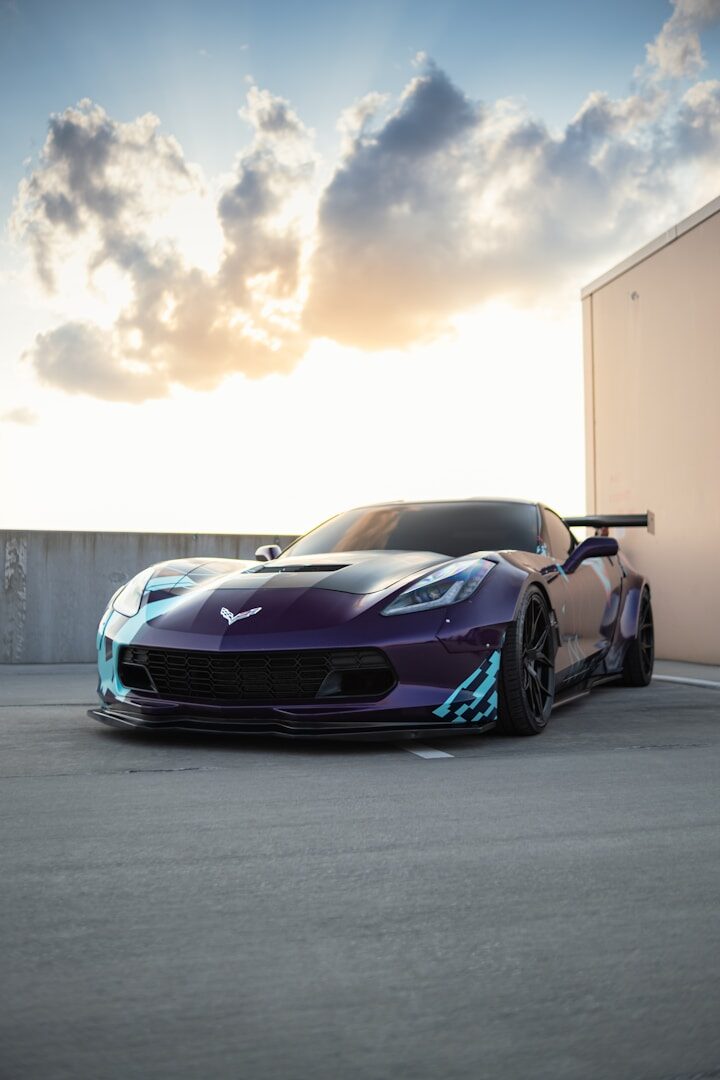
The Chevrolet Corvette is America’s most famous sports car and, in its current eighth-generation (C8) form, one of the most significant performance-car stories of the modern era. By moving the engine behind the driver, Chevrolet transformed the Corvette from a front-engine icon into a genuine mid-engine supercar challenger, all while keeping its trademark value proposition intact. This guide covers the full C8 lineup, including its history, powertrains, performance, interior, technology, safety, trims, pricing, competitors, and reliability, along with a detailed FAQ.
Specifications throughout are drawn from manufacturer information and independent testing by established outlets. Performance and pricing figures vary by model year, configuration, and options, so where a number cannot be confirmed with confidence we say so directly. Always verify current details with Chevrolet or an authorized dealer before making a purchase decision.
Overview
The eighth-generation Corvette (C8) launched for the 2020 model year as the first production Corvette with a mid-mounted engine. The lineup has since expanded into one of the broadest in the sports-car world. It begins with the rear-wheel-drive Stingray, adds the all-wheel-drive hybrid E-Ray, climbs to the naturally aspirated, flat-plane-crank Z06, and tops out with the twin-turbocharged ZR1. A further range-topping ZR1X, combining ZR1 power with E-Ray-style hybrid all-wheel drive, has been announced for the 2026 model year.
What unites the lineup is the C8’s mid-engine architecture, which improves weight distribution and traction and gives the Corvette the proportions and dynamics of cars costing far more. Despite that, the Stingray’s starting price keeps the Corvette accessible relative to European exotics, reinforcing the model’s long-standing reputation as a performance bargain.
Vehicle History
The Corvette debuted in 1953 and has been in continuous production through eight generations. For its first seven generations, the Corvette used a front-engine, rear-drive layout, evolving from a stylish boulevard cruiser into a serious performance machine through the small-block V8 era. Generations such as the C2 Sting Ray of the 1960s, the long-running C3, the modernized C4 and C5, and the highly capable C6 and C7 each advanced the formula while keeping the front-engine V8 character.
Engineers and enthusiasts had speculated about a mid-engine Corvette for decades. That car finally arrived with the C8 for 2020, a fundamental reinvention that relocated the engine behind the cockpit. The change allowed the Corvette to compete more directly with mid-engine exotics in handling and acceleration while retaining the value and usability that define the nameplate. The C8 has since spawned the most diverse Corvette lineup ever, including the brand’s first hybrid and electrified all-wheel-drive variants.
Latest Generation
The C8 Corvette is offered as a coupe with a removable roof panel and as a convertible with a power-retractable hardtop. The mid-engine layout dictates the car’s dramatic proportions, with a long rear deck housing the engine and a short, low nose. Storage is provided both in a front trunk (frunk) and behind the engine, giving the C8 surprising practicality for a mid-engine car, including enough room for golf clubs or luggage.
Across the lineup, the C8 uses an eight-speed dual-clutch transmission rather than a manual; Chevrolet did not offer a manual gearbox on the C8. The driver sits well forward in the chassis, contributing to the car’s responsive feel. Each variant builds on this shared architecture with different engines, suspension tuning, aerodynamics, and, in the case of the E-Ray and forthcoming ZR1X, electrified all-wheel drive.
Engine Options
The C8 lineup spans an unusually wide range of powertrains for a single model, from a naturally aspirated pushrod V8 to a flat-plane-crank race-bred engine, a hybrid, and a twin-turbo monster.
The Stingray uses a 6.2-liter LT2 V8 producing 490 horsepower, or 495 horsepower when equipped with the optional performance exhaust, along with 465 lb-ft of torque. The E-Ray pairs that 6.2-liter V8 with a front-axle electric motor to create the first electrified, all-wheel-drive Corvette, with a combined output of 655 horsepower. The Z06 is powered by a 5.5-liter LT6 V8 with a flat-plane crankshaft, producing 670 horsepower and revving to a remarkable 8,600 rpm, making it the most powerful naturally aspirated V8 ever fitted to a production Corvette. At the top, the ZR1 uses a twin-turbocharged 5.5-liter V8 (the LT7) rated at 1,064 horsepower.
Horsepower & Torque
| Model | Engine | Horsepower | Drivetrain |
|---|---|---|---|
| Stingray | 6.2L LT2 V8 | 490 hp (495 hp with performance exhaust) | RWD |
| E-Ray | 6.2L V8 + electric motor (hybrid) | 655 hp combined | AWD |
| Z06 | 5.5L LT6 flat-plane V8 | 670 hp | RWD |
| ZR1 | Twin-turbo 5.5L LT7 V8 | 1,064 hp | RWD |
All C8 variants use an eight-speed dual-clutch automatic transmission. The E-Ray’s hybrid system is oriented toward performance and all-weather traction rather than fuel savings, using the electric front axle to add power and grip.
Performance
The C8 delivers supercar-level acceleration across the lineup. Chevrolet quotes a 0-60 mph time in the high-2-second range for the Stingray with the Z51 package, and independent testing has recorded the E-Ray sprinting to 60 mph in well under 3 seconds, with Edmunds measuring 2.8 seconds and a quarter mile in the 10-second range. The Z06, with its high-revving flat-plane V8, is engineered for track performance, and Chevrolet has cited a quarter-mile time near 10 seconds. The ZR1, with over 1,000 horsepower, is the quickest and fastest Corvette ever built, with manufacturer top-speed claims well into supercar territory.
These figures place the Corvette among the quickest production cars available at any price. As always, instrumented results vary by tires, surface, temperature, and methodology, so published numbers should be treated as representative. The mid-engine layout, wide tires, and sophisticated traction and launch systems are central to the car’s ability to put its power down.
Fuel Economy
For the Stingray, EPA-style estimates are in the range of roughly 16 mpg city and 25 mpg highway, which is competitive for a V8 sports car. The E-Ray’s hybrid system is tuned primarily for performance and traction rather than efficiency, so buyers should not expect large fuel savings from it. The high-performance Z06 and ZR1 are designed for maximum output and will return lower figures, particularly when driven hard. Specific ratings vary by model year and configuration, so confirm current EPA numbers for the exact variant of interest.
| Model | Approx. City MPG | Approx. Highway MPG |
|---|---|---|
| Stingray | ~16 | ~25 |
| E-Ray | Performance-oriented hybrid; verify EPA rating | Verify EPA rating |
| Z06 / ZR1 | Lower; verify EPA rating | Lower; verify EPA rating |
Interior
The C8’s cabin marked a major step up from previous Corvettes in both design and materials. The driver-focused interior is famous for the long spine of climate controls running down the center, separating the driver from the passenger and reinforcing the cockpit feel. A digital instrument cluster sits ahead of the driver, with a touchscreen angled toward them for infotainment.
Seating options range from comfort-oriented buckets to aggressively bolstered competition seats suited to track use. Material quality is generally strong for the price, with available leather, suede-like microfiber, and carbon-fiber trim, though some reviewers note that the very expensive Z06 and ZR1 interiors do not fully match their lofty price tags against bespoke exotics. Despite being mid-engine, the C8 offers usable storage in both the front and rear compartments, contributing to its reputation as a genuinely usable everyday supercar.
Technology
The Corvette includes a touchscreen infotainment system with Apple CarPlay and Android Auto, a configurable digital gauge cluster, and an available head-up display. A standard front-axle lift system on many configurations raises the nose to clear driveways and speed bumps and can be set to remember locations using GPS.
Performance technology is a major focus. The C8 offers selectable drive modes, available Magnetic Ride Control adaptive suspension, launch control, and a Performance Data Recorder that can log video and telemetry on track. Higher trims add track-oriented aerodynamics and cooling. The E-Ray adds hybrid-specific features, including a Stealth Mode that allows limited low-speed electric-only driving.
Safety
The Corvette includes airbags, stability and traction control, and a rearview camera, with available driver-assistance features that can include forward-collision alert and other aids depending on configuration. As a low-volume sports car, the Corvette is not comprehensively crash-tested by every agency each year, so buyers should verify current NHTSA and IIHS information for the specific model year and body style.
The available front-lift system, rearview camera, and parking aids help with the practical challenges of a low, wide mid-engine car. As with any high-performance vehicle, the most important safety factor is appropriate driving for conditions, given the C8’s substantial power across the lineup.
Trim Levels
Rather than traditional trims, the Corvette lineup is organized by model: Stingray, E-Ray, Z06, ZR1, and the announced ZR1X. Within each, Chevrolet offers equipment groups (commonly designated by numbers such as 1LT, 2LT, and 3LT on the Stingray, with analogous tiers on other models) that bundle interior upgrades, audio, and convenience features. Performance packages such as the Z51 package on the Stingray add brakes, cooling, aerodynamics, and suspension tuning aimed at track capability.
Buyers can further personalize with carbon-fiber aero, special wheels, seat choices, and extensive color and trim options. The breadth of the lineup means a buyer can choose anything from a comfortable, attainable Stingray to a track-focused Z06 or a flagship ZR1.
Pricing
The Stingray starts around $69,995 (before destination), keeping the entry point to mid-engine performance remarkably low. The E-Ray begins near $108,795, reflecting its hybrid all-wheel-drive hardware. The Z06 starts around $112,100, and the range-topping ZR1 begins near $174,995 to $178,195 depending on body style and configuration. The forthcoming ZR1X is expected to sit at the very top of the range.
| Model | Approx. Starting MSRP |
|---|---|
| Stingray | ~$69,995 |
| E-Ray | ~$108,795 |
| Z06 | ~$112,100 |
| ZR1 | ~$174,995–$178,195 |
Pricing changes by model year, and high-demand variants can carry dealer market adjustments. Options add up quickly on the higher models. Confirm current MSRPs and availability with Chevrolet or a dealer before purchase.
Competitors
The Corvette’s broad lineup competes across several price brackets. The Stingray undercuts and challenges sports cars and entry exotics on a performance-per-dollar basis, while the E-Ray, Z06, and ZR1 reach into territory occupied by established European and Japanese performance brands.
| Vehicle | Layout | Notable Trait |
|---|---|---|
| Chevrolet Corvette | Mid-engine, RWD/AWD | Wide lineup; strong value for performance |
| Porsche 911 | Rear-engine, RWD/AWD | Benchmark breadth and build quality |
| Acura NSX (recent past) | Mid-engine hybrid | Hybrid AWD performance comparison |
| Mercedes-AMG GT | Front-engine, RWD/AWD | Luxury grand-touring performance |
| Audi R8 (recent past) | Mid-engine, AWD | Naturally aspirated mid-engine rival |
Against all of these, the Corvette’s signature argument remains value: it delivers mid-engine performance and, in higher trims, genuine supercar capability, typically at a lower price than comparably quick rivals.
Reliability
The Corvette benefits from being built by a major manufacturer with a broad dealer and service network, which can be an advantage over low-volume exotics for parts and maintenance. The Stingray’s 6.2-liter V8 is a well-understood engine family, while the Z06’s high-revving flat-plane V8 and the ZR1’s twin-turbo engine are more specialized, high-performance units.
As with any performance car, reliability and longevity depend on maintenance and how the car is used, with track use accelerating wear on consumables. Because the C8 introduced significant new technology, prospective buyers should review the specific model year’s recall history and current third-party reliability data for the most accurate picture.
Frequently Asked Questions
Is the Corvette now a mid-engine car?
Yes. The eighth-generation C8, launched for 2020, is the first production Corvette with the engine mounted behind the driver, a fundamental change from the previous seven front-engine generations.
Does the Corvette come with a manual transmission?
No. The C8 uses an eight-speed dual-clutch automatic across the lineup; Chevrolet did not offer a manual gearbox on this generation.
How much horsepower does the Z06 make?
The Z06 produces 670 horsepower from its 5.5-liter flat-plane-crank LT6 V8, which revs to 8,600 rpm and is the most powerful naturally aspirated engine ever fitted to a production Corvette.
What is the Corvette E-Ray?
The E-Ray is the first electrified, all-wheel-drive Corvette, pairing the 6.2-liter V8 with a front electric motor for a combined 655 horsepower. Its hybrid system prioritizes performance and traction over fuel savings.
How powerful is the ZR1?
The ZR1 uses a twin-turbocharged 5.5-liter V8 rated at 1,064 horsepower, making it the most powerful Corvette ever produced.
How fast is the Corvette 0-60?
The Stingray reaches 60 mph in the high-2-second range with the Z51 package, and the E-Ray has been independently tested at around 2.8 seconds. The Z06 and ZR1 are quicker still.
How much does a Corvette cost?
The Stingray starts around $69,995, the E-Ray near $108,795, the Z06 around $112,100, and the ZR1 near $174,995 to $178,195. Confirm current pricing with Chevrolet.
Is the Corvette a coupe or a convertible?
Both. The C8 is offered as a coupe with a removable roof panel and as a convertible with a power-retractable hardtop.
Does the Corvette have all-wheel drive?
The E-Ray is all-wheel drive thanks to its electric front axle, and the announced ZR1X also uses electrified all-wheel drive. The Stingray, Z06, and ZR1 are rear-wheel drive.
Is the Corvette practical for daily driving?
For a mid-engine car, yes. The C8 offers front and rear storage compartments, a comfortable ride in milder modes, and modern infotainment, making it usable as a daily driver, especially in Stingray and E-Ray form.
What is the difference between the Stingray and the Z06?
The Stingray uses a 490-to-495-hp pushrod 6.2-liter V8 and emphasizes value and everyday usability, while the Z06 uses a 670-hp flat-plane 5.5-liter V8 with track-focused chassis, aero, and tires at a much higher price.
What competitors should I cross-shop?
Depending on the variant, cross-shopped cars include the Porsche 911 and various European and Japanese performance and exotic models. The Corvette’s calling card against all of them is value.
Is the Corvette reliable?
It benefits from a major manufacturer’s parts and service network. Reliability depends on maintenance and use, and because the C8 introduced new technology, checking model-year-specific recall and reliability data is wise.
What is the ZR1X?
The ZR1X is an announced range-topping variant that combines the ZR1’s twin-turbo V8 with E-Ray-style hybrid all-wheel drive. Verify its final specifications and availability with Chevrolet.
Final Summary
The eighth-generation Chevrolet Corvette reinvented an American icon by going mid-engine, and in doing so created one of the most compelling performance-car lineups on sale. From the attainable, 490-to-495-horsepower Stingray to the all-wheel-drive E-Ray hybrid, the 670-horsepower flat-plane Z06, and the 1,064-horsepower twin-turbo ZR1, the C8 covers an extraordinary range of capability and price. Throughout, it preserves the Corvette’s defining value proposition, delivering performance that typically costs far more elsewhere. For buyers seeking supercar dynamics with everyday usability and the backing of a major manufacturer, the Corvette is a standout choice. As always, verify current model-year specifications, fuel-economy ratings, and pricing with Chevrolet or an authorized dealer before purchasing.