
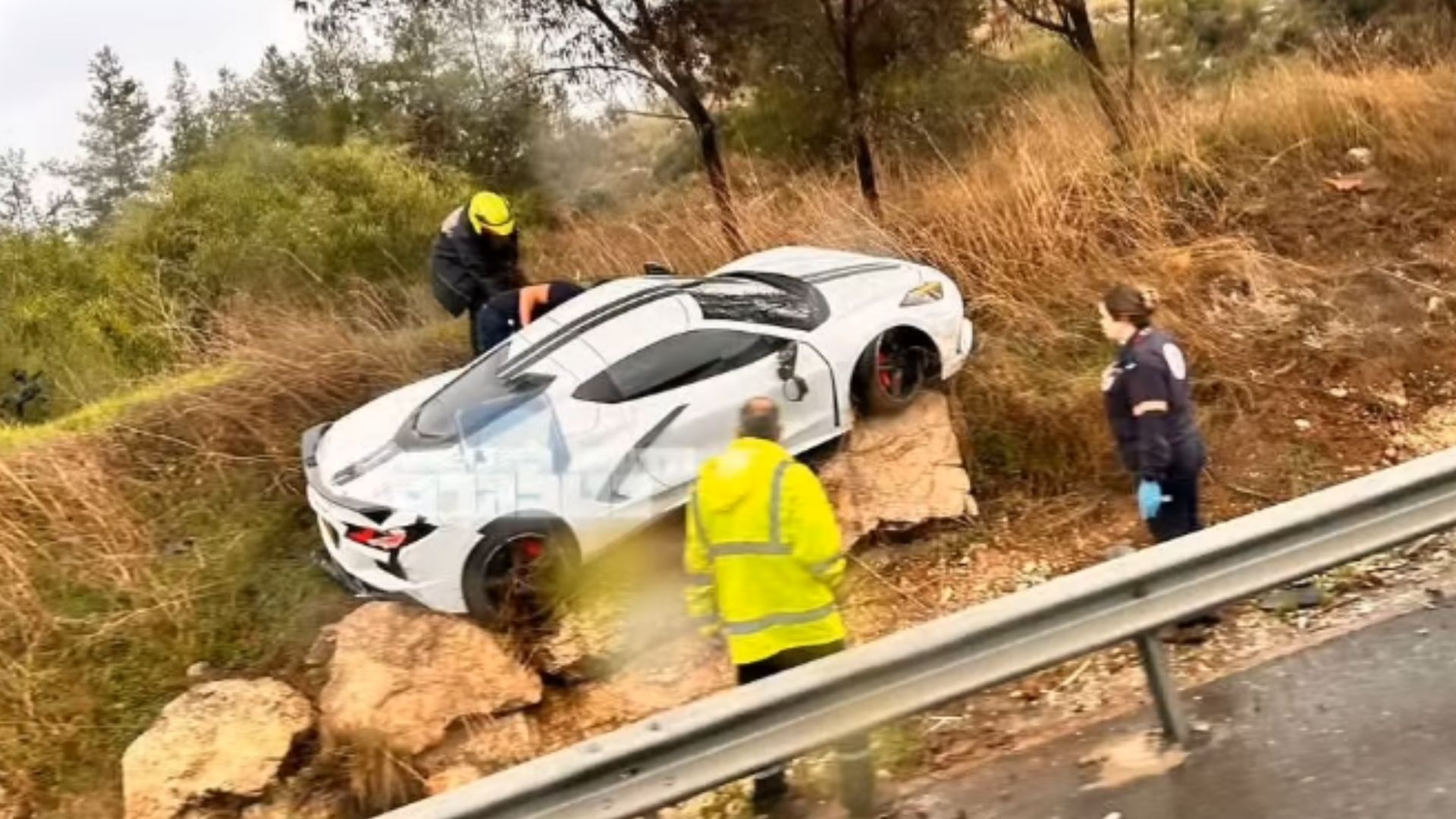
A C8 Corvette driver learned an expensive lesson about the limits of even the most capable sports cars’ ability to overcome the laws of physics when their Corvette hydroplaned on a wet highway surface and left the roadway. The incident, which was captured on footage that spread online, shows the Corvette’s driver losing control in conditions that are well within what drivers of less capable vehicles navigate safely every day, illustrating that the problem is not insufficient vehicle capability but insufficient adaptation of driving style to road conditions. The Corvette’s mid-engine layout and high-performance tires that make it exceptional on dry roads do not make it immune to hydroplaning.
Hydroplaning occurs when a wedge of water forms between the tire and the road surface faster than the tire’s tread design can displace it, causing the tire to lose contact with the pavement and the driver to lose directional control. The risk of hydroplaning increases with speed, with tire wear, and with standing water depth, and it applies to all tires on all vehicles — it cannot be avoided through sheer performance capability. The preventive measures are straightforward: reduce speed in wet conditions, maintain adequate tire tread depth, and avoid large puddles or standing water where possible. The driver’s C8 sustained damage that will require significant repair investment.
Comments are closed.