 By Shawn Henry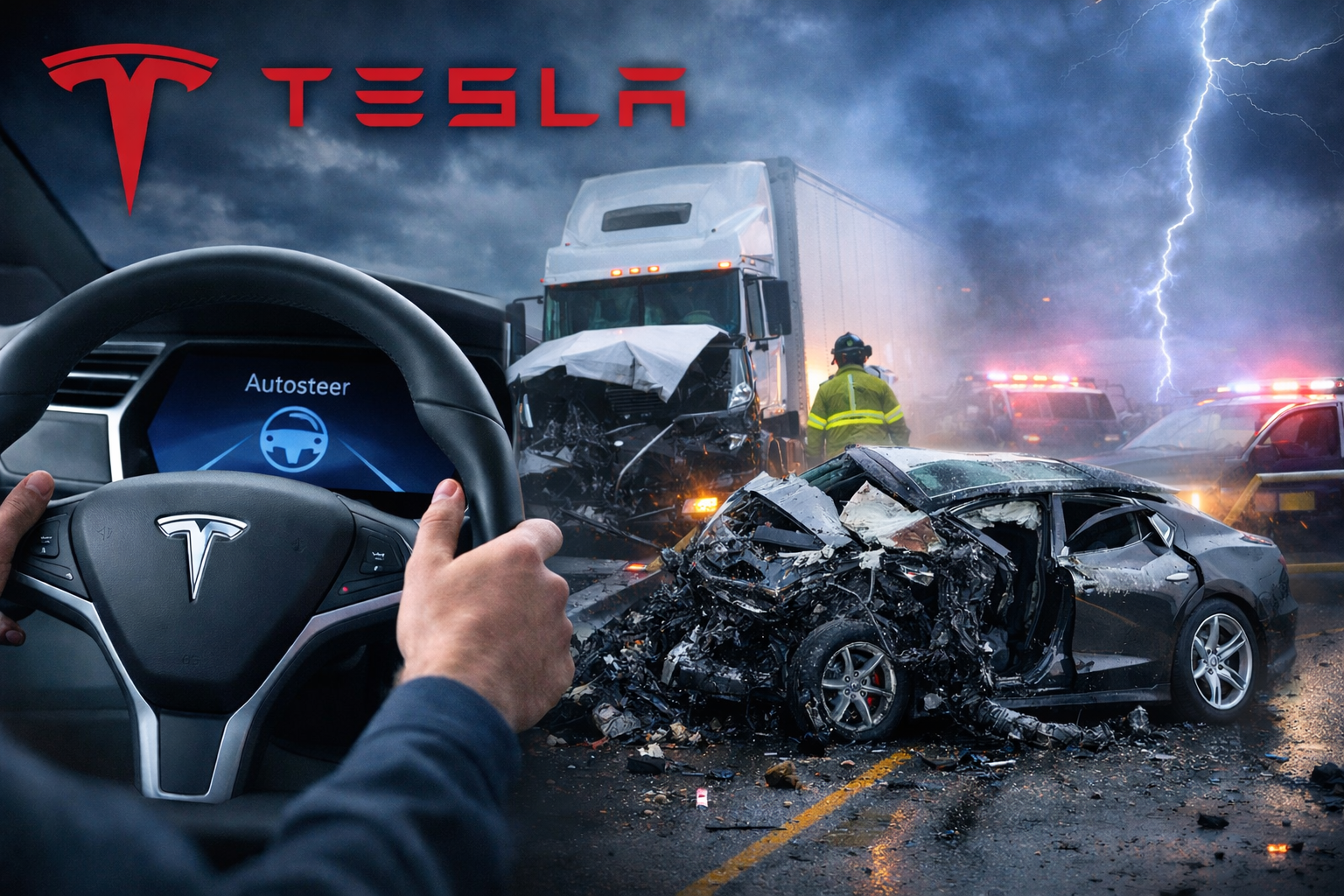
A wrongful death lawsuit filed by Idaho resident Nathan Blaine alleges that a Tesla Model X using one of the automaker’s driver-assistance features steered into oncoming traffic, causing a crash that killed nearly his entire family and their dog.
According to the complaint, the vehicle was operating with Tesla’s Autosteer feature enabled when it crossed the center line of Idaho State Highway 33 and collided head-on with an oncoming semi-truck hauling a 90,000-pound load. The impact crushed the front of the vehicle and killed all occupants inside, including Blaine’s wife, Jennifer, their two daughters, their son-in-law, and the family dog.
The lawsuit accuses Tesla and its chief executive, Elon Musk, of intentionally misrepresenting the safety and capabilities of Tesla’s driver-assistance systems. Blaine alleges those representations created a false sense of security that led his family to believe the technology was safer than a human driver.
The complaint focuses on Tesla’s Autosteer system, a lane-centering feature described by the company as capable of detecting lane markings, road edges, and nearby vehicles to keep a car within its lane. While Autosteer is considered less advanced than Tesla’s Autopilot or Full Self-Driving systems, the Blaines had purchased Full Self-Driving capability for the vehicle. The lawsuit alleges that regardless of which system was engaged, Tesla’s safety features failed to prevent the vehicle from leaving its lane.
Additional systems, including lane departure warning and emergency lane departure avoidance, are also cited in the filing as having failed to function as intended. The lawsuit argues that disengaging Autopilot or related features should not disable or weaken other safety systems designed to prevent exactly this type of collision.
The crash occurred just before 10 p.m. as the family was traveling east through a gentle curve in the roadway while heading to meet Nathan Blaine and one of their surviving sons for a backpacking trip. The vehicle abruptly veered into the opposite lane moments before the collision, according to the complaint.
The lawsuit also challenges Tesla’s branding and marketing practices, arguing that product names and public statements blurred the distinction between driver assistance and true vehicle autonomy. Tesla’s systems are classified as Level 2 under standards set by the Society of Automotive Engineers, meaning they require constant human supervision.
Regulators have previously raised concerns about Tesla’s marketing, including criticism from the National Transportation Safety Board and legal action by the California Department of Motor Vehicles over claims that driver-assistance features were misleading.
The lawsuit contends that the Blaine family was among the consumers influenced by years of messaging suggesting Tesla vehicles could effectively drive themselves, with tragic consequences in this case.
 Eve Nowell