 By Shawn Henry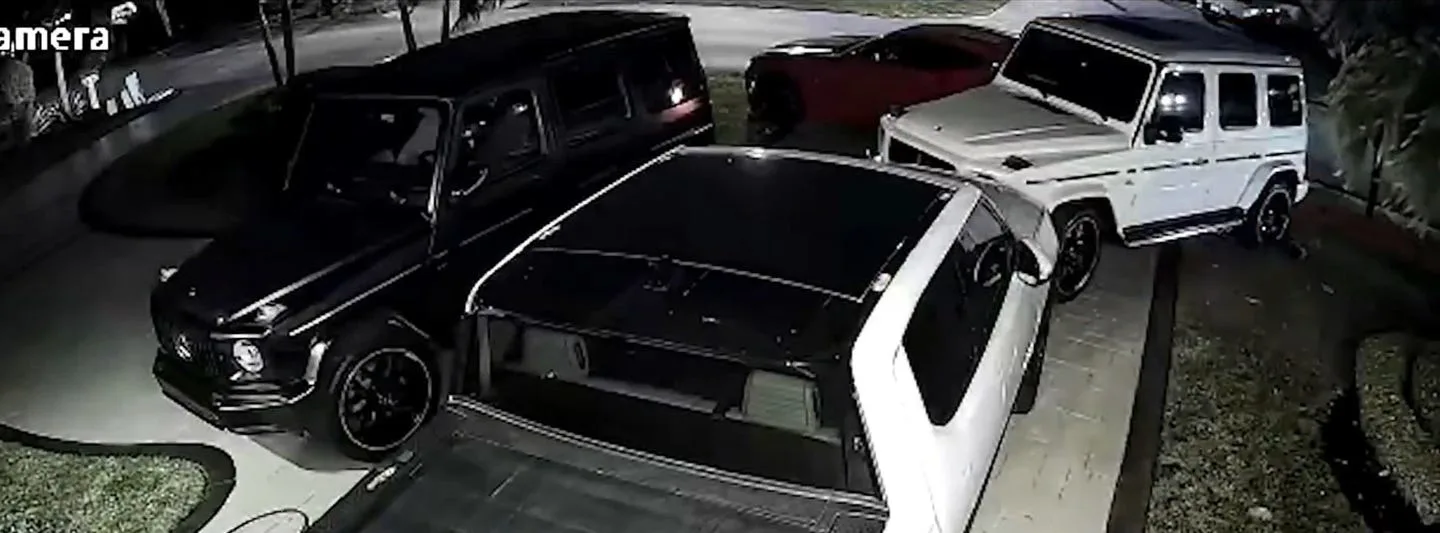
What happened in a quiet Miami-Dade driveway early February wasn’t random, and it shouldn’t be dismissed as another weird Florida crash. A Chevrolet Camaro was allegedly stolen, used as a weapon, and intentionally slammed in reverse into a parked Mercedes-AMG G63. That’s not reckless driving. That’s a coordinated attack—and it exposes a problem the auto industry has spent years dodging.
Surveillance footage shows two vehicles circling a home on West Oakmont Drive in Northwest Miami-Dade around 5 a.m. on Sunday, February 1. One of them, a red Camaro, made repeated passes before accelerating backward directly into a white Mercedes G-wagen parked in the driveway. The SUV had reportedly been purchased just three weeks earlier for $185,000.
The owners, Adrian Fatjo and Claudia Valeria, were asleep inside the home when it happened. After reviewing the video, they concluded the crash was deliberate, not a mistake. Investigators later told them the Camaro had been stolen from a nearby home just minutes earlier. The presence of a second vehicle suggests coordination, not coincidence.
This is where the industry failure becomes impossible to ignore. Car theft is no longer just about joyriding or stripping parts. Vehicles are being stolen easily, quickly, and then used to commit targeted crimes. That doesn’t happen by accident. It happens because modern vehicles are still rolling around with security vulnerabilities that criminals understand better than manufacturers seem willing to admit.
The owners say the Mercedes is already being repaired. That’s not the point. The real issue is safety. Masks, a stolen car, a second vehicle, and a deliberate impact in a residential driveway cross a line from property crime into personal threat. The couple is now offering a $15,000 reward for information leading to arrests, underscoring how seriously they view the danger.
Law enforcement is asking anyone with information to contact Broward County Crime Stoppers at 954-493-TIPS.
This incident isn’t just a bizarre crash. It’s a warning. Vehicles are becoming tools for criminals because the industry has allowed theft to become easy, fast, and low-risk. When stolen cars are used as weapons, the excuses run out. The reality is here—and the industry is being forced to face it.
 John Lloyd
  Eve Nowell