
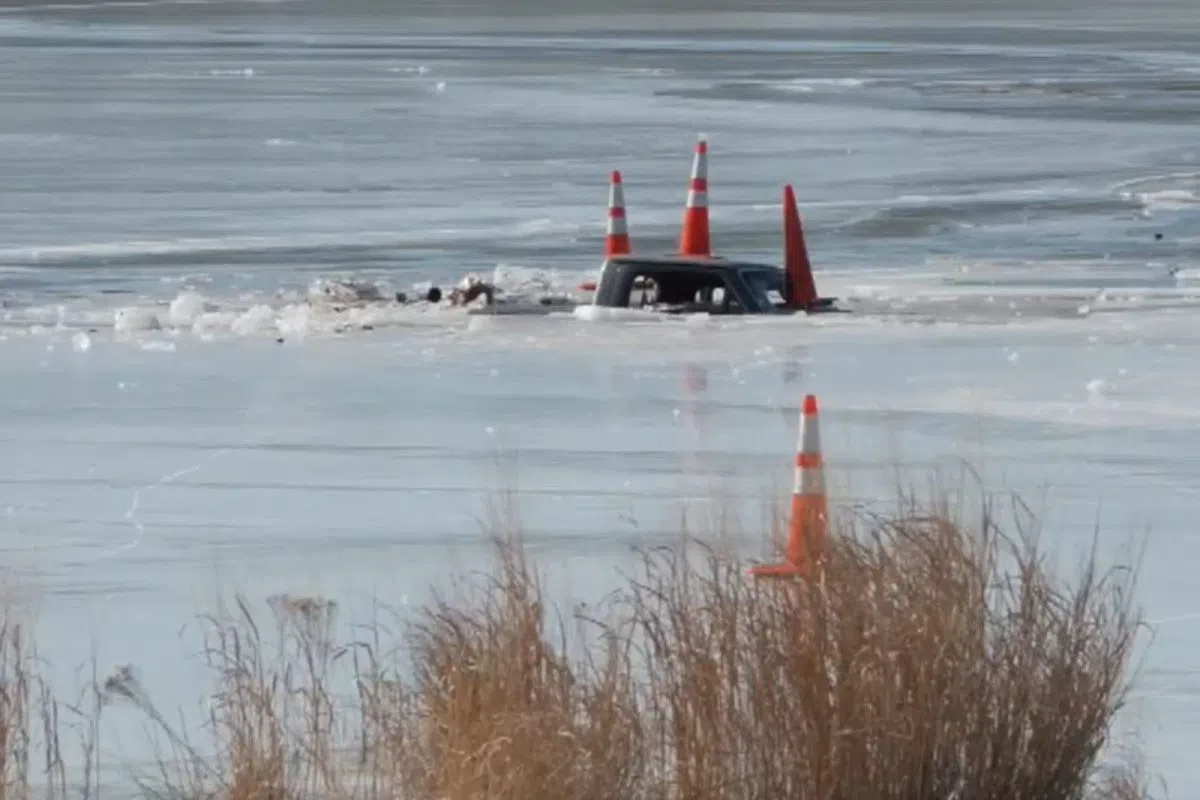
A pickup truck spinning donuts on a frozen lake at the Jersey Shore didn’t just fall through the ice. It fell straight through the illusion that this kind of behavior is harmless fun.
Stolen Corvette Is Vandalized and the Owner Is Left Paying the Price
A Predictable Result
The stunt, caught on camera and widely circulated, shows a pickup truck deliberately tearing across a frozen lake before the ice gives way beneath it. The result was entirely predictable. Ice conditions are unstable by nature. Vehicles are heavy. Gravity always wins in the end. Yet the driver pressed on anyway, turning a public space into a personal thrill ride at everyone else’s expense.
The Rescue That Almost Had to Happen
Local leaders and first responders were quick to criticize the incident, and for good reason. This wasn’t just about one reckless driver risking their own safety. It created a potential emergency scenario that could have forced first responders onto unstable ice themselves to attempt a rescue. That kind of response puts additional lives at risk and drains resources meant for genuine emergencies elsewhere.
Marketing Versus Physics
This is where responsibility becomes hard to avoid. Pickup trucks are aggressively marketed as unstoppable machines built to dominate terrain, shrug off conditions, and conquer anything in their path. That messaging looks great in commercials. In reality, it encourages exactly this kind of dangerous overconfidence. Ice doesn’t care about branding. Frozen lakes don’t bend to horsepower or four-wheel drive no matter what the truck ads suggest.
First responders have warned that if these stunts continue, the consequences could escalate quickly. A submerged vehicle, a trapped driver, or responders falling through the ice themselves would turn a viral video into a fatal incident in an instant. The danger here isn’t hypothetical. It’s immediate and fairly obvious to anyone thinking it through.
A Campaign That Shouldn’t Need to Exist
Local leaders are now calling for increased awareness efforts to address ice safety and discourage this kind of behavior going forward. That alone shows how far things have drifted. Communities shouldn’t need a public awareness campaign to explain that driving a truck in circles on frozen water is a bad idea.
This incident wasn’t a fluke. It was the logical outcome of a culture that celebrates reckless stunts, rewards attention-seeking behavior, and downplays real risk until something actually collapses. In this case, it was the ice. Next time, it could be a life. The takeaway is blunt: thrill-seeking with heavy vehicles on frozen lakes isn’t entertainment. It’s a public safety failure. And this time, the consequences were visible enough that leaders were forced to step in before someone pays an even higher price for it.