 By Shawn Henry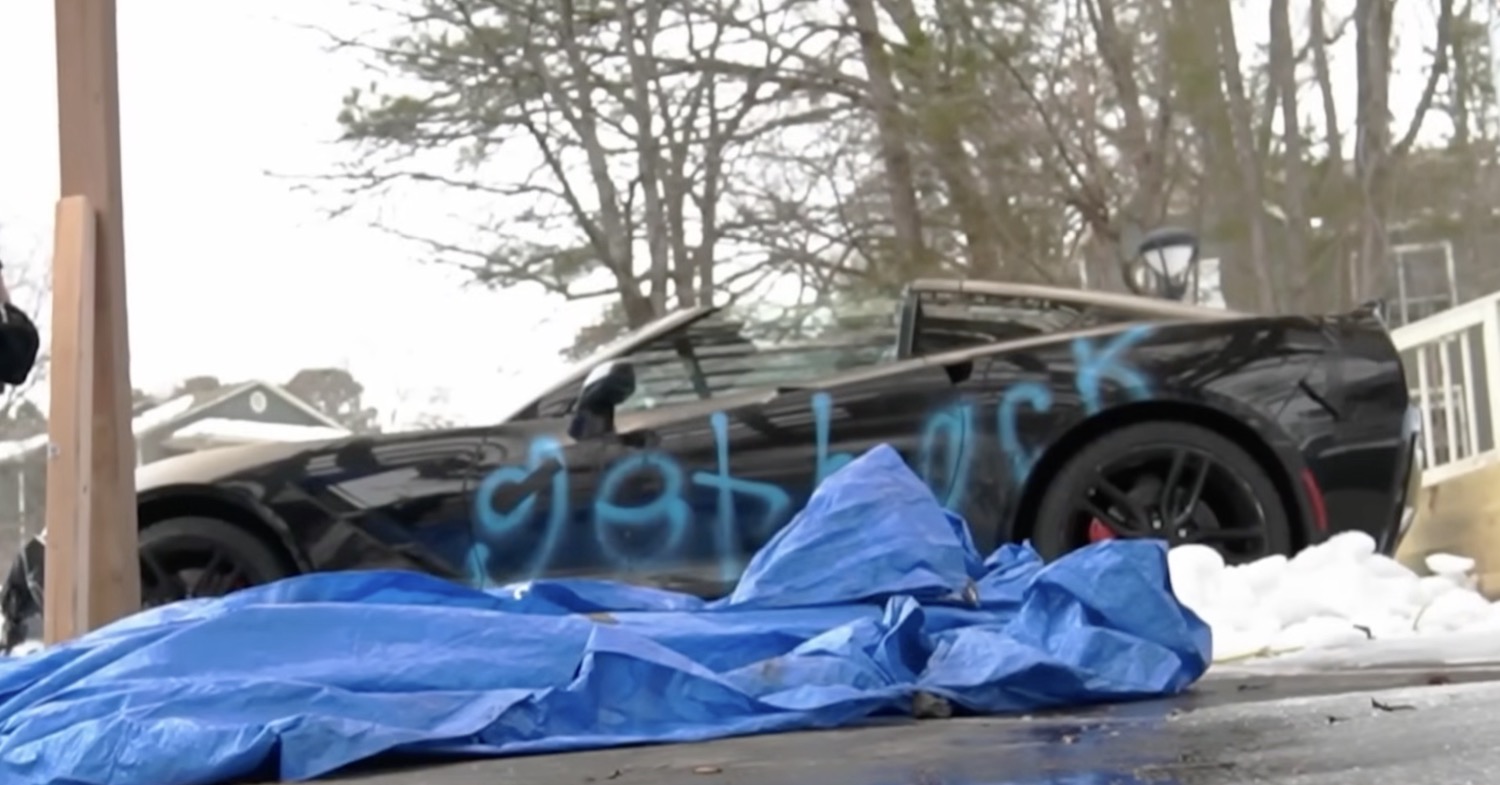
A stolen 2017 Corvette left vandalized in Richmond isn’t just another theft story. It’s a blunt example of how the fallout from auto crime lands squarely on owners while the system struggles to keep up.
The Virginia owner bought the C7 Corvette as a birthday gift to himself after serving in the U.S. Army. It was the exact car he wanted — black exterior, black interior, matching wheels, and a removable roof panel. A personal milestone, not just a purchase.
That sense of control disappeared early on Oct. 19 when the car was stolen. At first, the owner thought he may have parked it somewhere nearby and forgotten. After searching, it became clear the vehicle was gone.
Henrico Police located the Corvette later that same day in Richmond near West Marshall Street and Summit Avenue. It had been abandoned and heavily vandalized. Spray paint covered the body. Egg yolks were smeared across the exterior. Headlights were broken. The removable roof panel was missing. Damage estimates reached roughly $20,000.
Surveillance video reportedly showed masked individuals parking the vehicle and walking away. Police are now working to determine whether the car was used in other crimes while it was missing. The phrase “get back” was spray painted on the door, language sometimes tied to illegal street takeover activity.
More than three months later, the car still sits under a tarp. Some repairs are complete, but the remaining damage is not fully covered by insurance.
That’s where the reality sets in.
The owner is left paying for destruction he didn’t cause. Insurance gaps absorb the financial shock. And the same performance and image-driven appeal that made the Corvette desirable also made it a target.
This is the cost of auto theft in its current form. It’s not just about losing a vehicle for a few hours. It’s about vandalism, potential criminal use, and long-term financial damage that doesn’t disappear when the car is recovered.
The marketing sells freedom, performance, and aspiration. The aftermath shows the other side — owners dealing with tens of thousands in repairs, vehicles turned into props for vandalism, and crimes that unfold faster than prevention can keep up.
The Corvette was recovered. The damage remains. And the burden falls on the person who did everything right except assume the system would protect what he earned.
At some point, repeated incidents like this stop being isolated crimes and start looking like a systemic failure. The pressure builds until action isn’t optional — because when dream cars keep turning into crime scenes, the industry and public safety leaders don’t get to look away anymore.
 John Lloyd
  Eve Nowell