
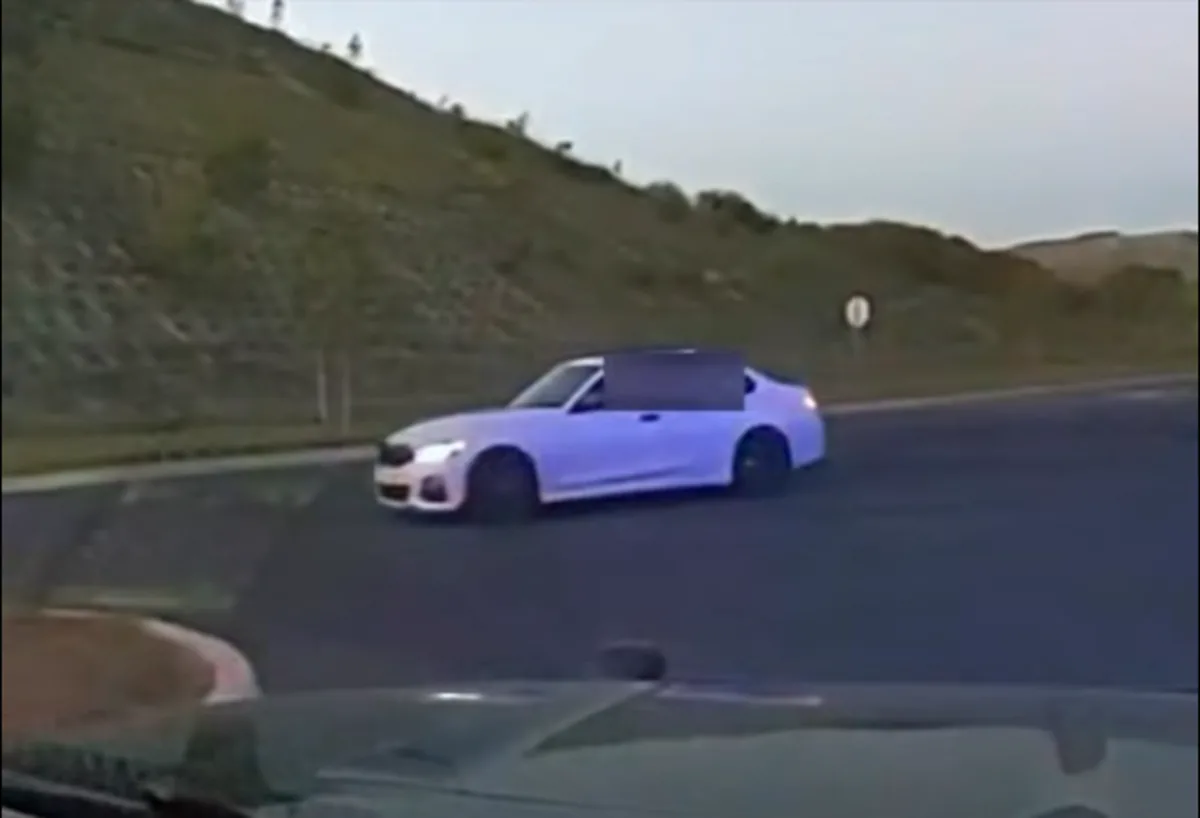
A few seconds of tire smoke at an Irvine intersection turned into a legal and financial mess that’s still unfolding. A juvenile driver was caught spinning donuts in a BMW near Jeffrey Road and Portola Parkway, and it didn’t take long for a patrolling officer to notice.
The stop itself was quick: the driver was detained, cited for reckless driving, and released to a parent. But that’s where the simple part ends. The BMW was impounded for 30 days, and a stunt that lasted only moments turned into a case with consequences that will stretch on far longer.
10 Best Safety Items for Your Car
Why This Is a Criminal Charge, Not Just a Ticket
A lot of young drivers assume reckless driving gets handled like a routine traffic stop. It doesn’t. California classifies it as a misdemeanor criminal offense, which changes the entire trajectory of the case.
This juvenile now has to appear before a juvenile hearing officer, turning what happened on the road into a formal legal proceeding rather than a quick fine-and-move-on situation. Two points land on the driving record immediately, and the court can layer on probation, community service, or a deferred judgment program, with community service requirements in cases like this sometimes running around 80 hours.
The part that tends to surprise families most is how long this follows the driver. A reckless driving conviction can sit on a record for 10 to 13 years, meaning a few seconds behind the wheel as a teenager can still show up on paperwork well into adulthood.
Parents End Up Holding the Bill
The juvenile was driving, but the financial exposure doesn’t stay with them. In California, parents typically absorb the immediate costs tied to incidents like this one.
Start with the impound: 30 days of towing and storage fees can climb into the thousands before the case even gets to court. Then add the fines, which officially range from $145 to $1,000 but routinely balloon higher once state and county fees get tacked on.
California’s vicarious liability laws add another layer entirely. Parents can be held financially responsible for damage their minor child causes, up to $25,000 for injury or property damage. No damage was reported in this particular case, but the legal exposure was real the moment the citation was written.
The Insurance Hit Is the Part Nobody Sees Coming
If the fines and impound fees feel steep, the insurance fallout is often worse, and it lasts longer. Reckless driving convictions in California have been tied to premium increases averaging around 184 percent, which works out to roughly $3,154 more per year for an affected household.
Good Driver discounts vanish immediately, stripping away one of the few cost-saving levers available for a young driver’s policy. In some cases, insurers decline to renew the policy at all, pushing the family toward high-risk options like SR-22 coverage, which carries elevated premiums for years afterward. The damage here isn’t a single hit, it’s a slow drain that can outlast the original citation by a decade.
Street Stunts Keep Colliding With Real Consequences
This case fits into a pattern that keeps showing up across car culture. Donuts, street takeovers, and public stunts have gotten more visible, partly thanks to social media’s appetite for a few seconds of chaos. What gets lost in the moment is how fast enforcement can escalate things once police get involved.
Car culture has always had room for performance and skill. But once that spills onto public roads, it invites scrutiny and penalties that reach well beyond the driver who made the call.
The Bottom Line for Drivers and Parents
For young drivers, this case is a blunt illustration of how quickly a single decision can spiral into court dates, a decade-plus mark on a driving record, and a financial bill that keeps growing long after the tires stop smoking. For parents, it’s a reminder that handing over the keys comes with legal and financial ties that don’t disappear once the car is in someone else’s hands.
The law doesn’t measure how fun a stunt looked or how briefly it lasted. It measures risk and consequence, and in this case, a few seconds of donuts turned into a criminal charge, thousands of dollars in exposure, and a financial shadow that could follow the family for years.