 By Eve Nowell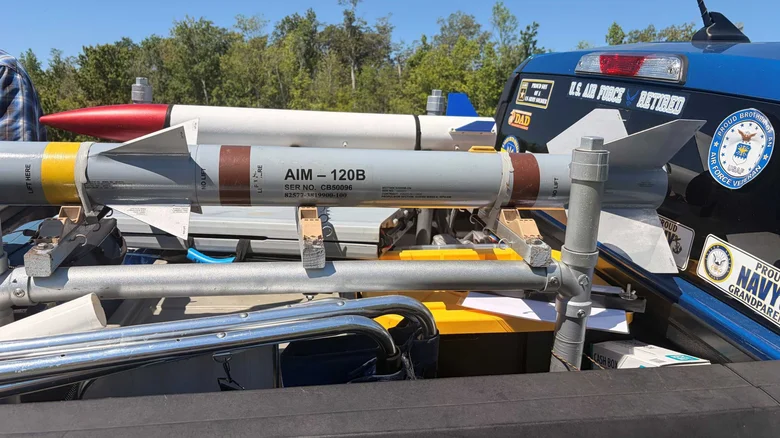
A routine traffic stop in Florida turned into something far bigger when a pickup truck rolled down the road carrying what appeared to be mounted missiles in plain sight. Not hidden, not disguised, just sitting openly in the bed like it belonged there. That alone was enough to set off alarms. What followed was not just a simple pull-over. It escalated fast, and for good reason.
Florida Highway Patrol spotted the truck and made the stop immediately. From their perspective, there was no room to hesitate. A vehicle carrying what looked like military-grade hardware is not something you wave past. Even in a state known for unusual roadside moments, this crossed into territory that demands a response. Once officers approached and got a closer look, the situation did not calm down. It intensified.
Related Incidents
- $3 Million Lawsuit Hits Delaware Dealership Over Alleged Double Financing Scheme
- Trump Could’ve Blocked It — Instead, Vehicle Surveillance Mandates Are Advancing
Multiple agencies were called in almost immediately. Bomb squad units, local police, sheriff’s deputies, and fire crews all responded. At that point, this was no longer about a traffic violation. It had turned into a full-scale safety situation with the potential to go very wrong. That is the kind of escalation that happens when something looks like a credible threat. And from a distance, that is exactly what this looked like.
The driver, later identified as Michael Nipper, offered an explanation that could have gone either way. He told officers the missiles were not real. According to him, they were plastic models built for shows or events.
That might sound like the kind of excuse that makes things worse. In most cases, it probably would. But here’s where things change. The claim held up under scrutiny.
Bomb squad personnel inspected the items and confirmed there were no explosives, no active components, and no immediate danger. The missiles were replicas. Highly realistic ones, but still just models. That detail matters. It meant the situation shifted from a potential emergency to a serious lapse in judgment.
Still, the fact that the objects were fake did not undo what had already happened. By the time authorities confirmed there was no threat, a full response had already been deployed. Resources were committed. Roads were likely disrupted. Attention was pulled from other potential emergencies. All because of how something looked.
This is where the story turns. The issue was never just about what was in the truck. It was about perception. Anyone seeing that vehicle on the road would have had no way to tell the difference between a harmless display piece and something far more dangerous.
More Stories Like This
- GM’s EV Truck Future Suddenly Looks Uncertain as Reports Clash With Company Denials
- Brand-New Ram 1500 Triggers Airbags on the Highway—Now Owner Is Stuck With a $20K Shock
- Toyota’s $200K GR GT Supercar Might Reject Buyers—And That’s Exactly the Point
And people did notice. Calls came in from concerned individuals who saw the setup and reported it. That reaction was predictable. In fact, it was exactly what public safety systems are designed for. When something looks like a threat, people are supposed to say something. From there, the chain reaction takes over.
The truck itself did not help matters. The Ford Maverick was reportedly covered in military-style decals, adding to the overall impression. Combined with the missile replicas, the visual effect pushed the situation even further into gray territory. It looked convincing enough to trigger concern, and that was enough.
There are also indications that Nipper may have some form of military background. That detail does not change the legality of the situation, but it adds another layer of confusion. It raises a basic question about intent and awareness. Someone with that kind of background would likely understand how something like this might be perceived in public. And yet, it happened anyway.
No arrests were made in the end. Once the items were confirmed to be harmless, the situation de-escalated from a legal standpoint. But that does not mean it ended quietly.
Officers made it clear that this kind of setup is not acceptable on public roads. You cannot drive around with objects that convincingly resemble weapons systems and expect it to be ignored. Even if the intent is harmless, the impact is anything but.
This is where the broader issue comes into focus. Public roads are shared spaces. What one driver sees as a creative project or display piece can easily be interpreted by others as a serious threat. And once that perception takes hold, the consequences follow quickly.
Emergency services do not get the luxury of assuming something is fake. They respond based on risk, not intention. That means every call, every report, and every suspicious sighting has to be treated as real until proven otherwise.
That process costs time, attention, and resources. It also introduces unnecessary risk for the responders involved.
You Should Read This Next
- Shell’s 10-Minute Charging EV Isn’t Just a Concept—It’s a Warning Shot to the Entire Industry
- Volkswagen Walks Away From Bugatti After 28 Years, Leaving the Hypercar Icon Facing an Uncertain Future
There is also the driver responsibility angle. Enthusiasts often push boundaries when it comes to customization and expression. That is part of car culture. But there is a line where creativity starts to create problems instead of turning heads. Driving a truck with realistic missile replicas crosses that line.
The takeaway here is simple, even if the situation itself was anything but. If something looks like a threat, it is going to be treated like one. It does not matter if it is plastic, decorative, or built for a show. The moment it hits a public road, context changes.And that shift can turn a personal project into a public safety response in seconds.
In this case, nobody was hurt. No charges were filed. But it still became a situation that pulled in multiple agencies and forced a serious response.
That is not harmless. That is a warning.
And now there is at least one driver in Florida who understands exactly how far that line can stretch before it snaps.
Continue Reading: Jeep Wrangler Gets Stuck, Then Ignites 20-Acre Wildfire in Florida Forest
 Shawn Henry
  John Lloyd