 By John Lloyd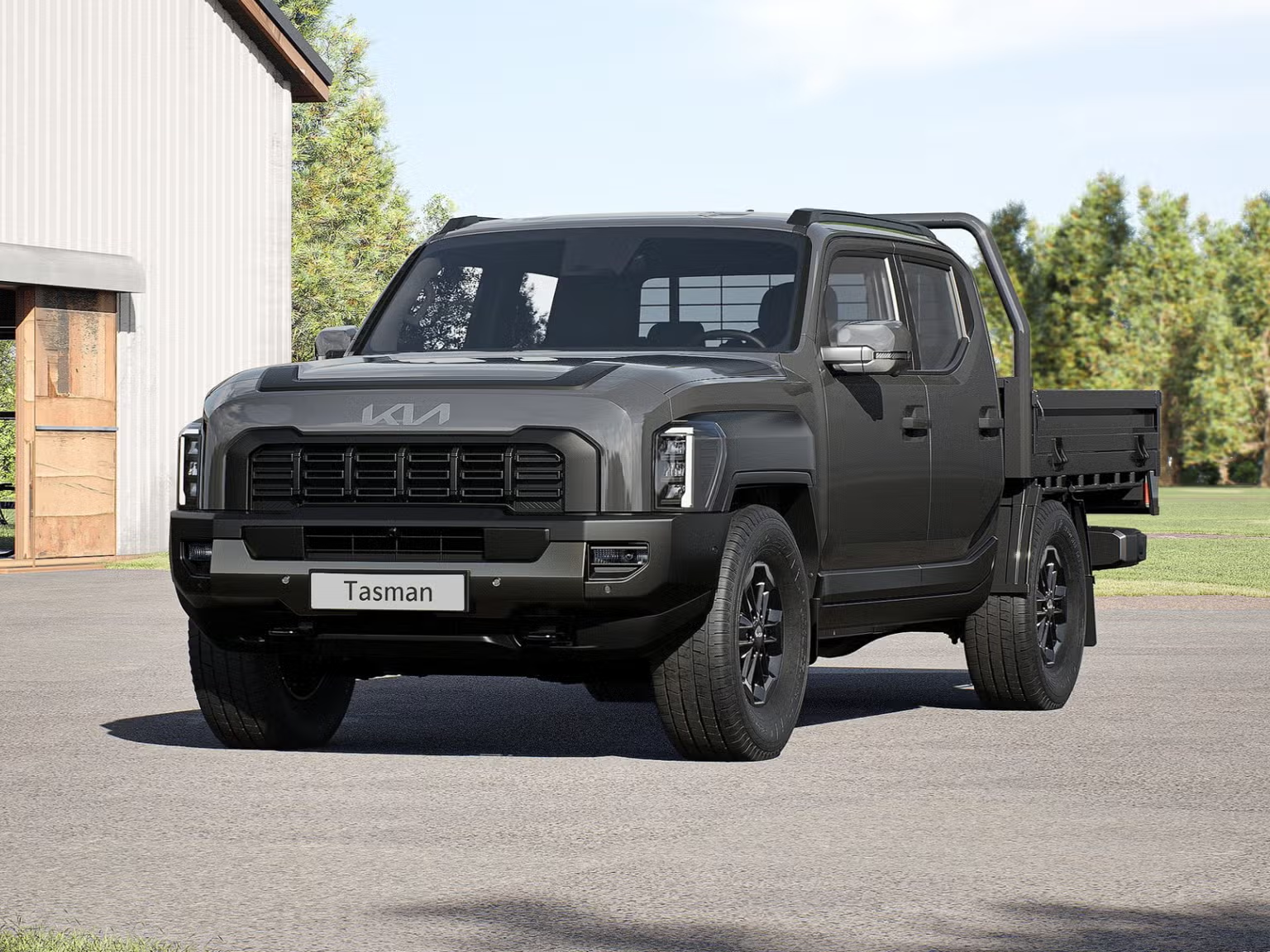
Kia built its recent success by breaking into crowded segments and winning. That streak just hit a wall. The company’s first pickup, the Tasman, is off to a rough start, and the numbers out of Australia are hard to ignore.
This is not a small miss. It is a sharp reality check in one of the most competitive truck markets on the planet. Australia loves midsize pickups, and it rewards the brands that deliver exactly what buyers expect. Right now, Kia is not getting that reward.
More Stories Like This
- GM’s EV Truck Future Suddenly Looks Uncertain as Reports Clash With Company Denials
- Brand-New Ram 1500 Triggers Airbags on the Highway—Now Owner Is Stuck With a $20K Shock
- Toyota’s $200K GR GT Supercar Might Reject Buyers—And That’s Exactly the Point
The Tasman launched with high expectations. Kia aimed to move 20,000 units a year in Australia. That is an ambitious target, but not unrealistic if the product connects. In March, the Tasman managed just 399 sales. That is not just below target. It is nowhere near the pace needed to stay relevant in this segment.
Look at what it is up against. The Toyota HiLux and Ford Ranger each cleared more than 4,000 units in the same month. That gap is massive. It is not even a close fight. Other players like the Isuzu D-Max and Mitsubishi Triton are also comfortably ahead. The Tasman is not just trailing the leaders. It is getting buried in the middle of the pack.
This is where the story turns. Kia is not pretending everything is fine. The company knows exactly where it is falling short, and it is not pointing fingers at just one issue.
Related Incidents
- $3 Million Lawsuit Hits Delaware Dealership Over Alleged Double Financing Scheme
- Trump Could’ve Blocked It — Instead, Vehicle Surveillance Mandates Are Advancing
There has been a lot of talk about the Tasman’s design. It stands out, and not everyone is sold on it. Some observers believe that styling has played a role in the slow start. Kia pushed back on that idea late last year and made it clear a redesign is not being rushed. That tells you something. The company is betting the look is not the core problem.
Instead, the focus is shifting to where the real truck buyers are. Kia says it has done well with lifestyle customers, the kind of buyers who already trust the brand. That group is not enough to carry a pickup. Trucks live or die on work credibility.
Here’s the part that matters. Kia admits it needs to improve in fleet sales, agricultural use, and provincial markets. Those are not side categories. That is the backbone of pickup demand in Australia. Farmers, tradespeople, and fleet operators are not buying based on design flair or brand curiosity. They buy what works, what lasts, and what they already trust.
And that’s where it gets complicated. Breaking into those markets is brutally difficult. Established brands have spent decades building reputations with these buyers. Ford and Toyota did not get there overnight. They earned it through years of consistent performance and reliability in tough conditions.
Kia is walking into that fight as a newcomer. That alone puts it at a disadvantage. Even if the product is competitive on paper, trust is not built on paper. It is built over time, job after job, year after year.
That detail matters because it explains why cheaper, more traditional pickups are still winning. Models like the HiLux and Ranger are not just popular. They are proven. Buyers know what they are getting. Capability, durability, and value come first. Right now, the Tasman has not convinced enough buyers that it belongs in that conversation.
The consequence is clear in the sales data. When a truck fails to connect with core users, volume disappears quickly. Lifestyle buyers can only carry so much weight, and they tend to be more flexible in their choices. The work crowd is not.
You Should Read This Next
- Shell’s 10-Minute Charging EV Isn’t Just a Concept—It’s a Warning Shot to the Entire Industry
- Volkswagen Walks Away From Bugatti After 28 Years, Leaving the Hypercar Icon Facing an Uncertain Future
There is also a bigger lesson here, and it is not limited to Australia. Pickup buyers around the world show a level of brand loyalty that is hard to crack. The U.S. market proves it every year.
Look at what happened when Ford and Hyundai entered the compact pickup space around the same time. The Ford Maverick quickly pulled ahead and stayed there. The Hyundai Santa Cruz has struggled to keep up. That gap is not just about product. It is about trust and familiarity.
Kia is now facing a similar uphill battle with the Tasman. And it is not getting easier from here. The company is also preparing a body-on-frame midsize pickup for future markets. If the Tasman’s early performance is any indication, that next launch could run into the same resistance.
This is where the stakes get real. If Kia cannot break into the core truck audience, it risks being stuck on the outside of one of the most profitable segments in the industry. Pickups are not just another category. They are a foundation for many brands.
Kia has proven it can disrupt sedans and SUVs. That playbook does not automatically translate to trucks. The expectations are different. The buyers are tougher. The loyalty runs deeper.
For now, the Tasman is a reminder that even a fast-rising brand can stumble when it steps into unfamiliar territory. The product may improve. Sales may climb over time. But none of that happens quickly in the truck world.
Earning respect here is slow, and there are no shortcuts.
Right now, Kia is learning that the hard way.
Continue Reading: Jeep Wrangler Gets Stuck, Then Ignites 20-Acre Wildfire in Florida Forest
 Shawn Henry