
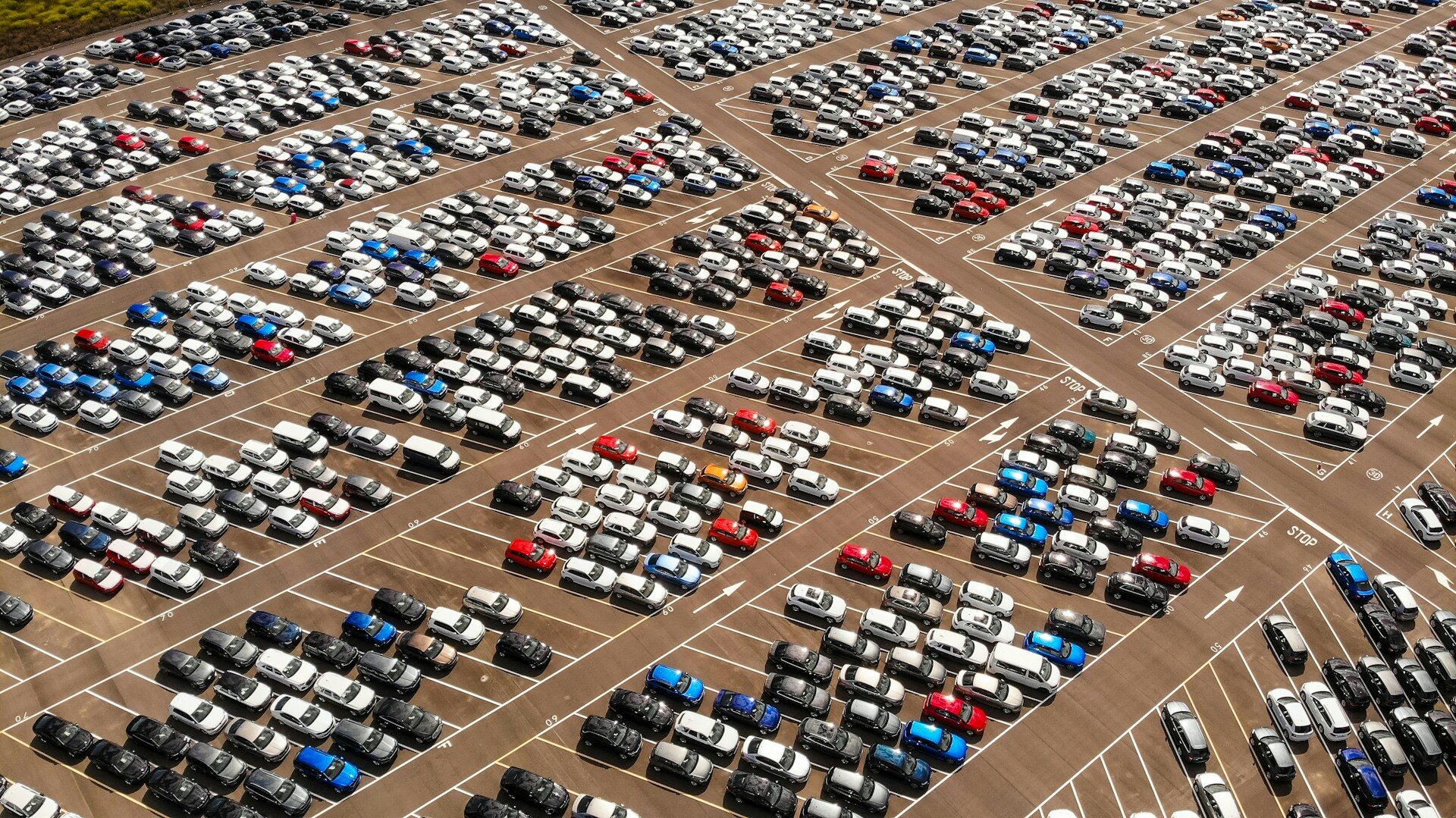
Vehicle safety recalls are simply a constant part of owning a car in the United States. At any given time, the National Highway Traffic Safety Administration (NHTSA) is tracking thousands of open recall campaigns, with new ones announced on nearly every business day. This roundup covers some of the largest and most serious active recalls affecting popular vehicles right now, explains the underlying risk behind each one, and walks through exactly what affected owners should do next. Treat this as a snapshot of the recalls generating the most attention, not a complete catalog of everything currently open. The only way to know for certain whether a specific vehicle is affected is to run its Vehicle Identification Number through the NHTSA free lookup tool, covered in detail below.
How to check if your car has an open recall
The single most reliable step any owner can take is to look up their Vehicle Identification Number (VIN). Visit nhtsa.gov/recalls and enter your 17-character VIN, found on the lower-left corner of the windshield or on your registration and insurance cards. The tool will report any unrepaired safety recalls tied to that exact vehicle. A result of zero unrepaired recalls means there is nothing outstanding for that VIN, though newly announced campaigns can take time to populate, so it is worth checking roughly twice a year.
Recall repairs are free. Federal law requires the manufacturer to fix a safety defect at no cost by repairing it, replacing the part, refunding the purchase price, or in rare cases repurchasing the vehicle. Owners are notified by first-class mail, usually within 60 days of the manufacturer reporting the recall to NHTSA, and the repair is carried out by a franchised dealer. You do not need to be the original owner to qualify.
The most serious open recalls: fire risk and “do not drive” warnings
A small number of recalls are severe enough that the manufacturer tells owners to park the vehicle away from structures, or in the most extreme cases to stop driving it entirely until repairs are made. These deserve the most urgent attention.
Jeep Wrangler 4xe and Grand Cherokee 4xe high-voltage battery fire risk
Stellantis has recalled certain 2020-2025 Jeep Wrangler 4xe and 2022-2026 Grand Cherokee 4xe plug-in hybrids because the high-voltage battery can fail internally and lead to a fire while parked or driving (NHTSA campaign 25V741000). Owners of these plug-in hybrids have been advised to follow the interim guidance in their notification, which typically includes limiting charging and parking away from structures and other vehicles until the remedy is available.
Jeep Wrangler and Gladiator steering-pump fire risk
A separate and very large Stellantis recall covers certain 2021-2025 Jeep Wrangler, Wrangler 4xe and Gladiator vehicles, where the electric hydraulic power steering pump wiring may overheat and cause a fire even when the vehicle is parked and switched off (NHTSA campaign 26V363000). We covered the scale of this campaign in detail in Jeep’s recall of more than a million Wranglers and Gladiators over fire risk. Owners should watch their mail for remedy instructions and contact a dealer promptly.
Kia Telluride power-seat fire risk
Kia recalled certain 2020-2024 Telluride SUVs because the front power-seat motor can overheat if the seat slide knob becomes stuck, creating a fire risk whether the vehicle is parked or being driven (NHTSA campaign 24V407000). Affected owners were advised to park outside and away from structures until repaired.
Engine-failure recalls affecting trucks and SUVs
GM 6.2-liter V8 engine failure
General Motors recalled certain 2021-2024 Cadillac Escalade and Escalade ESV, Chevrolet Silverado 1500, Suburban and Tahoe, and GMC Sierra 1500, Yukon and Yukon XL models equipped with the 6.2-liter V8, because connecting rod or crankshaft manufacturing defects can lead to engine damage and failure (NHTSA campaign 25V274000). This campaign has drawn federal scrutiny over whether the fix fully resolves the problem, which we explored in regulators reexamining the GM 6.2L V8 after reports of failures following recall repairs.
Nissan Rogue VC-Turbo engine and throttle defects
Nissan has issued multiple recalls covering Rogue crossovers with the variable-compression turbo engine. Affected vehicles include certain 2021-2024 Rogues where engine bearing defects can lead to engine failure (NHTSA campaign 25V437000), 2023-2025 Rogues where oil breakdown can cause bearings to seize (26V080000), and 2024-2025 Rogues where the electronic throttle body gears can break (26V081000). We broke down the combined campaign in Nissan’s recall of more than 640,000 Rogue SUVs for engine and throttle issues.
Kia Telluride engine valve springs
Certain 2024 Kia Telluride models were recalled because the engine valve springs can break while driving, which may cause a loss of drive power and potentially punch a hole in the engine block (NHTSA campaign 24V077000).
Airbag and seat-belt recalls
The long-running Takata airbag recall
NHTSA continues to spotlight the Takata airbag inflator recall, one of the largest in U.S. history, covering tens of millions of vehicles across many brands. The inflators can rupture and send metal fragments into the cabin. If you own an older vehicle and have never had a Takata-related repair, a VIN check is essential — and GM has more recently widened a related airbag campaign, as we reported in GM expanding its airbag recall after new testing uncovered additional rupture risk.
Stellantis steering-column airbag
A wide Stellantis recall covers certain 2023-2024 Ram 1500, Jeep Wrangler, Wagoneer and Grand Wagoneer, Chrysler Pacifica and several Ram chassis-cab models, where an improperly welded steering-column control module can prevent the driver’s airbag from deploying in a crash (NHTSA campaign 24V199000).
Honda seat belts and seat fasteners
Honda recalled certain 2023-2024 Accord and HR-V models for front seat-belt pretensioners missing a securing rivet (NHTSA campaign 23V782000), and a broader group of 2023-2024 Accord, Civic, Pilot and related Acura models where the driver’s seat cushion frame may not have been tightened properly, leaving the seat unsecured (24V859000).
Rearview camera and software recalls
One of the most common recall themes across nearly every automaker right now involves the rearview camera failing to display, freezing, or showing a delayed or inverted image when the vehicle is in reverse — a violation of the federal rear-visibility standard. Affected campaigns include large Ford software recalls spanning the Bronco, F-150, Escape, Explorer, Mustang Mach-E and more (NHTSA campaigns 25V315000 and 25V442000), Tesla Model 3, S, X and Y (25V002000), Nissan Rogue and Infiniti QX80 (24V748000), and a Toyota, Lexus and Subaru Solterra campaign covering vehicles with the Panoramic View Monitor (25V744000). Many of these are fixed with a free software update, sometimes delivered over the air.
Suspension, steering and rollaway recalls
Honda rear suspension rust
Honda recalled roughly 880,000 Pilot, Passport, Ridgeline and Acura MDX vehicles in salt-belt states because corrosion at the rear subframe could lead to suspension failure. Full details and the affected model breakdown are in our report on Honda’s 880,000-vehicle rear suspension rust recall.
Ford Bronco control-arm and suspension recalls
Ford issued several Bronco suspension recalls, including a “park it” advisory for certain 2024-2025 Broncos where improperly tightened front lower control-arm fasteners could allow the control arm to detach from the frame (NHTSA campaign 25V308000), plus related front upper control-arm ball-joint campaigns affecting the Bronco and Ranger.
Hyundai and Honda power-steering loss
Hyundai recalled certain 2024 Tucson and Santa Cruz models for a power-steering circuit board that can short and cause a loss of steering assist (NHTSA campaign 24V412000), while Honda recalled a wide range of 2022-2025 Civic, CR-V, HR-V and Acura Integra models for a steering gearbox that can cause excessive friction and difficulty steering (24V744000).
Rollaway risks
Several recalls involve vehicles that may roll away even when shifted to park. Examples include certain Ford F-150, Mustang, Explorer and Bronco models with a loose transmission bolt (NHTSA campaign 23V070000), Kia Telluride driveshaft engagement (24V214000), and Hyundai Santa Fe transmission software (24V529000). Ford also recalled hundreds of thousands of electrified vehicles over an unintended-movement software issue, covered in Ford’s recall of nearly 273,000 vehicles over rollaway risk.
Fuel-system and towing recalls
Fuel leaks are another recurring theme. Honda recalled certain 2023-2024 Accord, CR-V Hybrid and 2025 Civic models for a high-pressure fuel pump that can crack and leak (NHTSA campaign 24V763000), and certain 2023-2025 Pilot and Passport models for a fuel filler neck that can separate (24V900000). Ford recalled 2024 Maverick trucks for fuel tanks that can leak through an open pinch joint (24V185000).
Towing-related recalls have also been significant. Stellantis recalled close to half a million Ram and Jeep vehicles over a towing-related safety defect, detailed in nearly half a million Ram and Jeep vehicles recalled over dangerous towing risk, and Ford recalled a broad swath of F-Series, Maverick, Ranger and Lincoln models for an integrated trailer module that can lose communication and cause a loss of trailer brake or lighting function (NHTSA campaign 26V104000).
More recent campaigns worth checking
Recall activity remains heavy across the industry. Recent examples our team has covered include Toyota’s Tundra V6 recall, where not every affected engine is replaced, Ford’s recall of 255,000 Focus models over an unverified 2018 repair, Ford’s recall of more than 500,000 Expeditions over hand-slicing console trim, a Ford Maverick recall over a dashboard panel safety risk, and a Ford recall affecting the Mustang, Bronco and others over power-loss risk.
What every owner should do right now
- Run your VIN. Enter your 17-character VIN at nhtsa.gov/recalls to see any unrepaired recalls on your exact vehicle. Check again every six months.
- Read the notification letter. If you received a recall letter, follow any interim safety guidance it provides, such as parking outside or away from structures, before the repair is completed.
- Call your dealer to schedule the free repair. Recall fixes are performed at no charge. If a remedy is not yet available, ask the dealer or manufacturer to add you to the notification list.
- Take “park it” and “park outside” warnings seriously. For fire-risk and stop-driving advisories, follow the instructions until the vehicle is repaired.
- Register your vehicle with the manufacturer so recall notices reach you, and update your address if you move.
- Report a safety problem. If you experience a defect, file a complaint with NHTSA — complaints are often the first step that leads to an investigation and recall.
Because recalls are issued continuously and VINs are added over time, treat this report as a starting point rather than the final word. The authoritative, up-to-date source for your specific vehicle is always NHTSA’s VIN lookup at nhtsa.gov/recalls. NHTSA campaign numbers are included above so you can search any individual recall directly.
We want to hear from you: This roundup covers some serious active campaigns — Jeep 4xe battery fire risk, the GM 6.2L V8 failures, Nissan Rogue VC-Turbo engines, and a wave of rearview-camera software recalls. Have you run your VIN at nhtsa.gov/recalls lately, and did anything surprise you? Drop the model and the issue you found below — and if you’ve been through a recall repair that didn’t actually fix the problem (looking at you, GM 6.2L owners), tell us how the dealer handled it.