
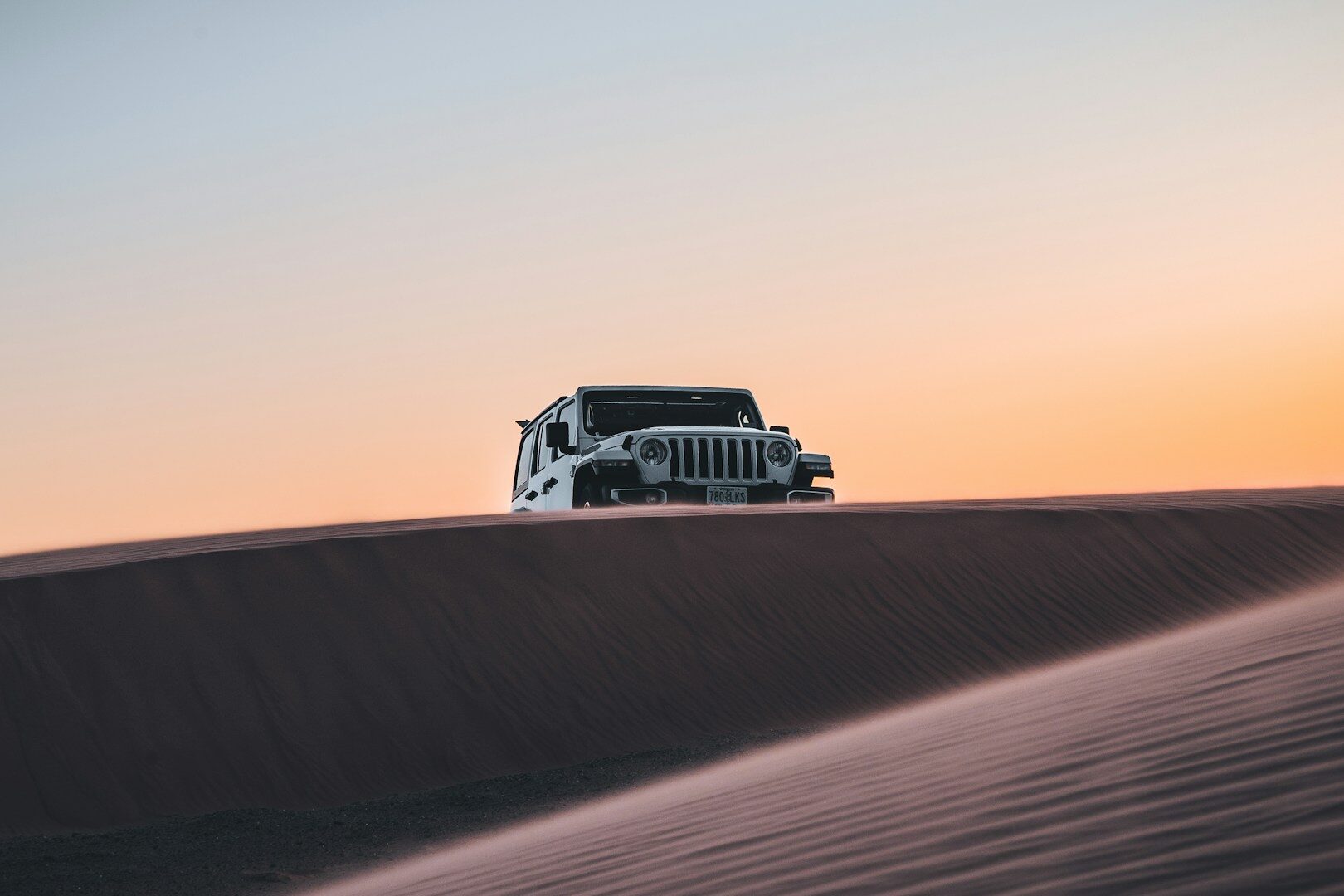
Ask a die-hard off-roader whether the Ford Bronco or Jeep Wrangler is the better SUV and you’ll usually get a fast, confident answer. Ask them to actually justify it beyond brand loyalty, and the conversation gets a lot more interesting. Both are body-on-frame, trail-rated, doors-and-roof-off machines built for the same buyer, and both are genuinely excellent at the thing they’re built for. The real decision isn’t about which one wins on a spec sheet. It’s about which set of trade-offs you’re willing to live with every day you’re not actually on a trail.
Start With What Each One Costs You
Pricing between these two is closer than either fanbase likes to admit, though the shape of that pricing differs. Here’s an approximate snapshot of 2026 starting prices by trim tier.
| Trim Level | Ford Bronco | Jeep Wrangler |
|---|---|---|
| Base (2-door) | ~$39,000 | ~$33,000 |
| Mid-range 4-door | ~$48,000 | ~$46,000 |
| Top off-road trim | ~$62,000 (Raptor) | ~$64,000 (Rubicon 392) |
Notice the Wrangler undercuts the Bronco at the entry level by a meaningful margin, but the gap narrows and eventually flips once you climb into serious off-road trims. That alone tells you something about where each brand expects to make its money, and where each buyer base is willing to spend.
Buyer’s guide: Best Accessories for Jeep Wrangler Owners
On the Trail, the Wrangler Still Has the Edge, But It’s Closer Than It Used to Be
The Bronco offers a 2.3-liter turbo-four and a 2.7-liter turbo V6, with the high-performance Raptor trim packing a 3.0-liter EcoBoost making over 400 horsepower. The Wrangler counters with its own 2.0-liter turbo-four, a 3.6-liter Pentastar V6, and the genuinely absurd Rubicon 392 with its 6.4-liter HEMI V8. Both deliver locking differentials, sway-bar disconnects, and serious wheel articulation on the trail. The Wrangler Rubicon still holds a slight edge in extreme rock-crawling scenarios thanks to lower available crawl ratios, but the Bronco’s available Sasquatch package and Trail Turn Assist feature make it highly competitive and, for a lot of drivers, genuinely easier to place on technical terrain.
Off the Trail Is Where the Bronco Starts Winning Arguments
Inside, the Bronco feels noticeably more modern and offers more usable cargo space and rear-seat room, with rugged rubberized surfaces and marine-grade vinyl options that make hosing out mud a genuine option rather than a joke. The Wrangler’s cabin has improved substantially in recent generations but still prioritizes function over refinement in a way that’s obvious the moment you sit in both back to back. Both interiors are water-resistant with drain plugs built in for cleaning out after muddy adventures, which tells you exactly what kind of ownership experience each brand expects you to have.
On the technology front, the Bronco runs Ford’s SYNC 4 system on a large available 12-inch touchscreen, with wireless Apple CarPlay and Android Auto plus a genuinely excellent off-road navigation and trail-camera suite. The Wrangler uses Jeep’s Uconnect 5, widely regarded as one of the most intuitive infotainment systems on the market, also offering wireless smartphone integration and available off-road data pages. Both systems are well-equipped, but Uconnect’s snappier responsiveness gives the Wrangler a slight day-to-day usability edge.
Neither Is a Safety Champion, and That’s Not Really the Point
Neither SUV is a class leader in crash-test scores, a predictable consequence of their boxy, body-on-frame construction. Both offer driver-assistance features including automatic emergency braking, blind-spot monitoring, and available adaptive cruise control. The Bronco generally offers a broader suite of standard safety tech out of the gate, while the Wrangler has added more advanced driver aids in its recent model-year updates, narrowing what used to be a wider gap.
Reliability and Resale: Jeep’s Long Game vs. Ford’s Fast Improvement
The Wrangler benefits from decades of proven, relatively simple mechanicals and an enormous nationwide service network, though some owners do report electrical gremlins and interior rattling over time. The Bronco is the newer of the two nameplates and had real early-production issues, particularly around hardtop fit and quality, but reliability has measurably improved with later model years. Both hold their value exceptionally well compared to the broader SUV market, with the Wrangler historically leading the entire segment in resale, though the Bronco has posted strong value retention numbers of its own since its relaunch.
The Actual Pros and Cons
Ford Bronco
- Pros: More refined on-road ride, roomier interior, stronger standard tech, available Sasquatch package
- Cons: Higher base price, early hardtop quality issues, smaller aftermarket ecosystem than Jeep’s
Jeep Wrangler
- Pros: Unmatched trail capability and heritage, massive aftermarket support, best-in-class resale, iconic styling
- Cons: Busier on-road ride, dated ergonomics in some spots, price climbs quickly on higher trims
So Which One Should You Actually Buy?
If you live for the trail, want the deepest aftermarket customization ecosystem in the business, and care most about long-term resale value, the Wrangler remains the enduring champion of this segment for good reason. If you want genuine off-road capability paired with a more comfortable daily driving experience and a more spacious interior, the Bronco is the better-balanced choice for most real-world buyers. Neither is a wrong answer here. The right pick genuinely comes down to how often “off-road capable” needs to translate into “comfortable commuter” for your specific life.
Quick Answers
Which holds its value better?
The Jeep Wrangler has historically led the entire SUV segment in resale value, though the Bronco has also shown strong value retention since its relaunch a few years ago.
Can you remove the doors and roof on both?
Yes. Both the Bronco and Wrangler offer removable doors and roofs as a signature feature of this segment. The Bronco’s doors are frameless and store onboard, while the Wrangler’s removable doors and roof have been a core part of its identity for decades.