
Ford’s most recent U.S. sales report, filed with the SEC on July 2, shows second-quarter deliveries down 10 percent to 549,200 vehicles. Taken alone, that number suggests the country stopped buying Fords. Read further into the filing and the picture flips: strip out the planned phase-out of the Escape and Lincoln Corsair and a 69 percent collapse in daily rental-fleet sales, and Ford says its underlying retail business actually grew by about half a point, ahead of a flat industry. That gap between the headline number and what’s actually happening underneath it is a pretty good summary of the entire car business at the moment. Tariff bills are shrinking but still massive. Recalls are piling up even as regulators tout record-low road deaths. And the federal government just handed car owners back a right they had been quietly losing: the ability to fix what they own without a dealership’s blessing.
Trucks and hybrids are doing the heavy lifting
Ford’s numbers tell you where the real growth is hiding. F-Series moved 357,801 units through the first half of the year, putting America’s best-selling truck on pace for a 50th consecutive year at the top and outselling the Chevrolet Silverado by more than 80,000 trucks. The Bronco set first-half and second-quarter sales records and outsold the Jeep Wrangler in the second quarter, while the Maverick Hybrid posted a record quarter of its own, up 19.3 percent. Entry-level trims, Maverick, Ranger, and Bronco Sport, climbed roughly 9 percent for the half, which tells you buyers are chasing affordability wherever they can find it inside a lineup rather than trading down to a smaller car altogether. Ford’s answer to that affordability squeeze on the electric side, a small four-door electric pickup built on its Universal EV Platform, is still a year away; Louisville Assembly is only now being retooled to build it. In the meantime, hybrids and trucks are doing the work EVs were supposed to be doing by now, and BlueCruise, Ford’s hands-free driving system, has quietly logged more than 12 million cumulative hours on the road, a number that matters more than it sounds once you get to the insurance angle below.
Tariffs got cheaper. They didn’t get cheap.
General Motors’ first-quarter results, filed April 28, are the clearest evidence yet that trade policy is still running through every automaker’s income statement whether they like it or not. GM reported $43.6 billion in revenue and $2.6 billion in net income, then used the same filing to raise its full-year guidance, not because business got better, but because a U.S. Supreme Court ruling on tariffs imposed under the International Emergency Economic Powers Act knocked roughly $500 million off GM’s expected tariff bill. The company now expects gross tariff costs of $2.5 billion to $3.5 billion for 2026, down from an earlier estimate of $3 billion to $4 billion. A court ruling that saves an automaker half a billion dollars sounds like a win, and legally it is one, but the smaller number is still a multibillion-dollar tax on building cars in North America. Import-dependent brands have had it worse: Japanese automakers alone have already absorbed billions in added costs since the tariffs took effect, a gap we broke down in detail here. Court challenges can trim the bill. They can’t make it disappear, and dealers aren’t exactly rushing to lower sticker prices in the meantime.
Two recalls, and one very good reason not to trust a random used airbag
Stellantis’s FCA US arm issued a recall in June covering 1,076,999 model-year 2021 to 2025 Jeep Gladiator and Wrangler trucks for a wiring fault in the electric hydraulic power steering pump that can overheat nearby combustible material and start a fire, even with the engine off. NHTSA is aware of 51 fires and one injury tied to the defect and told owners to park outside, away from structures and other vehicles, until repairs are available. The reason a steering system can start a fire while the truck is parked comes down to how electric power steering pumps are wired: the circuit stays live to provide instant boost the moment you turn the key, so a chafed harness or corroded connector can arc into an idle vehicle just as easily as a running one. Owner notification letters go out July 9, and this is hardly an isolated headache. Ford alone has already topped 10 million recalled vehicles in 2026, including a separate park-system defect affecting 741,000 SUVs and trucks.
NHTSA followed that up by using power it hadn’t touched in two decades: an outright ban on a specific piece of automotive equipment. The target is a batch of frontal driver airbag inflators stamped DTN60DB, illegally imported from China, now linked to at least 10 deaths and two serious injuries across a dozen crashes in Chevrolet Malibu and Hyundai Sonata vehicles. Instead of inflating a cushion, these inflators rupture and send metal fragments into the cabin, the same failure mode, driven by unstable propellant chemistry, that turned the Takata recall into the largest in automotive history. Transportation Secretary Sean Duffy put it bluntly: “Anyone caught importing or selling these defective, deadly inflators will be held accountable…” The practical takeaway if you own or are shopping for a used Malibu or Sonata that’s had a prior airbag deployment: get the replacement parts verified before you trust that airbag with your face. And know that a bargain-bin airbag swap isn’t just a safety gamble; if a knockoff part is involved in a later crash, insurers can and do fight claims over unverified replacement parts.
A new bar for driver-assist tech
On the regulatory side, NHTSA also rolled out four new pass/fail evaluations under its New Car Assessment Program, covering pedestrian automatic emergency braking, lane keeping assistance, blind spot warning, and blind spot intervention, layered on top of the four tests already in use. The 2026 Tesla Model Y, built after November 12, 2025, became the first vehicle to clear all eight. These aren’t abstract lab exercises: pedestrian AEB and blind spot intervention both require a vehicle’s cameras and radar to identify a hazard and physically intervene, braking or nudging the wheel, without driver input, on a strict pass/fail basis rather than a graded score. Expect this benchmark to matter well beyond bragging rights, since NCAP ratings increasingly feed into insurer pricing models and resale valuations, not just window-sticker safety stars.
Washington just handed the wrench back to owners
The most consequential news for anyone who actually works on their own car came from the EPA, not NHTSA. On July 1, the agency issued guidance affirming that under the Clean Air Act, manufacturers must give independent shops and consumers the same service and repair information, including for Diesel Exhaust Fluid and other emissions hardware, that they give their own dealer networks. The same guidance makes clear that manufacturers can’t force owners into branded replacement parts for emissions-control repairs; generic, equivalent parts are fair game, though the EPA was careful to note the Clean Air Act doesn’t guarantee warranty coverage if a noncertified part is involved. To give that carve-out some teeth, EPA also recognized SEMA’s Certified Emissions program as an official certification path for aftermarket parts, replacing what had been a legal gray zone for the specialty parts industry. It’s a follow-up to guidance EPA issued in February covering nonroad diesel equipment, and it lands alongside a broader deregulatory push from the agency this year, including the repeal of the 2009 endangerment finding and the termination of California’s electric vehicle mandate waivers. For owners of diesel trucks who’ve been towed to a dealer over a DEF fault code, or enthusiasts who’ve had to guess whether a part would run afoul of tampering rules, this is the rulebook actually changing in their favor for once.
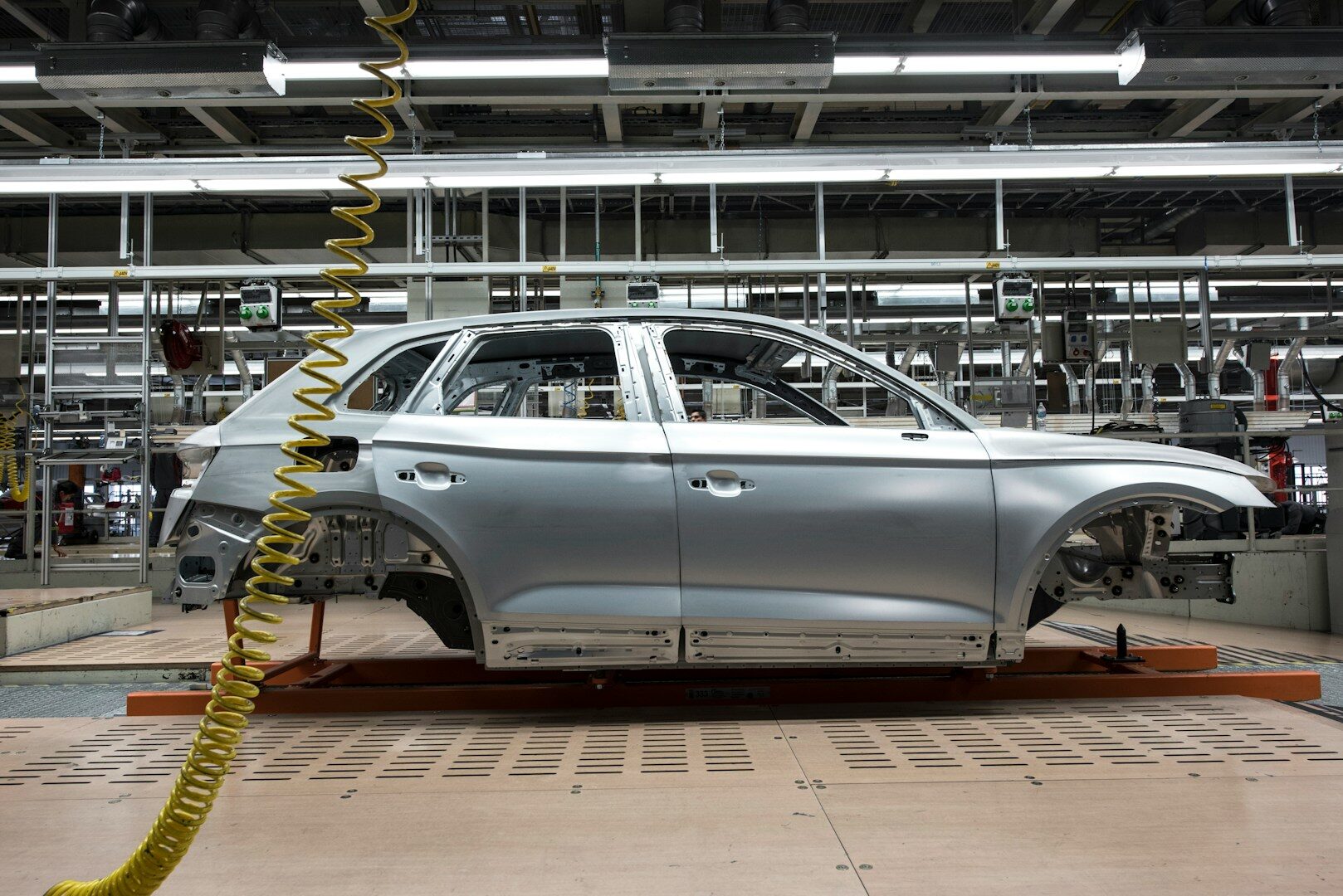
None of these stories happened in a factory. They happened in a courtroom, a federal register notice, and a couple of press conferences, and every one of them still lands squarely on the owner. A Supreme Court ruling changes what a Silverado costs to build. A wiring diagram decides whether a Wrangler needs to sleep in the driveway instead of the garage. A lab bench in Ohio decides what your insurer thinks your Model Y is worth. And a two-page EPA memo decides whether your neighborhood shop can legally fix your truck’s emissions system without shipping it to the dealer. The car business used to be interesting because of what was happening on the assembly line. Right now, it’s interesting because of what’s happening everywhere else.