
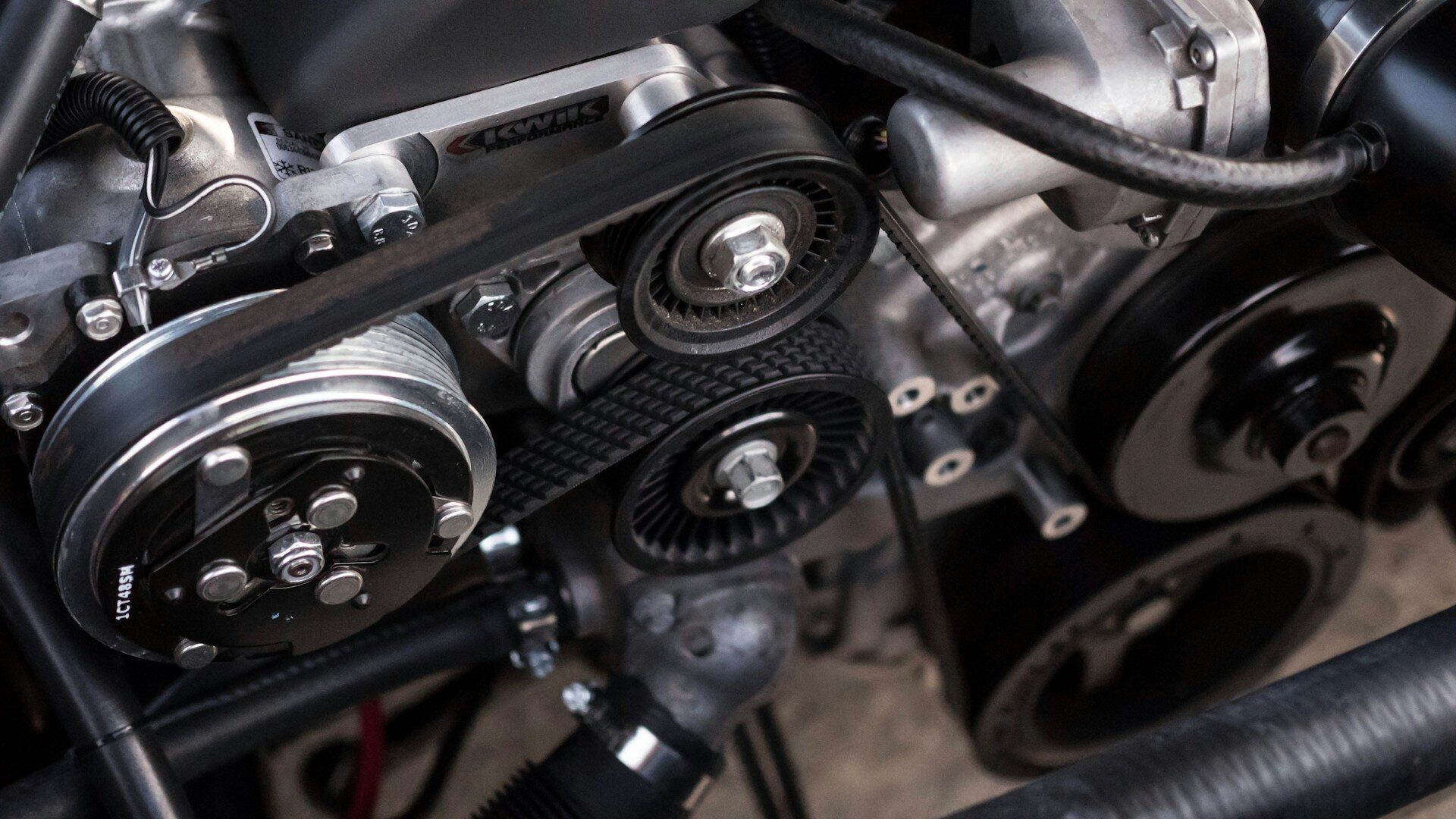
Genuine Parts Company spent the better part of this year building an elaborate exit ramp for its automotive business. Tax-free spinoff, new stock ticker, standalone board, a target date of early 2027 — the whole production. Then, according to a Bloomberg report citing people familiar with the matter, O’Reilly Automotive showed up with a simpler offer: a cash bid reportedly worth $10 billion or more for the whole division, right now.
Neither company has confirmed a deal. But the fact that a bid like this surfaced at all, five months into a separation process GPC had already announced to the world, says more about how corporate breakups actually get priced than the eventual purchase price will.
Back on February 17, GPC told shareholders it would split into two independent public companies: Global Automotive, built around the 100-year-old NAPA brand and roughly 10,000 stores and distribution points across North America, Europe and Australasia, and Global Industrial, the Motion-branded industrial distributor. The automotive side alone generated more than $15 billion in sales and $1.2 billion in EBITDA last year, anchored by a network of over 20,000 independently owned NAPA AutoCare repair shops, the same corner of the business where questions about who actually gets to fix your car have been getting louder all year. GPC structured the whole thing to qualify as a tax-free spinoff for shareholders, with stock in both companies landing in their accounts once the transaction closes.
It’s worth pausing on why GPC wanted out of the automotive side in the first place, because NAPA’s name recognition obscures the actual math. In the same segment breakdown GPC files with the SEC, North America Automotive posted a 6.6% EBITDA margin in the first quarter of 2026 and International Automotive posted 9.1%. Industrial Parts, the Motion business GPC is keeping, posted 13.6%, nearly double the North America Automotive number. The half of GPC that carries the famous name is also the less profitable half. That detail sits underneath every mention of unlocking shareholder value in the company’s official language.
On the company’s first-quarter earnings call in April, CEO Will Stengel told investors the separation “remains on track for completion in the first quarter of 2027.” Ten weeks later, Bloomberg was reporting that a competing bidder wanted to skip the spinoff and simply buy the automotive division outright.
That timeline, not the $10 billion figure, is the real story.
A Spinoff Is a For-Sale Sign That Never Says For Sale
Wall Street calls this a dual-track process, and it’s more common than most car owners realize. The moment GPC hired J.P. Morgan and Guggenheim Securities and began carving Global Automotive’s books into standalone financials, it did essentially everything a buyer would need to make a clean offer. Separate management structure, isolated balance sheet, disclosed store count, segment-level EBITDA — that isn’t spinoff paperwork. That’s due diligence paperwork. A public company rarely has to explain the difference, because both paths are supposed to end at the same place: Global Automotive operating independently of GPC’s industrial business. What changes is who cashes the check, and how much of it survives contact with the tax code.
The Tax Code Is Doing More Work in This Deal Than Either Side Is Saying
Here’s the detail that got buried under the headline number. GPC’s spinoff was explicitly built to qualify as tax-free to shareholders under federal law, meaning no capital gains hit when GPC stock splits into two tickers. A straight cash sale to O’Reilly doesn’t get that treatment. GPC would owe corporate-level tax on the gain from an outright sale, and shareholders would be cashed out rather than simply repositioned into a second stock they never had to pay to receive. A $10 billion offer isn’t automatically the better outcome for GPC investors; it has to be large enough to outrun a tax bill the spinoff was specifically designed to avoid. Whether O’Reilly’s number actually clears that bar is the negotiation hiding behind the people familiar with the matter language, and it matters more than the sticker price does.
NAPA Isn’t Built Like an O’Reilly Store, and That’s an Integration Problem Nobody’s Pricing In Yet
There’s a structural mismatch in this potential deal that has nothing to do with money. O’Reilly runs a corporate model: every store company-owned, company-staffed, centrally managed. NAPA is a hybrid. Thousands of its locations are independently owned jobbers who buy inventory through NAPA’s distribution network but run their own businesses under the NAPA banner, the same arrangement that supports the AutoCare repair network and the supplier relationships GPC’s own leadership has pointed to as its biggest growth lever. Folding a vertically integrated retailer into a business built on independent ownership isn’t like combining two chains with matching org charts. It’s closer to a franchisor absorbing a wholesaler, and GPC has specifically named the commercial do-it-for-me segment, the one that runs through those independent relationships, as Global Automotive’s biggest growth opportunity.
Regulators Have Read This Script Before
This wouldn’t be the first time the auto parts aisle got smaller through a merger. O’Reilly’s own 2008 purchase of CSK Auto and Advance Auto Parts’ 2014 acquisition of General Parts International, the parent of CARQUEST, both drew federal scrutiny and forced store divestitures in markets where the combined company would have owned every parts counter in town. A deal folding NAPA into O’Reilly would be larger than either of those, combining two of the four national chains that already dominate a business increasingly built around supply chain software and same-day delivery to repair shops rather than walk-in customers. If this bid firms up, expect the antitrust conversation to focus less on any single town’s parts store and more on what happens to the wholesale pipeline that keeps independent garages stocked, a supply chain question that echoes concerns raised elsewhere about how thin a badge’s home-country story gets once you trace where the parts and platforms underneath it actually come from.
None of this happens in a vacuum. GPC’s own guidance already flags tariffs and trade policy as a live risk to its numbers this year, the same pressure that has been reshaping what a stalled trade review means for car prices industry-wide.
Whatever happens next — GPC completes the spinoff as planned, takes O’Reilly’s cash, or fields a higher offer from somewhere else — the more durable lesson is about how corporate breakups get priced in public. Announcing a spinoff is how a company tells Wall Street what a division is worth. Fielding a $10 billion cash bid before that spinoff even closes is how Wall Street tells the company it guessed low.