
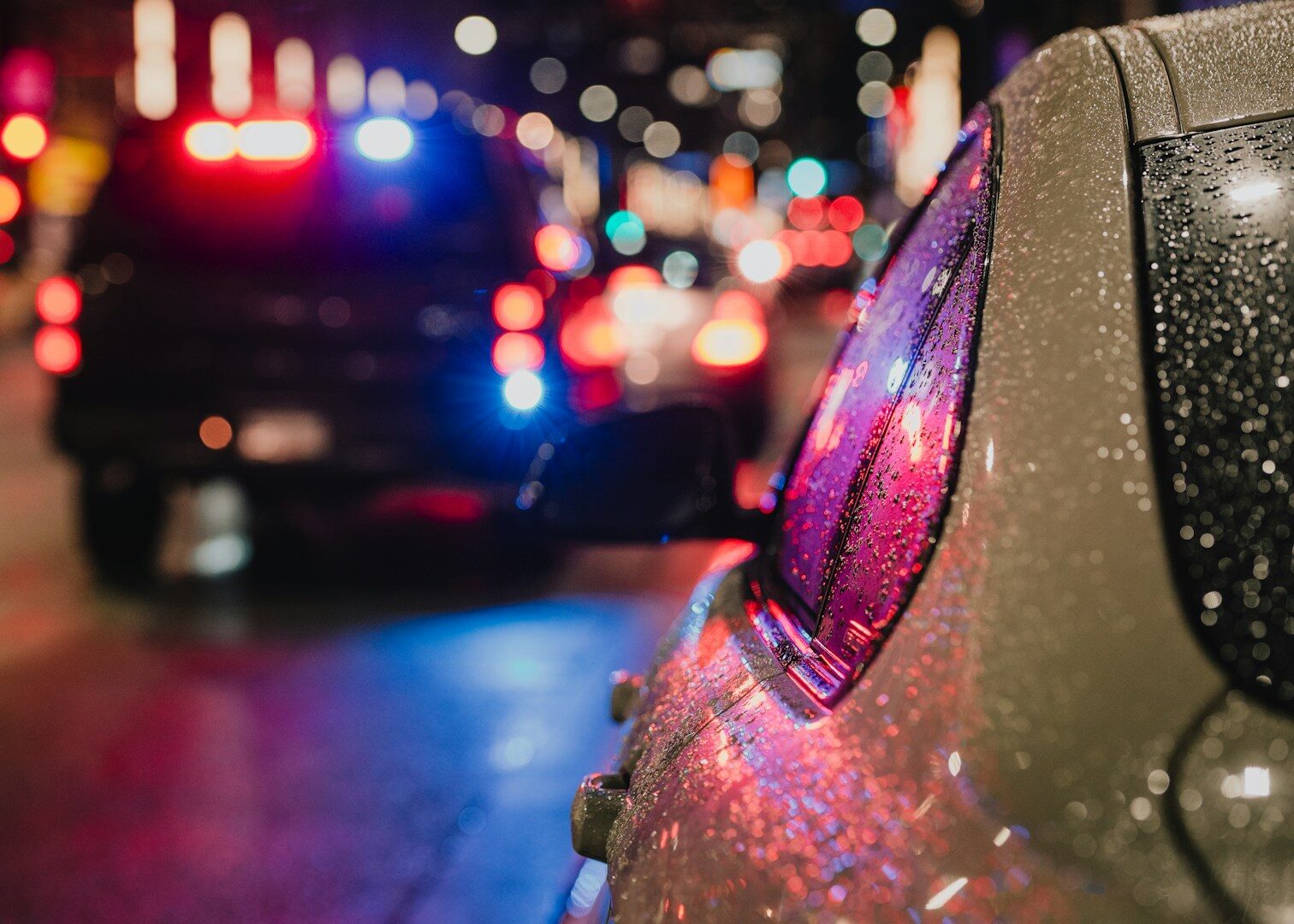
A suspended license is a piece of paper telling someone they can’t drive. It is not a physical barrier, a kill switch, or a cop riding shotgun. That distinction sounds obvious, but it explains everything. A driver who has already lost the privilege to operate a car can climb back into one the same afternoon. They twist the key and merge onto the freeway with nothing stopping them except the hope that no officer pulls them over. When one of those drivers blows a red light in something fast and expensive, coverage tends to fixate on the wreckage. The more useful question is different: how did a person the state had officially benched get legal access to a car, insure it, register it, and start it in the first place?
Garage-worthy EDC gear, on sale this week.
The federal government has spent decades studying this exact failure. The picture that emerges from NHTSA’s data shows a system with the deterrence value of a stern letter. Roughly one-quarter of drivers arrested for impaired driving already had a prior DWI conviction on their record. So did 30 percent of those actually convicted. These are not first-timers who made a single catastrophic decision. A meaningful share are repeat customers cycling through a control system that NHTSA itself describes as having “many opportunities for breakdowns.”
The scale of the return trip
A license suspension should remove a dangerous driver from the road. In practice, it removes their permission, not their access. NHTSA is blunt about the workaround, noting in its countermeasures guide that some DWI offenders “continue to drive on occasion with suspended or revoked licenses.” That’s the polite version. The consequence shows up in the fatality data. Among drivers involved in fatal crashes in 2021 who were legally drunk, seven percent had a DWI conviction within the previous five years. That compares with two percent of the sober drivers in fatal crashes. A prior conviction, in other words, tracks with roughly triple the presence in deadly alcohol-related wrecks. The suspension didn’t neutralize them. It just gave them a reason to keep a lower profile.
Part of the problem is that the punishment often outlasts the offender’s willingness to comply with it. NHTSA cites research finding that about half of DWI offenders delay reinstating their license for at least a year after they become eligible. Another 30 percent wait five years or more. That matters because drivers who drag out reinstatement are more likely to reoffend than drivers who go through proper relicensing and monitoring. A driver operating on a long-expired suspension is, by definition, outside every supervisory tool the state has. That means no interlock, no probation check-in, and no monitored insurance policy. They’ve simply gone dark and kept driving.
Check This Out: 5 Genius Garage Upgrades Under $100 That Make a Big Difference
Why the DMV is always a step behind
The enforcement gap starts with information, or the lack of it moving fast enough. A license suspension is an administrative event. It has to propagate through court records, state driver databases, and eventually the patrol car’s computer before it means anything on the street. NHTSA’s blueprint for an effective DWI control system requires record systems that are “accurate, up-to-date, easily accessible, and able to track each DWI offender from arrest through the completion of all sentence requirements.” The agency lists that as a goal precisely because it so often isn’t the reality.
How the two-track system creates blind spots
Consider the mechanics. Many states run a two-track system. An administrative suspension, triggered by failing or refusing a breath test at the roadside, proceeds independently from the criminal case. The arresting officer typically takes the physical license and hands the driver a temporary paper permit that buys time to arrange a hearing. During that window, the driver is still mobile and, on paper, still holds a valid credential.
Now layer on court backlogs, hearing requests, and the hardship or occupational licenses that many jurisdictions grant during part of the suspension period. The result is a status that is genuinely ambiguous at any given moment. An officer running a plate or a license at 11 p.m. is querying a database that may not yet reflect a suspension entered days earlier. Or it may show a “valid” hardship permit that the driver is violating simply by being on that road, at that hour, in that condition.
This is the unglamorous heart of the issue. There is no real-time nationwide ledger of who currently holds driving privileges. Enforcement depends on a traffic stop happening, and a stop depends on the driver first doing something else wrong. NHTSA acknowledges the structural weakness directly: officers “must observe a traffic violation or other aberrant behavior before they can stop a motorist.” A suspended driver who signals, stays under the limit, and keeps their taillights working is, functionally, invisible until they aren’t.
The interlock loophole nobody advertises
Ignition interlocks are the one countermeasure that physically prevents an impaired start. Blow above a preset level, usually .02 BAC, and the car won’t crank. NHTSA gives them a five-star effectiveness rating in its interlock guidance, and the numbers earn it. A review of 15 studies found interlocks cut arrest recidivism by about 75 percent while installed. States requiring them for all DWI offenders logged 26 percent fewer alcohol-involved fatal crashes. One estimate cited by the agency projects 2,600 lives saved annually if every state mandated interlocks for every DWI offender.
So why do repeat offenders still end up behind the wheel drunk? Because the device only works if it’s actually on the car, and most of the time it isn’t. A 2019 survey of interlock providers, referenced by NHTSA, found that only 15 percent of people arrested for DWI had an interlock installed. The figure was 42 percent for those convicted. Even in the 34 states and the District of Columbia that mandate interlocks for all offenders, a majority of convicted drivers never get one bolted in. The gap between “the law requires it” and “the device exists on the vehicle” is where the danger lives.
The camera loophole, and the ownership shuffle
And an interlock guards one specific car. NHTSA notes the obvious circumvention: an offender can simply drive a different vehicle that isn’t equipped. The agency’s suggested fix, monitoring the mileage logged on the interlock-equipped car to catch suspiciously low usage, is a tell. If your enforcement strategy involves noticing that the monitored car’s mileage barely moves, you’ve conceded that the offender has another set of keys. As of May 2019, only 22 states even required interlocks with cameras. Those cameras confirm the person blowing into the device is the person supposed to be driving. The tool is excellent. The coverage is full of holes.
Registration and insurance don’t catch what you’d think
Here’s the counterintuitive part for most owners. The systems that feel like gatekeepers, vehicle registration and insurance, mostly aren’t checking whether the driver actually has a valid license. Registration attaches to the vehicle, not the operator. A suspended driver can keep a car titled and plated in their name without any automatic flag. That’s why states have had to invent an entire menu of vehicle-based sanctions to compensate. NHTSA’s guide catalogs them: special “scarlet letter” license plates that let police stop a car on sight to check the driver, plus outright plate impoundment, vehicle immobilization with a boot, and forfeiture.
The fact that these sanctions exist at all is the admission. If registration systems caught suspended drivers, you wouldn’t need to physically seize the plate. Minnesota’s plate impoundment program, administered by the arresting officer, reduced both recidivism and driving with a suspended license. It works precisely because it doesn’t wait on the courts, and it removes the car’s ability to operate anonymously. Twenty-nine states have provisions allowing vehicle forfeiture for impaired driving or driving on a suspended license, yet NHTSA notes there’s little information on how often they’re actually used.
The loopholes are almost quaint in their simplicity. If someone other than the offender owns the vehicle, the state’s best available tool is asking that owner to sign an affidavit promising not to let the offender drive it. NHTSA also warns that laws should let officers impound plates or vehicles at the time of arrest. That closes off “the opportunity to transfer vehicle ownership” — signing the car over to a relative and driving it anyway. The enforcement system is playing a shell game against people who have every incentive to move the pea.
The insurance angle, and what it means for everyone else
Insurance is where the suspended-license problem quietly reaches into the wallet of every other driver. A convicted DWI offender who wants to relicense typically has to file an SR-22, a certificate proving they carry at least minimum liability coverage. That requirement is one of the few mechanisms that actually links an individual’s driving status to an ongoing financial obligation. The trouble is that it only bites for offenders who choose to come back into the system. Remember that half of them delay reinstatement a year or more, and 30 percent wait five-plus years. A driver who never bothers to relicense never files an SR-22 and never triggers a monitored policy. Often, they carry no insurance at all while continuing to drive.
For everyone sharing the road, that translates into a population of high-risk drivers. They are simultaneously the most likely to crash and the least likely to carry insurance when they do. The two-percent-versus-seven-percent gap in fatal crashes isn’t just a safety statistic. It’s the reason uninsured-motorist coverage exists, and the reason your own premium carries a surcharge for drivers who opted out of the system entirely. The suspension meant to protect you instead created a driver with less accountability than before, not more.
What actually moves the needle
The research points in a consistent direction, and it isn’t toward harsher headline penalties. NHTSA repeatedly stresses that deterrence works when consequences are “swift and sure” far more than when they are merely severe. The countermeasures with real evidence behind them are the ones that shrink the gap between the offense and the consequence. These include administrative suspensions that happen at the roadside instead of months later in court, immediate vehicle or plate impoundment, and interlocks tied to license reinstatement rather than left as an optional afterthought. Florida offers the cleanest example. When the state made interlocks a prerequisite for reinstatement, 93 percent of eligible offenders installed them. That compares with the dismal single-digit and low-double-digit install rates seen where the device is technically required but practically ignored.
What this means for owners and insurers
The practical takeaway for owners and buyers is less about policy and more about awareness. If you’re buying a used car, especially at auction or through a quick private sale, understand that a vehicle can carry a history you can’t see on the title. Plate or ownership status can tangle up with someone else’s DWI case. If you’re insured, recognize that your uninsured-motorist coverage isn’t a formality; it’s specifically designed for the driver the state suspended and who kept going anyway. And if you ever find yourself sharing a green light with someone who blew the red one, here’s the uncomfortable truth. Someone probably filed the paperwork saying they shouldn’t have been there correctly. It just never became a physical fact until the moment of impact.
Read Next: 10 Emergency Car Products You Hope You Never Need
The suspended-license problem isn’t a story about one reckless driver in one expensive car. It’s a story about the distance between a database entry and a running engine, and how many drivers have learned to live comfortably inside that gap.
- Utah to Restrict Alcohol Purchases for Those Convicted of Extreme DUI
- An Iowa Driver Was Stone Sober, Got Jailed for DUI Anyway, and Just Won $105,000
- 701 Sober Drivers Arrested for DUI in Georgia, And the Numbers Are Raising Serious Questions
- Florida Man Walks Out of Jail, Steals an SUV From the Courthouse Lot, and Leads Cops on Chase Number Two in Under a Week