
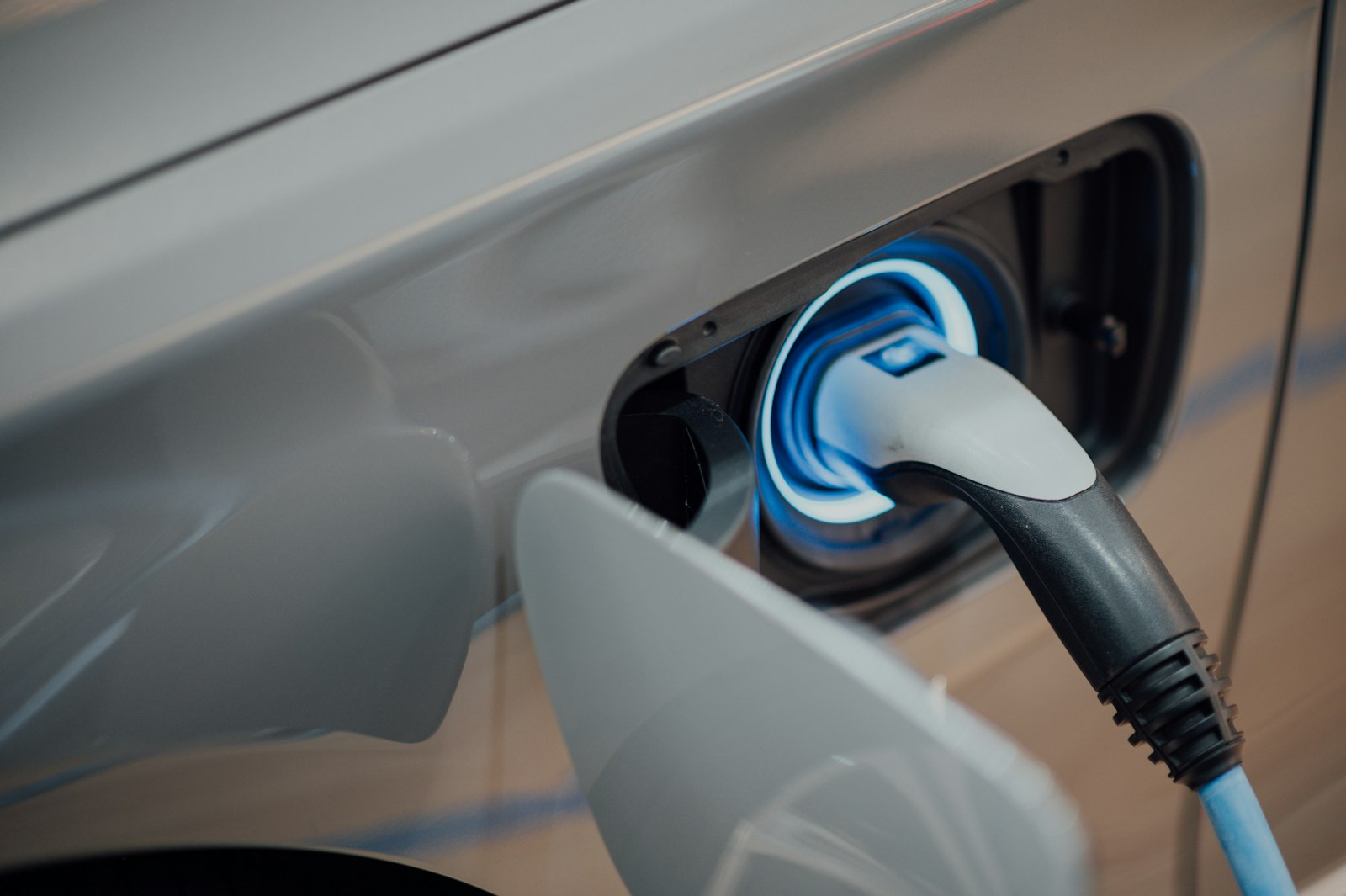
Tesla owns and operates the largest fast charging network on earth. More than 80,000 Superchargers, by its own count, built over more than a decade, and the single most valuable physical asset the company has outside its factories.
And for its robotaxi fleet, it is building different ones.
That decision is not a rounding error in a capital plan. It is a company conceding that the network it spent twelve years building was engineered around a behaviour its newest product does not have.
A note on what is and is not confirmed
Reports have circulated of permit filings for robotaxi-only Supercharger sites. The Auto Wire could not verify a specific filing through a public permit record. Austin’s open data covers issued permits only, and its application portal is gated; Houston’s permit search was offline.
What is verifiable is more interesting anyway, and it comes from state records that almost nobody reads.
The fleet, VIN by VIN, in a public database
Texas requires anyone operating driverless vehicles commercially to hold an authorisation from the Department of Motor Vehicles, under SB 2807, effective 1 September 2025. The implementing rules require applicants to list every vehicle by VIN, year, make and model.
Which means the roster is public.
Tesla Robotaxi, LLC, authorisation AV8313426653583, authorised 14 May 2026, registered at 1 Tesla Road, Austin. Vehicles on the authorisation: 439. Of those, 390 are 2026 Model Ys and 49 are Cybercabs.
Waymo, authorised nine days earlier on 5 May 2026, lists 988 vehicles.
Those two numbers are worth sitting with. Tesla’s Texas robotaxi fleet is roughly 44 percent the size of Waymo’s. And the Cybercab, the steering-wheel-free car that anchors the entire economic argument, accounts for 49 vehicles.
Texas charges no fee for the authorisation. For the federal side of Tesla’s driverless ambitions, see what happened when the Cybercab ditched the steering wheel without asking. Tesla filed 14 days before the enforcement deadline.
Why a public Supercharger cannot serve a robot fleet
Now the engineering, and the best evidence comes from Tesla’s own specification sheet.
On its Supercharger for Business page, Tesla explains how it sizes a V4 installation: “While each post can deliver up to 500 kW, the cabinet system typically requires less than 1 MW across eight posts to deliver max power to cars 99% of the time.”
Read that carefully, because it is a statement about people.
Eight posts rated at 500 kW each would draw 4 MW if all eight pulled maximum power simultaneously. Tesla installs under 1 MW because that never happens. Human drivers arrive in scattered bursts, at different states of charge, and most stop around 80 percent because the last 20 percent is slow and they have somewhere to be. The undersizing works because human charging behaviour is lumpy and self-limiting.
A driverless fleet has none of those properties. It charges when dispatch logic says to charge, not when a person needs coffee. It has no errand to get back to. It can plausibly arrive in a correlated wave, because the whole fleet has been running the same duty cycle all day.
Size a depot honestly for continuous fleet duty and you approach the full 4 MW. That gap — roughly four to one — is the entire engineering case for separate infrastructure, and it comes straight off Tesla’s own page.
The bill nobody outside the industry knows about
There is a second reason fleet charging is not retail charging, and it is the part of commercial electricity that catches people out.
Businesses do not simply pay for the energy they use. They also pay a demand charge, billed on the highest average rate of consumption in a short window — typically 15 minutes — across the entire billing period.
As NREL puts it, demand charges exist so utilities can “recover costs associated with providing sufficient electricity generation and distribution capacity.” You are not being billed for electricity. You are being billed for the size of the tap.
NREL’s survey found roughly five million US commercial customers able to subscribe to tariffs above $15 per kilowatt, around three million facing $20 per kilowatt or more, and a maximum observed rate of $51.25.
Do the arithmetic on a depot. One fifteen-minute window in which too many robotaxis plug in at once sets the demand charge for the whole month. A retail Supercharger site absorbs that unpredictability because the customer pays per kilowatt-hour and the peaks are random. A fleet operator eats it directly — and a fleet operator is the one entity on earth that can schedule its way around it, because its cars take orders.
That is why dedicated depots exist. Not to keep the public away from the plugs. To control the fifteen minutes that set the bill.
The filings that do exist say service, not charging
Texas keeps a registry of construction projects for accessibility review, and it contains exactly two projects in the entire database whose names contain the word robotaxi.
Both are in Houston, at 16503 and 16505 Air Center Boulevard, beside Bush Intercontinental Airport. Registered 26 August 2026, with an October start and a 31 December completion date. Together about 40,300 square feet and $1.365 million, described as tenant improvement of a new service area with associated electrical and mechanical scope. Design by an Irvine industrial architecture firm.
Two details stand out. The first is the word service — these are registered as service facilities, and no charging stall count appears anywhere in them. The second is the owner of record: a limited liability company in Sugar Land, Texas. Tesla is the tenant.
The company whose Supercharger network is its most-cited competitive moat is leasing its robotaxi depots from a landlord. Which raises a question worth asking: who pays for the electrical service upgrade, and who carries the demand charge?
Waymo said this out loud three years ago
The comparison that makes this story is one of timing.
In August 2023, Waymo wrote: “We’ve also invested in and operate our own charging infrastructure, which means we can manage our electricity supply and power our fleet with 100% renewable energy.”
Waymo has no public charging network, no retail charging business and no charging brand. It went straight to depots because a fleet operator has no reason to build anything else.
Tesla arrived at the same conclusion three years later, having spent a decade building the alternative. Owning the largest charging network in the world turned out to be no help at all for this particular problem, because the network was optimised for a customer who parks, shops, and leaves.
There is a supporting number from NREL’s national charging model worth noting: ride-hailing accounts for about 21 percent of simulated fast-charging demand, and ride-hail electrification requires fast charging inside urban areas. Tesla’s own description of its network is that it is located on major routes. Highways are where road trips happen. Robotaxis do not take road trips.
The permits Tesla does not have
One last thing, because it constrains where any of this capital can go.
Tesla’s robotaxi service currently operates in Austin, Dallas, Houston, Miami, Orlando and Tampa. There is no California city on that list, and the regulatory record explains why.
In California, Tesla Robotaxi LLC holds a drivered testing permit from the DMV — testing with a safety driver, nothing more. It does not hold a driverless testing permit. It does not hold a deployment permit. And on the Public Utilities Commission’s list of autonomous passenger service permits, across all four categories, Tesla does not appear at all. Waymo holds all four.
Any charging infrastructure Tesla commits to in California is being built ahead of permits it has not been granted — while Waymo has been cleared for paid driverless rides across 18 California counties.
What to remember
Forget the megawatts. Remember the sentence on Tesla’s own website: under 1 MW across eight posts delivers full power “99% of the time.”
That one percent is where human beings live. It is the margin that lets a charging network be built for a quarter of its theoretical load, and it exists only because people are inconsistent, impatient and easily distracted by a coffee shop.
Take the driver out and the inconsistency goes with them. Tesla built the world’s largest charging network on an assumption about human behaviour, and then built a car that does not behave.
Should Tesla have built robotaxi charging into the Supercharger network from the start? Tell us in the comments.