
Waymo Just Got the Keys to Most of California — Here’s What the Paperwork Actually Says
The headline number is 18 counties. The more interesting number is 3,871.
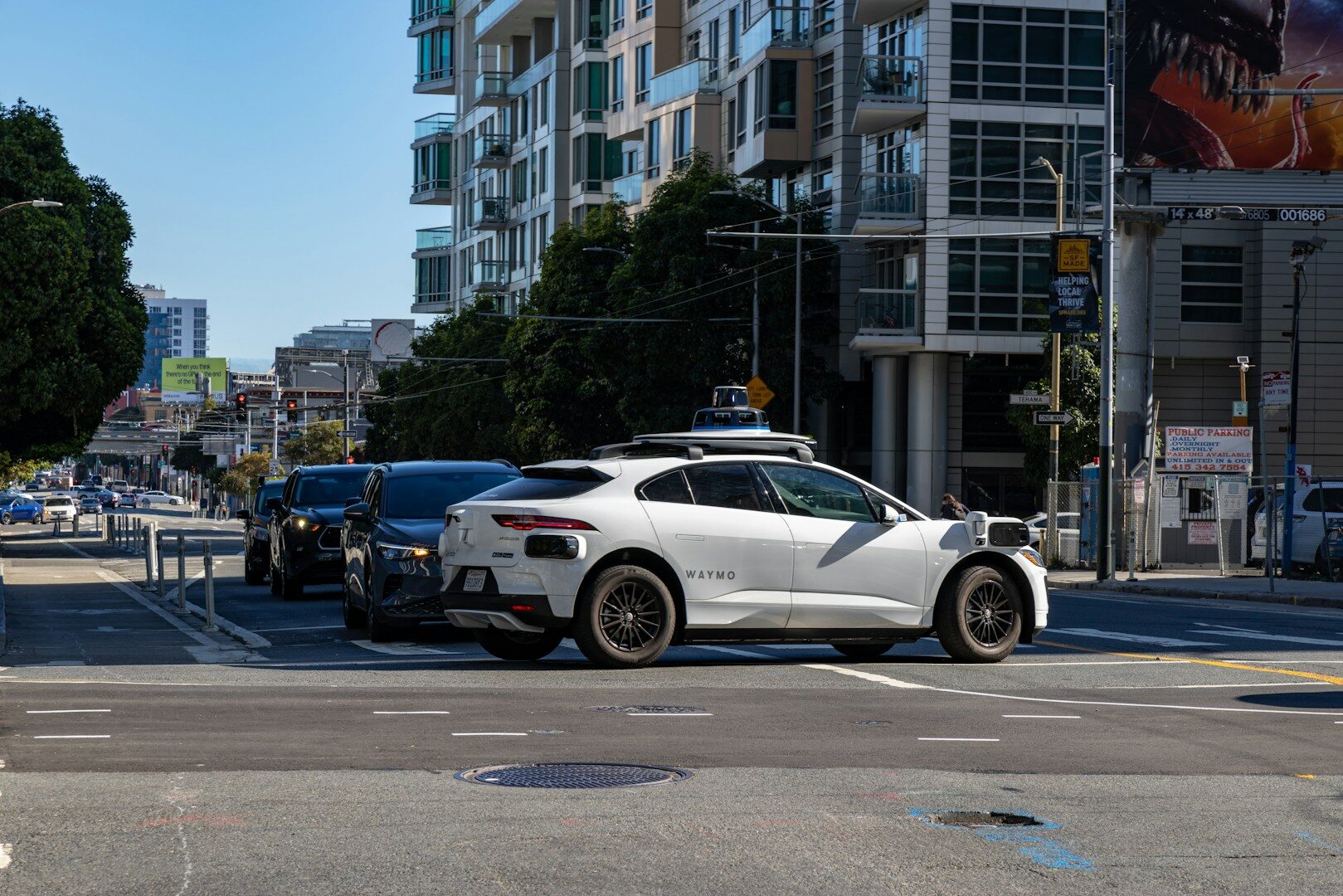
On August 14, the California Public Utilities Commission’s Consumer Protection and Enforcement Division signed off on Waymo Advice Letter 0004 and its supplement, 0004-A, clearing the Alphabet subsidiary to charge money for rides with nobody in the driver’s seat across a chunk of California that stretches from Sonoma County to the Mexican border. Effective immediately. Waymo confirmed it that afternoon on X, calling the rollout “gradual and guided by our safety framework.”
Here’s the part most people will miss: this approval was not a debate about whether robotaxis are safe. It was a filing-cabinet exercise, and by design.
Two agencies, two keys
California splits autonomous vehicle oversight in a way that trips up almost everyone reading the news. The DMV decides whether a machine may drive itself and where — that’s the operational design domain, or ODD. The CPUC decides only whether you may charge a fare for the ride, and its review is scoped to passenger safety: how riders are educated, how they reach support, what happens when something goes sideways.
Related Articles
- Dinoco Blue Lightning McQueen Crocs: What Cars Fans Should Know
- Belvidere Is Getting Its Cherokee Back. It’s Also Becoming Stellantis’s Guinea Pig For a Platform That Doesn’t Exist Yet
The DMV already handed Waymo the geography on November 21, 2025. Everything that happened since has been the CPUC catching up on the passenger-service half.
And because Waymo’s original driverless deployment permit was granted back in 2023, this filing was a Tier 2 advice letter — the lowest-drama tier available. Under General Order 96-B, staff can dispose of a Tier 2 filing by determining, as a technical matter, whether the request falls inside what the Commission already authorized. No commissioner vote. No hearing. One manager’s signature.
San Diego fought it and lost on procedure
Two entities protested: the San Diego Metropolitan Transit System, acting through CEO Sharon Cooney under Board Resolution 26-01, and the MTS Taxicab Advisory Committee. MTS argued Waymo vehicles could stall on trolley tracks and gum up bus and paratransit service, pointed at the December 2025 San Francisco power outage as the cautionary tale, and made the argument cities have been making since 2023 — that local governments should get a say. The taxicab committee argued the obvious: this kills jobs.
CPED didn’t rule against them on the merits. It ruled that Rule 7.4.2 of GO 96-B doesn’t permit those grounds at all, because the Commission already rejected municipal veto power in the underlying Deployment Decision, and you cannot relitigate a prior Commission order through an advice letter protest. Staff pointed both parties toward Rulemaking 25-08-013 if they want the policy revisited.
Twenty-nine organizations filed in support, including the San Diego Regional Chamber of Commerce, MADD, the National Federation of the Blind of California, and the LightHouse for the Blind. Eight more filed after the supplemental letter, among them Representative Young Kim.
If you’re a city council anywhere in those 18 counties wondering what leverage you have: functionally, none. That’s not an accident, it’s the architecture.
Now, about that 3,871
The newly opened territory is not dense urban grid. Riverside, San Bernardino, Ventura, Santa Clarita, Chula Vista — this is freeway country. Waymo’s ODD explicitly covers freeways and highways at all posted speed limits, day or night, in rain, fog, and hail. The only carve-out is widespread snow or ice on the roadway, which quietly rules out Tahoe and Donner Pass while leaving Central Valley tule fog fair game.
Which makes the open NHTSA recall worth reading. On June 17, Waymo filed Part 573 report 26E035 covering 3,871 units of its fifth-generation Automated Driving System — every unit capable of driverless freeway operation, built between March 2022 and May 2026, with an estimated defect rate of 100%.
The defect: under certain circumstances the vehicle may enter and drive at speed through freeway construction zones, either by misprioritizing the avoidance of other hazards or by failing to recognize the zone at all. The chronology is specific. One event April 11 and five on April 19 in Phoenix, where cars drove past ramp closure signs. Then seven Bay Area vehicles on May 18 that threaded between cones marking a lane closure. Waymo’s Field Safety Committee imposed freeway restrictions; the Safety Board voted to recall on June 8.
Because Waymo owns every affected vehicle, there’s no Part 577 owner notification — no letters, no dealers, no VIN lookup. The company patches its own fleet and files a status update. That’s a genuinely novel enforcement posture, and it means the public-facing recall paper trail is thinner than it would be for a Camry.
Note also what the recall covers: fifth-gen hardware, which is the Jaguar I-PACE fleet. The new platform approved alongside this expansion is the Ojai — which, per a footnote in Waymo’s own filing, is simply the renamed Zeekr. Waymo’s Passenger Safety Plan also flags the Hyundai IONIQ 5 as a future addition.
Practical takeaways nobody’s putting in the headline
Airports are not included. Paragraph 11 of Waymo’s charter-party certificate bars operations on airport property without the airport authority’s own authorization. San Diego International, Sacramento International, John Wayne — each is a separate negotiation. Paragraph 15 also prohibits top lights and taxi meters, which is why these things don’t look like cabs.
Related Articles
- Stellantis Promised to Keep Brampton Running Until 2035. Canada’s $529 Million Contract Had a Trapdoor Built In.
- California’s New Tire Rule Could Wipe Out 70% of What’s on the Shelf — And Sacramento Sat on the Law for 23 Years
The insurance floor is $5 million. CPUC AV program participants must carry it, well above ordinary charter-party minimums. If you’re in a collision with one of these, you’re not chasing a rideshare driver’s policy limits — you’re filing against a corporate entity with a stack of sensor logs and a 30-second pre-crash data recorder mandated by state regulation.
Enforcement finally has teeth, sort of. Since July 1, AB 1777 lets peace officers issue a Notice of Autonomous Vehicle Noncompliance directly to the manufacturer, which then has 72 hours to report it to the DMV. Emergency officials can also transmit a geofencing message the manufacturer must act on within two minutes. The DMV’s broader AV rules took effect April 28 and now require staged permitting with 50,000 test miles per phase for light-duty vehicles.
And riders must be 18. Waymo’s supplemental filing exists specifically because CPED wanted detail on how the company keeps unaccompanied minors out — account onboarding checks, in-vehicle detection, terms-of-service enforcement. Kids ride only with an adult account holder, who is also responsible for installing any car seat.
Approval is not deployment. The company has to build depots, charging, mapping, and remote support before a single fare gets collected in Chula Vista. But the regulatory ceiling just moved, and it moved without a vote.