
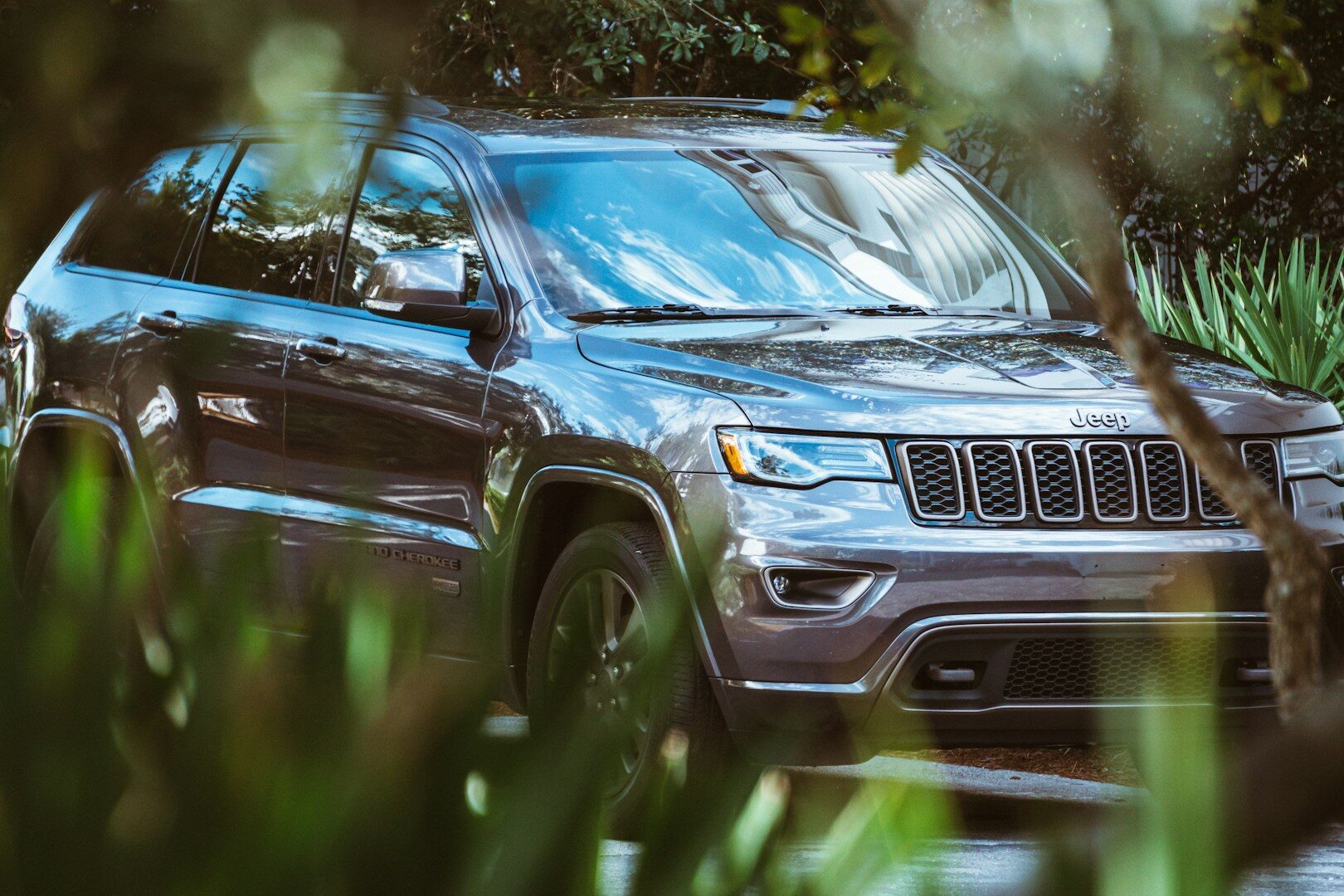
Stellantis wants Belvidere to feel like a win. On Thursday, the company said it’s raising its investment in the shuttered Illinois assembly plant to more than $800 million and confirmed the factory will build the next-generation Jeep Cherokee. Buried a few paragraphs down, though, was the number that actually matters: retail production won’t start until the second half of 2029. That’s not a typo, and it’s not a rounding error. It’s a two-year slip from what Stellantis promised less than a year ago, and the platform switch behind it says more about Stellantis’s finances than about the Cherokee.
Belvidere has been dark since February 2023. Its shutdown became one of the defining grievances of that year’s UAW strike against Detroit’s automakers, and reopening it was one of the union’s headline wins when the two sides settled. Since then, Stellantis has announced the plant’s comeback in stages, each one sounding more definitive than the last, each one pushing the actual restart a little further out.
The clearest version of the plan came in October 2025, when Stellantis unveiled a $13 billion U.S. investment plan, the largest domestic commitment in the company’s 100-year history. Of that, $600 million was earmarked for Belvidere, which was set to build the Jeep Cherokee and Jeep Compass, with an initial production launch expected in 2027 and roughly 3,300 new jobs. That release also quietly moved a previously planned midsize truck out of Belvidere and over to Toledo, a reminder that even Stellantis’s product plans for this plant have never been static.
Thursday’s update raises the investment by another $200 million and confirms the next-generation Cherokee will be the first U.S. vehicle built on STLA One, Stellantis’s new global vehicle architecture. Pilot production is now targeted for the first half of 2028, with retail sales following in the second half of 2029. Stellantis says it has already spent more than $60 million through July on stamping, body, paint and general assembly upgrades, and it’s extending supplemental unemployment benefits, healthcare coverage, pension-credit protections and relocation assistance for workers who have been waiting since 2023. CEO Antonio Filosa said the plan “creates the best long-term outcome and stability for our employees, customers and stakeholders.”
Notice what’s missing. The Jeep Compass, explicitly part of the October 2025 plan, isn’t mentioned by name anymore. Stellantis now says only that Belvidere is expected to build “at least two vehicles” on the new architecture, language vague enough to cover a lot of outcomes, including one where Compass quietly disappears from the lineup.
STLA One is not a small technical footnote. Stellantis introduced it in May 2026 as a mega platform meant to eventually underpin more than 30 models and two million-plus units annually by 2035, folding five separate platforms into one shared architecture. The company is targeting 20 percent cost efficiency from the move, along with up to 70 percent parts reuse across its lineup by 2030. That’s the real project here: not one SUV, but a wholesale rebuild of how Stellantis engineers and builds nearly everything it sells.
For readers who don’t spend their weekends thinking about body-in-white tooling, a vehicle platform isn’t just a shared chassis blueprint. It dictates the welding and joining methods on the line, the stamping dies for major structural panels, and the electrical architecture running through the car, including, on STLA One, 800-volt capability and steer-by-wire ambitions. Consolidating five platforms into one is how a struggling automaker saves billions on engineering and tooling. It’s also why reopening Belvidere was never going to be as simple as flipping a switch. A plant that built the old Cherokee on the old bones can’t just resume. It has to be substantially rebuilt to produce a car engineered around principles that didn’t exist when the plant went dark.
Here’s the detail that should give Belvidere workers pause. The extra $200 million didn’t buy speed. It bought time. STLA One itself doesn’t launch anywhere in the world until 2027, meaning Stellantis is asking a plant that hasn’t built a car since 2023 to be one of the first places on Earth to prove out a platform that’s still in development. There’s no established STLA One production line elsewhere to borrow tooling shortcuts or trained line workers from. Belvidere isn’t just restarting. It’s a pilot program.
That risk makes more sense once you look at where Stellantis has been. The company forced out CEO Carlos Tavares in December 2024 after a disastrous year of inventory pile-ups and dealer anger, installed 25-year company veteran Antonio Filosa in his place, and has spent the year and a half since trying to convince investors and Washington that it’s serious about building in America. The strategic plan unveiled alongside STLA One in May 2026 explicitly targets half of global volume on just three platforms by 2030. Betting Belvidere’s rebirth on the newest of those platforms isn’t an accident. Stellantis has leaned on ambitious multi-year turnaround plans before to reset investor confidence, with mixed results.
Belvidere’s workforce isn’t paying for that bet with lost income, at least not yet. The 2023 UAW contract obligates Stellantis to keep funding supplemental unemployment pay and healthcare for idled workers, and Thursday’s announcement extends those protections along with pension-credit adjustments and relocation help. That’s real money Stellantis is spending to keep thousands of workers whole while they wait, on top of the plant investment itself. What those workers are losing is time. Assuming the 2029 date holds, Belvidere will have sat idle for more than six and a half years, roughly the production life of an entire vehicle generation, before it builds another car for sale.
There’s an irony worth sitting with. The old Cherokee’s cancellation is what killed Belvidere in the first place. Stellantis stopped building it there in early 2023 as sales cooled and the company consolidated production elsewhere. Now a new Cherokee, engineered from scratch on a platform that shares nothing with the old one, is what’s supposed to bring the plant back to life. Same nameplate, same zip code, completely different car underneath.
Stellantis isn’t alone in betting its factory strategy on fewer, bigger platforms. It’s the direction the whole industry is heading as automakers try to squeeze out engineering and tooling costs that ballooned during the EV transition. We’ve written before about how thin the growth numbers behind some of Stellantis’s other big claims can get, and the pattern shows up elsewhere too: GM’s own plant-reopening headlines this month buried a rockier story out of Indiana and Tennessee. Announcements about reopened factories tend to travel faster than the fine print about what those factories are actually being asked to build.
Restarting a stalled assembly line is one kind of hard. Launching a platform that doesn’t exist anywhere else in the world, inside a plant that hasn’t built a car in years, is another kind of hard entirely. Stellantis just signed Belvidere up for both at once, and asked its workers to wait until 2029 to find out if it was worth it.