

Among the poorest fifth of American families, 59.4 percent owned a vehicle in 2025, down from 66.4 percent in 2022. The Federal Reserve, which published those figures Oct. 9 in its triennial Survey of Consumer Finances, called it “the lowest vehicle ownership rate for this group in the past 20 years.”
That number belongs beside the ones making the rounds this week about America’s $1.7 trillion in car debt. The total is accurate: the New York Fed put auto loan balances at $1.71 trillion at the end of June. The auto loan delinquencies inside that pile are concentrated among lower-income borrowers with thinner credit, buying used cars from lenders at the edge of the market, and for a growing number of those families it is ending with no car in the driveway. The one federal measure aimed at car payments, a new interest deduction, goes to buyers of new, U.S.-assembled vehicles, the part of the market least likely to be in trouble.
Where the one-in-five figure comes from
The “one in five” comes from the same Fed survey. In 2025, 19.6 percent of families reported being late on loan payments at some point in the prior year, up from 12.2 percent in 2022, and 8.2 percent said they had fallen two months or more behind. The Fed asks that question of families carrying any debt, and it covers any loan: a credit card, a mortgage, a student loan, a car note. The survey does not report how many of those families were behind on a car payment specifically, so a graphic that says one in five households is behind on auto loans is stretching the data past what it measures.
What the survey does show about cars is a retreat. The share of families holding a vehicle loan fell to 32.1 percent from 34.7 percent. The share owning any vehicle fell to 84.2 percent from 86.6 percent, a drop the Fed traces to the bottom income group. The median value of the vehicles families did own fell 14 percent, to $26,000. And the share of families whose debt payments eat more than 40 percent of their income rose to 8.6 percent from 6.5 percent, which the Fed’s release said was the highest since its 2013 survey.
Auto lenders reached for weaker credit this spring
The New York Fed’s household debt report for the second quarter, released Aug. 11, shows lenders writing more car loans to riskier borrowers. Originations totaled $211 billion, up from about $181 billion in the last quarter of 2025, according to the bank’s February report. The full report says the median credit score on newly originated auto loans fell seven points in the quarter. The bank moved to VantageScore 4.0 at the start of 2026, so that drop is measured on the new scale, quarter over quarter.
At the same time, the annualized share of auto loan balances moving into serious delinquency, meaning 90 days or more past due, was 3.00 percent, up from 2.93 percent a year earlier. The New York Fed measures that in dollars, not people. A $45,000 pickup loan going bad moves the number more than a $9,000 loan on an old Corolla, so the measure tells you how much money is souring, not how many households are. Joelle Scally, an economic policy advisor at the bank, put it this way in the release: “Still, new delinquencies for auto loans and credit cards remain at elevated levels, a trend we’ll continue to monitor.”
New York Fed researchers broke down who is falling behind in a February 2025 analysis. Delinquencies were concentrated in loans from non-captive auto finance companies, the lenders not owned by an automaker. Their median borrower had a credit score of 636 at origination, against 755 for the captive finance arms that automakers run to sell their own cars. Small banks and credit unions had the lowest delinquency rates. The rise was steepest in the lowest-income zip codes, and the non-captive loans were more likely to be financing used cars. The Auto Wire has tracked how that end of the market has been piling up delinquencies and repossessions through 2026.
What the same used car costs at 8.81 percent and at 19.10 percent
Credit bureau Experian’s second-quarter figures put the average used-car loan at $27,852 over 67.9 months. The average used-car APR was 8.81 percent for prime borrowers and 19.10 percent for subprime borrowers, with deep subprime at 21.62 percent.
Apply both rates to the same $27,852 loan over 68 months. By The Auto Wire’s math, the prime borrower pays about $522 a month and roughly $7,600 in interest over the life of the loan. The subprime borrower pays about $673 a month and roughly $17,900 in interest. That is about $151 more every month and more than $10,000 more in total for an identical car, charged to the person least able to absorb it. New-car buyers are stretching too: The Auto Wire reported last week that the average new-car payment has reached $787, with a quarter of buyers signing for 84 months.
Falling used prices make it harder to get out. The Bureau of Labor Statistics’ index for used cars and trucks was down 1.5 percent in the year through September. A borrower whose car loses value faster than the loan balance shrinks owes more than the car is worth, and the New York Fed’s researchers flagged that risk in their 2025 analysis. That gap gets rolled into the next loan or written off after a repossession, with the shortfall often billed back to the borrower.
A 12.8-year-old fleet and a 34 percent jump in gas prices
Families who skip the loan keep the car they have. The average light vehicle on U.S. roads was 12.8 years old in 2025, according to the most recent annual figure from S&P Global Mobility. Passenger cars averaged 14.5 years and light trucks 11.9, across 289 million vehicles in operation, with a scrappage rate of 4.5 percent. That 12.8 is the “nearly 13 years” in the graphics now circulating.
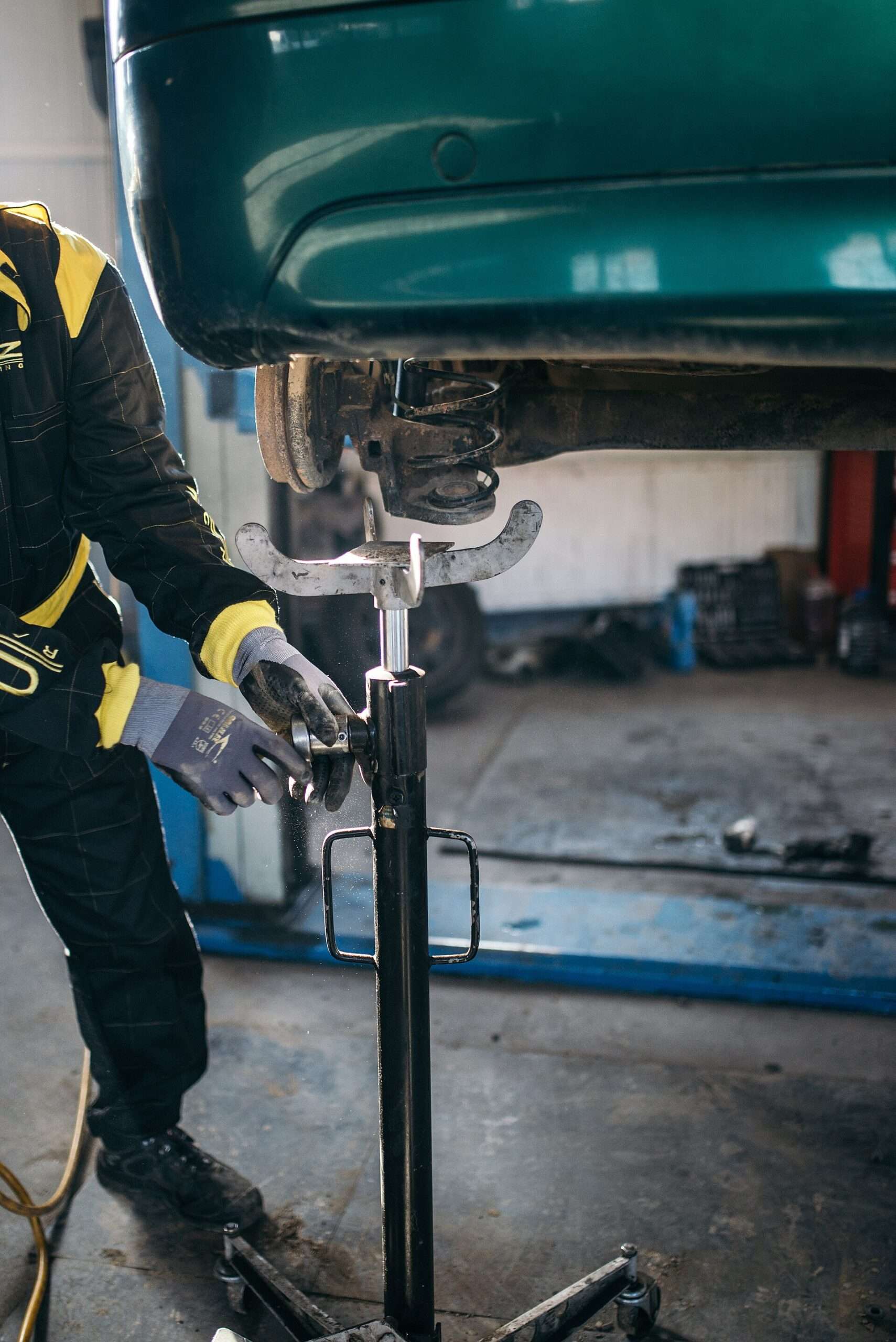
Keeping a 14-year-old sedan alive moves the household’s car spending from the finance company to the repair shop and the gas station, and both got more expensive this year. The September consumer price index showed gasoline up 34.2 percent from a year earlier and motor vehicle maintenance and repair up 5.8 percent. Car insurance, the one bright spot, fell 5.0 percent, as The Auto Wire detailed in its breakdown of the September CPI. For a family already late on a bill, a four-figure suspension repair on a car worth a few thousand dollars forces the same call a lender makes on a bad loan: put more money in, or let it go.
Tricolor and the lenders at the bottom of the market
The lenders serving those borrowers have their own problems. Tricolor Holdings, which federal prosecutors describe as a subprime auto retailer and financing company, filed for Chapter 7 liquidation on Sept. 10, 2025. In December, the U.S. Attorney’s Office in Manhattan charged founder and former CEO Daniel Chu and former COO David Goodgame with fraud. Former CFO Jerome Kollar and former finance executive Ameryn Seibold pleaded guilty and are cooperating. Prosecutors allege that by August 2025 Tricolor had pledged about $2.2 billion in collateral to its lenders while holding only about $1.4 billion in real collateral. The charges against Chu and Goodgame are allegations, not findings.
In August of this year the Securities and Exchange Commission filed civil fraud charges against Chu, Kollar and Seibold, saying Tricolor raised more than $1.9 billion through asset-backed securities from at least 2020 and still owed investors more than $945 million in principal when it went bankrupt.
The mechanics explain why a case like this reaches the finance office. A subprime lender typically funds its loans with borrowed money. It borrows from banks on credit lines secured by the car loans it writes, then bundles those loans into bonds sold to investors, and each car loan is supposed to back one funding source at a time. The SEC alleges Tricolor pledged the same loans to multiple deals and dressed up defaulted loans to look current. When a lender like that fails, its borrowers still owe; their loans are assets of the bankrupt company, and only the address the payment goes to changes. The bigger cost is downstream. Investors who lose money on one subprime auto deal demand more to buy the next one, and that price works its way into the APR quoted to the next 600-score applicant at a buy-here-pay-here lot.
The car-loan tax break skips the used-car lot
Washington’s answer to car payments points the other way. The new car loan interest deduction lets taxpayers deduct up to $10,000 a year in interest for 2025 through 2028, on loans originated after Dec. 31, 2024. The IRS says plainly that “used vehicles do not qualify.” The vehicle has to be new, for personal use, and assembled in the United States, which buyers can check on the window label or through the plant code in the VIN, and the VIN goes on the tax return every year the deduction is claimed. The deduction starts phasing out above $100,000 in modified adjusted gross income, or $200,000 for joint filers.
A deduction is worth the interest multiplied by the taxpayer’s bracket. A new-car buyer in the 12 percent bracket who pays $3,000 in interest saves $360; in the 22 percent bracket, $660. The subprime used-car borrower from the example above pays about $5,000 in interest in the first year alone and saves nothing. The Auto Wire has looked at how little the deduction moves even for buyers who qualify. Set against the Fed’s data, the bigger issue is who it leaves out: the borrowers paying the highest rates and falling behind most often are disproportionately financing used cars.
What to watch through tax season
The New York Fed’s next quarterly report will show whether lenders kept pushing into lower credit scores through the summer and whether the serious-delinquency flow stays at or above 3 percent. Next spring’s returns will cover the interest deduction’s second year, and its benefits will again stop at the new-car lot, while used-car shoppers face gas prices that were a third higher this September than last. If the September fuel numbers hold into winter, the families keeping 14-year-old cars on the road will feel it at the pump before they feel it at the lender.
The Fed’s ownership figure is the one to keep checking. A missed car payment shows up in a lender’s delinquency report. A family that sells the car, loses it to the tow truck, or never replaces the one that died shows up only in a survey that comes out every three years, and the last one found the share of the poorest households with a vehicle down 7 percentage points.
If money got tight, would you keep paying a car loan ahead of every other bill, or sell the car and find another way to get to work?