
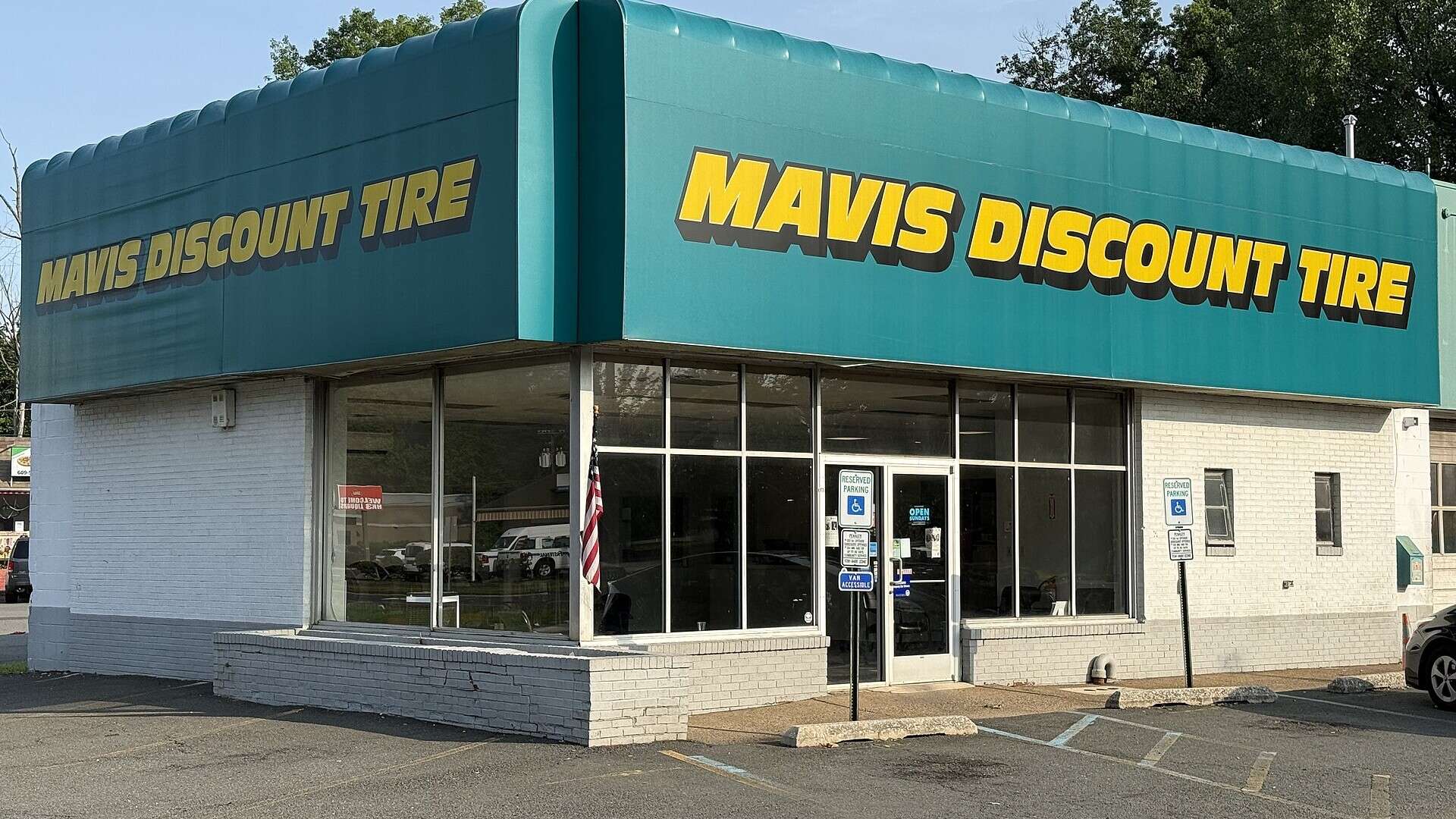
Pennsylvania drivers who think Mavis Discount Tire charged them for a repair they didn’t need have until January 26, 2027, to tell the state Attorney General’s office. A complaint filed by then is what qualifies a driver for a share of the $190,000 in restitution the chain agreed to pay. Drivers who never file get nothing from it.
The money comes from an Assurance of Voluntary Compliance filed September 28 in the Philadelphia County Court of Common Pleas under Case ID 260903390. Mavis Tire Supply LLC, the White Plains, N.Y., company that does business as Mavis Discount Tire, signed it on September 21. Senior Deputy Attorney General James Wise signed for the Commonwealth on September 25, and Attorney General Dave Sunday’s office announced the settlement the day it was filed. Mavis agreed to pay $215,000 within three days of signing: $190,000 in restitution and $25,000 to cover the cost of the investigation. A $100,000 civil penalty is written into the agreement but suspended, and it comes due only if a court finds Mavis broke the terms.
I read the full 14-page filing. It sets up a refund program that pays only people who complain, attached to an agreement that mostly tells Mavis to follow laws it was already bound by. For anyone weighing a quote for pads, rotors and a fluid flush, the stronger protection is the rulebook Pennsylvania already imposes on every repair shop in the state, and it costs nothing to use.
What Pennsylvania says happened at Mavis service counters
The Commonwealth alleges that, in certain instances, Mavis employees advised customers to authorize repairs and services that were not reasonably necessary for the safe or proper operation of their vehicles, then took payment for them. It also alleges that customers paid for work Mavis didn’t complete, and for work that was “not performed in a skilled and workmanlike manner.” The state says that conduct violated the Unfair Trade Practices and Consumer Protection Law and the state’s auto repair regulations, including the rule against telling a customer a repair is necessary when it isn’t and the rule against charging for repairs that were never performed.
Mavis denies all of it. The filing records the company’s position that it maintains established operational standards and policies, and that if any of the alleged conduct took place, it was carried out by employees who failed to follow them. Mavis says it signed to avoid the time and expense of litigation, without admitting liability, and the Attorney General’s release notes that a settlement of this kind is not an admission of a violation.
That defense is hard to test from outside a company of this size. Mavis says it has more than 3,500 owned and franchised service centers across its brands in the U.S. and Canada, a count that grew after it completed its purchase of Midas in 2025, and what happens at any one counter depends on the person behind it. Store-level conduct has tested the chain’s controls before: in August, a Mavis manager in the Atlanta area was accused of helping steal 438 tires from his own store.
Neither the agreement nor the press release says how many complaints the office received, what years they cover, or how much customers lost in total. Without those figures, the public record gives no way to judge whether $190,000 is enough.
Who gets the $190,000, and who decides
The restitution is reserved for three groups: people who had complained to the Commonwealth about Mavis by the date of the agreement, people who complain within 120 days after it, and anyone else the office decides is eligible. The 120-day window produces the January 26 deadline. The press release says complaints must come “with sufficient support,” so the original estimate, the final invoice and any second shop’s written opinion are worth attaching.
The state controls the payout. Under the agreement, the amount, timing and manner of distribution are “within the sole discretion of the Commonwealth.” It sets no per-claim amount and says nothing about how the fund will be divided if valid claims add up to more than $190,000. Once checks go out, any that stay uncashed after reasonable attempts to reach the payee and a wait of at least 90 days can be voided. Whatever is left, interest included, moves to an Attorney General account spent on public protection and education. None of it returns to Mavis.
Complaints go to the Bureau of Consumer Protection through its online consumer complaint form, by phone at 1-800-441-2555, or by email to scams@attorneygeneral.gov.
Georgia’s 2022 Mavis settlement required more money from fewer stores
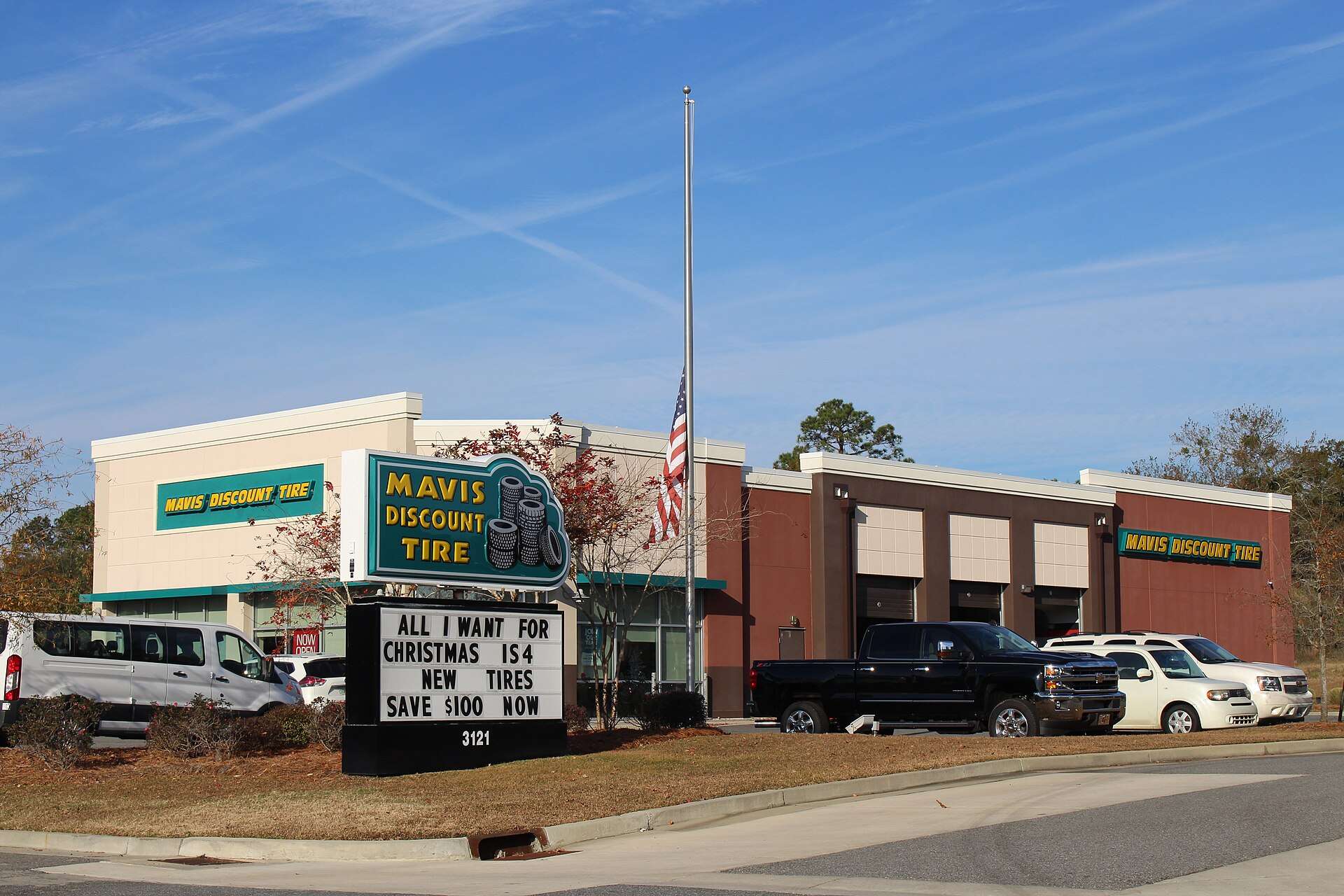
On March 15, 2022, Mavis Tire Supply settled with the Georgia Department of Law over allegations that read like an early draft of Pennsylvania’s: employees telling customers they needed expensive repairs or parts when they didn’t, used parts represented as new, poor or incomplete work that sometimes created new problems, and problems left unresolved despite promises of more work or refunds. Georgia said at the time that Mavis had more than 50 locations in that state.
Georgia’s deal required $15,804.63 in restitution to identified consumers, an $80,000 claim fund for others, and $200,000 in civil penalties. Of the penalties, $150,000 was due before December 21, 2022, and the other $50,000 became payable only if Mavis violated the settlement before the end of 2024.
By The Auto Wire’s math, not either state’s, Georgia’s settlement called for $245,804.63 in unconditional payments from a state where Mavis had more than 50 stores. Pennsylvania’s calls for $215,000 from a state where, according to the Attorney General, Mavis runs more than 130. Georgia made Mavis pay a civil penalty up front, while Pennsylvania’s agreement collects no penalty unless a court finds a breach. Spread across 130 stores, Pennsylvania’s restitution fund works out to about $1,460 per location.
Both settlements land in the same place on conduct. Georgia required Mavis to implement “remedial measures” to comply with the state’s Fair Business Practices Act, and Pennsylvania’s terms, covered below, are only somewhat more specific. Each state enforces its own consumer law, so each deal stops at the state line. Georgia’s compliance period ran out at the end of 2024 and never applied in Pennsylvania. Pennsylvania’s agreement binds nothing at a Mavis store across the Delaware River in New Jersey.
What the agreement requires Mavis to change
Section II of the agreement bars Mavis from violating the Consumer Protection Law and the auto repair regulations, listing the same provisions the state accused it of breaking. Mavis must “maintain measures reasonably necessary to oversee and train” its employees and monitor how they do their jobs. For two calendar years beginning October 1, 2026, it must perform annual compliance assessments and send each report to the Commonwealth within 30 days of finishing it. It must also turn over the billing and contact information the state needs to pay restitution.
The agreement does not require a second technician to confirm a recommended repair, photographs or measurements of worn parts, automatic return of replaced parts, or any change in how service advisers are paid or what sales targets they work under. The compliance reports go to the Attorney General’s office, and nothing in the agreement makes them public. For two years, Mavis assesses its own compliance and reports the results to the state.
That matters because every recommendation at a service counter is also a sale, and service work carries a large share of auto retail’s profit. An agreement that addresses training but not incentives leaves the economics of the counter where they were.
The heavier enforcement tool sits in the statute. Under Section 8(a) of Pennsylvania’s Unfair Trade Practices and Consumer Protection Law, a company that violates the terms of an assurance filed in court owes a civil penalty of up to $5,000 for each violation. The agreement adds that a breach entitles the state to ask a court for relief up to and including forfeiture of Mavis’s right to do business in Pennsylvania. Before any of that, the state must send Mavis a “Default Notice” and give it 10 business days to explain why no default occurred.
The repair rules every Pennsylvania shop already has to follow
The regulation at the center of the case, 37 Pa. Code § 301.5, applies to every repair shop in the state, from a dealer service lane to a two-bay independent. It gives customers more leverage than most of them use.
Before starting work, a shop must write down the odometer reading and either the specific repairs you asked for or a description of the problem you reported, and give you a copy where possible. It cannot charge for repairs you didn’t authorize in writing unless the price was clearly posted. When the cost isn’t known at drop-off, the shop has to say so and let you pick one of three options: no work until you’re told the exact repairs and total price and you approve them; work can start but must stop for your approval at a dollar limit you set; or the shop fixes the problem with no cap after telling you the hourly labor rate. If you approve work over the phone, the shop must log the date and time, the employee who took the call, your name and the exact authorization you gave.
Before you authorize anything, the shop must also disclose that “the customer has the right upon request to have parts replaced returned to the customer at the completion of the service,” or to inspect them if they’re going back to a manufacturer or another party under a warranty or rebuilding arrangement. It has to tell you whether a part is new, used, reconditioned or rebuilt. If the work wasn’t done in a skilled and workmanlike manner, the shop must fix it promptly at no charge, provided you complain promptly.
The old-parts rule is the cheapest audit a driver has. Worn brake pads still show how much friction material was left on them, and most rotors carry a minimum-thickness figure cast or stamped into the metal, so a second shop can measure both in a few minutes. Asking for numbers before approving the job does the same work at the counter: pad thickness in millimeters, rotor thickness against that minimum, tire tread depth in 32nds of an inch. A second shop can check a measurement, while a warning that the pads are “getting low” gives nobody anything to check, including a state investigator reviewing your complaint later.
Individual claims survive the settlement
The agreement says it does not waive or limit any individual’s right to bring a claim against Mavis, with one carve-out: Mavis may argue that money a customer recovers in another action should be offset by restitution the state already paid, and the state will tell Mavis what, if anything, a given customer received. Separately, Section 9.2 of the Consumer Protection Law lets a person who loses money on a purchase made mainly for personal, family or household use sue for actual damages or $100, whichever is greater, and lets a court award up to three times actual damages. For a disputed brake job, the Attorney General complaint is the practical route. For larger losses, a lawyer can say whether a private case makes sense; this column isn’t legal advice.
Deadlines and reporting dates in the Mavis agreement
January 26, 2027, is the cutoff for new Pennsylvania complaints to count toward restitution. Mavis’s two years of annual compliance assessments began October 1, 2026, and each report is due to the state within 30 days of completion. A Default Notice from the Attorney General is the step that would put the suspended $100,000, and the $5,000-per-violation exposure behind it, in play.
Drivers outside Pennsylvania who had a similar experience at a Mavis, Midas or other store in the company’s network gain nothing from this agreement. Their complaint goes to their own state attorney general.
When a service adviser tells you the brakes are due, do you ask for the measurements and the old parts back, or do you take the shop’s word for it?