
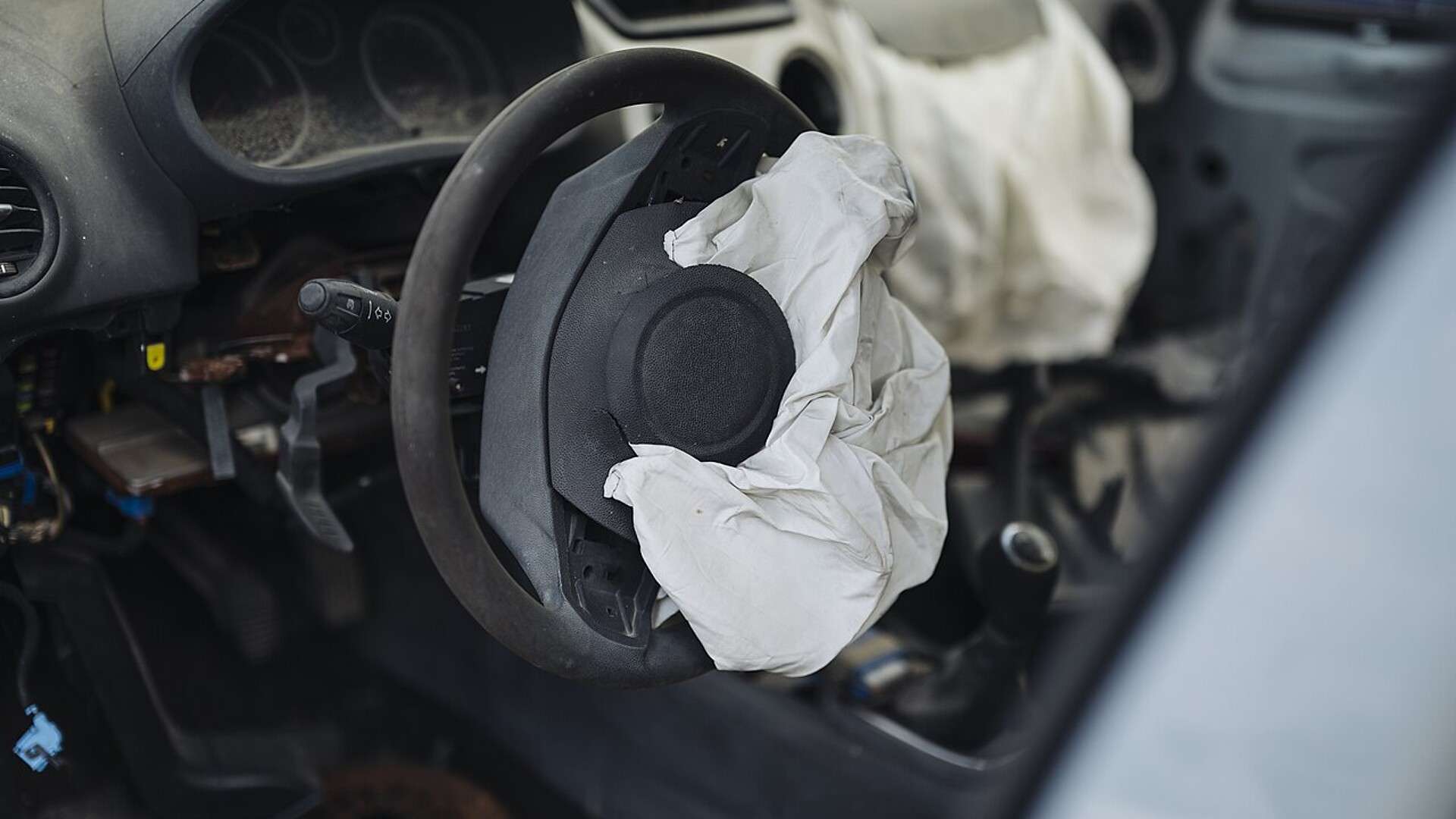
Eleven drivers have now died in crashes where a replacement airbag inflator stamped DTN60DB burst open, and the federal order meant to pull the rest of those inflators out of cars is addressed to people the government cannot identify.
On April 29, NHTSA issued a final decision under 49 U.S.C. § 30118(b) declaring the inflators defective and barring anyone from selling or importing them. The same order directs “any manufacturer of the subject inflators, including but not limited to any person who has imported the subject inflators” to notify owners and fix the defect. In the same document, the agency wrote that it had been “unable, despite substantial efforts, to obtain sufficient information to estimate the number of subject inflators in the United States.”
The ban can stop the next sale. For the inflators already sitting in steering wheels, the recall machinery the law promises has no company to run it, and the job of finding them has fallen to the people driving the cars.
How a parts importer becomes a manufacturer under federal law
The vehicle safety statute does not limit “manufacturer” to the company that built the thing. Its definitions section covers anyone “importing motor vehicles or motor vehicle equipment for resale.” That is why NHTSA could write an order aimed at importers it has never named. Under the law, whoever brought the inflators across the border for sale inherited the same notice-and-remedy duties an automaker carries, plus a requirement in the order to file a defect report with NHTSA within five business days of learning about it.
Even a cooperative importer would run into the way recall notices are addressed. For replacement equipment, 49 U.S.C. § 30119(d) sends the notice to “the most recent purchaser known to the manufacturer.” An automaker can mail a recall letter to every registered owner of a VIN. A seller of loose inflators knows only who ordered the box. NHTSA’s April 2 initial decision found that in at least ten of the twelve cases it had then documented, the inflator went in as a replacement after an earlier crash. In January, the agency said most of the cars carried salvage or rebuilt titles. The person behind the wheel today may be several sales removed from whoever bought the part.
Nothing NHTSA has released since April names an importer. Its September 3 consumer alert still described each part as a “defective and likely illegally imported inflator” and told owners who find one to report it to Homeland Security Investigations or the FBI. Both are law enforcement agencies, and neither one runs a recall.
The company on the label says the inflators aren’t its own
The DTN on the inflator refers to Jilin Province Detiannuo, a Chinese airbag supplier. NHTSA’s own documents give it two names: “Automobile Safety System Co., Ltd.” in the investigation file and “Safety Technology Co., Ltd.” in the Federal Register notice of the initial decision.
According to the final decision, NHTSA sent DTN an information request on December 23, 2025. The company answered on February 3 with some production and component data, then did not respond to a follow-up request. When the agency took public comment on its initial decision, DTN argued that “it cannot be proven that the inflators in question were indeed manufactured by DTN” and that it believed the part was “a counterfeit of our product manufactured by another company.” NHTSA wrote that DTN offered no evidence for that claim and that it “does not impact or diminish” the defect finding. In January, NHTSA had said that DTN acknowledged on its own website that these inflators are prohibited from sale in the United States.
For the ban, DTN’s argument made no difference. A § 30118 order attaches to the part, which NHTSA identified by the DTN60DB marking and two bar-code sequences, 144415654 666631 and 144415654 666633. Genuine or knockoff, a part carrying those markings is illegal to sell. For the remedy, the argument settles the matter in practice. A recall campaign needs someone with money, replacement parts, and a list of customers. A foreign supplier that disowns the part and ignored the agency’s follow-up request is not going to provide any of them.
The order drew three public comments: DTN’s, one from a private individual, and one from the Automotive Safety Council, which NHTSA said generally supported the decision without adding information about these inflators.
Eight months of production, more than three years of crashes
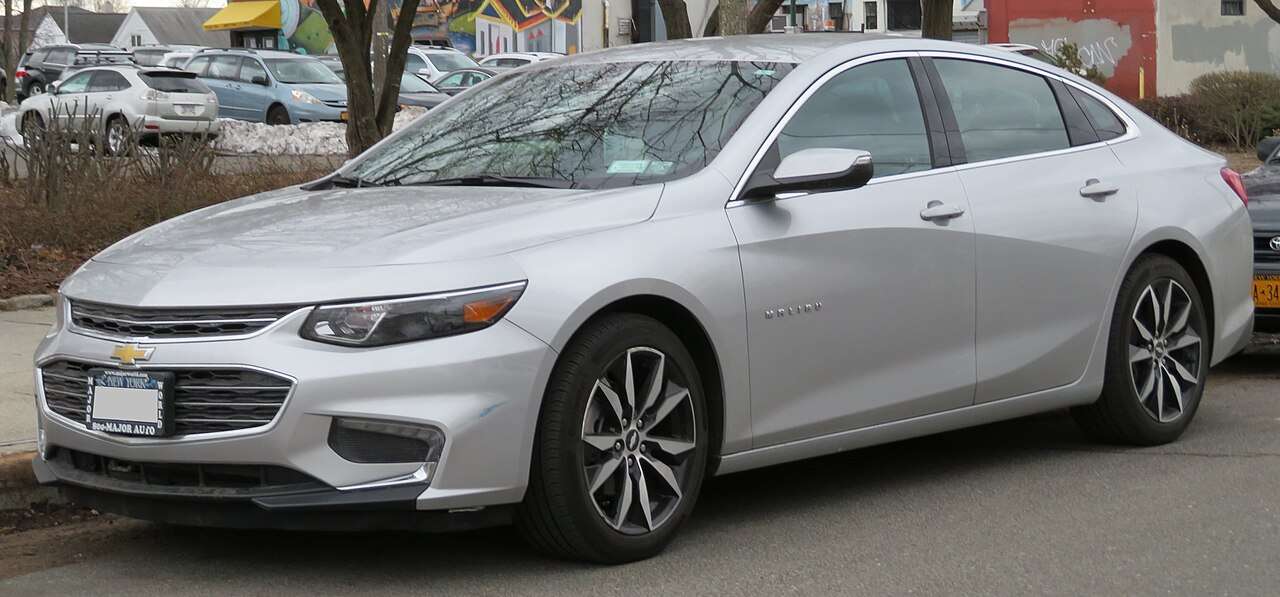
The initial decision lists all twelve incidents NHTSA knew of in April, with the build date of each inflator where investigators could find it. I lined them up. Of the eleven inflators with a known build date, every one was made between November 2021 and June 2022. The crashes started on May 30, 2023, in Dallas, and the twelfth on the list killed a driver in Clarksdale, Mississippi, on February 16, 2026, in a 2020 Malibu fitted with an inflator built in June 2022.
An inflator does not wear out the way a brake pad does. It sits behind the steering-wheel cover, unseen and untested, until the next crash. That means the ban arrived almost four years after the newest inflator in the case file was built, and it has nothing to say about the units already installed. The toll has kept rising on NHTSA’s own count:
| NHTSA document | Date | Crashes | Deaths | Severe injuries |
|---|---|---|---|---|
| Investigation EA25005 opened | Oct. 21, 2025 | 8 | 6 | 2 |
| Consumer warning | Jan. 13, 2026 | 10 | 8 | 2 |
| Initial and final decisions | April 2 and 29, 2026 | 12 | 10 | 2 |
| Current NHTSA guidance | After Sept. 3, 2026 | 14 | 11 | 3 |
The size of the problem has gone the other way. When the Office of Defects Investigation opened the case in October 2025, its opening document listed the population as “10,000 (Estimated).” By the final decision six months later, NHTSA said it could not estimate the number at all.
Geography shows one pattern. Three of the twelve crashes in the April list happened in Texas, in Dallas, Fort Worth and Austin, and the September death in a 2018 Chevrolet Equinox happened in Dallas on August 27. That puts four of the 13 crashes with a published location in one state. NHTSA has not said why. The other locations run from Sarasota, Florida, and Philadelphia to Phoenix, West Valley City, Utah, and Hayward, California.
The Equinox also broke the model pattern. Every earlier case involved a Malibu or a Hyundai Sonata, and NHTSA warned in January that it “does not have information to confirm the risk is limited to these makes and models.” The September crash bore that warning out.
Where federal law reaches repair shops, and where it stops
The safety act’s anti-tampering provision, 49 U.S.C. § 30122(b), bars a “manufacturer, distributor, dealer, rental company, or motor vehicle repair business” from knowingly making inoperative a safety device installed to meet a federal standard. Private individuals are not on that list, which matters when a wrecked car is rebuilt by a private seller rather than a shop. The April order is wider. Its sale and import ban applies to any person.
The penalties are large on paper. NHTSA’s civil penalty schedule sets a maximum of $27,874 per violation for breaking the act’s defect and recall provisions, counts each piece of equipment as a separate violation, and caps a related series at $139,356,994. The final decision says the agency is not giving up any civil or criminal action. Collecting from a seller nobody has identified is another matter.
A factory defect works differently. When an automaker installs a bad inflator, federal law requires it to fix the car without charge, and owners can find the recall by VIN. The Auto Wire’s look at GM’s repeated Silverado and Sierra curtain airbag recalls shows how messy that process can get, but the owner still has a dealer to call and a company paying for the parts. A DTN60DB owner has neither, and as we reported in September, a clean recall check says nothing about these parts.
What owners of crash-repaired cars should check
NHTSA’s guidance for owners draws a specific line. If a car was in a crash with an airbag deployment since 2020 and the repair was not done by the manufacturer’s dealership, have a reputable mechanic inspect it. Do not take the steering wheel apart yourself. If the inflator is marked DTN60DB, NHTSA says the car should not be driven until a genuine part replaces it. Owners can report a suspect inflator to Homeland Security Investigations, the FBI, or NHTSA’s Vehicle Safety Hotline at 888-327-4236.
The agency describes what happens when the part fails in a single sentence: “Instead of inflating the air bag in a crash to protect the driver, these inflators explode, sending large metal fragments into drivers’ chests, necks, eyes and faces.” NHTSA said the Dallas Equinox crash in August, like the earlier ones, was otherwise survivable.
With no manufacturer remedy to claim, the cost of the inspection and of a genuine module falls on the owner unless the seller or the shop that did the work can be made to cover it. Buyers shopping for a used Malibu, Sonata or Equinox with a rebuilt title should ask for the repair invoice that shows where the airbag parts came from, and should treat a seller who cannot produce one as a reason to walk away.
Two things will show whether the April order does more than stop new sales: whether any importer ever files the defect report the order demands, and whether federal investigators bring a case against the people who sold these inflators. Until one of those happens, the recall exists on paper and the search for the parts is being done one inspection at a time, paid for by owners.
When the importer of a deadly part can’t be found, should owners pay to find and replace it, or should the federal government cover those inspections itself?