
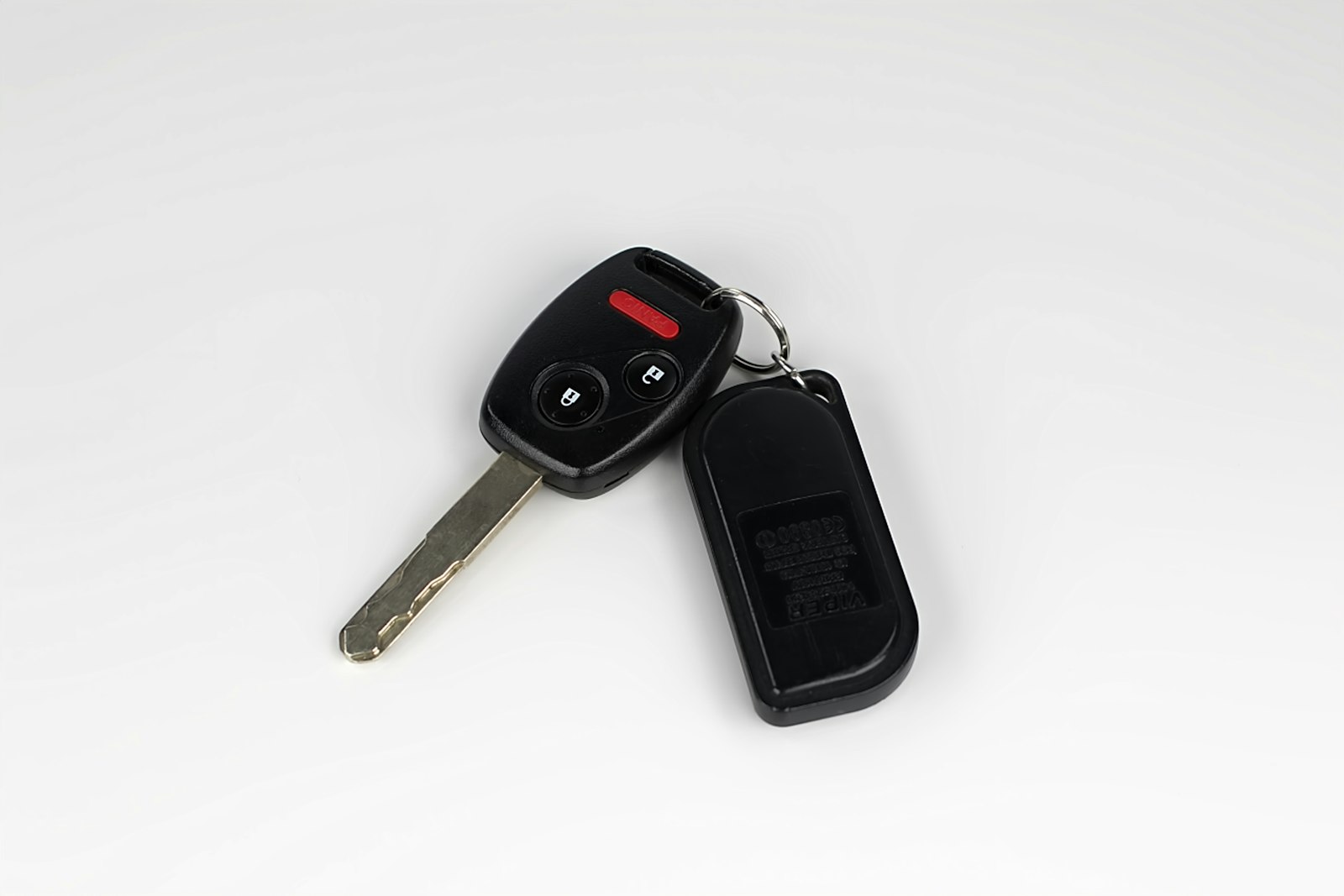
Hyundai is adding a remote engine immobiliser to the Venue over the air, marketed as protection against theft including key cloning. It is a genuinely useful feature and it deserves a closer look than the press release will get, for two reasons.
The first is that Hyundai spent the last three years settling with 36 American attorneys general over cars it sold without an immobiliser at all.
The second is that a remote immobiliser does not do the thing most readers will assume it does.
Buyer’s guide: Best Car Security Cameras in 2026 for Parking and Theft Protection
What is confirmed, and what is not
Hyundai Motor India has published no press release on this feature. The Auto Wire checked its media centre index across the relevant period and found releases on a concept teaser, a brand ambassador, EV charging and monthly sales, and nothing on a Venue immobiliser.
What Hyundai does document on its own site is the feature itself, currently scoped to a different car. Its Bluelink value-added services page describes a Remote Immobiliser and notes it is “available only in the New IONIQ 5.” It has not been updated to add the Venue.
Also confirmed: the all-new Venue is Hyundai’s first car in India to launch with over-the-air updates, and Hyundai advertises 20 controller-level OTA updates for it. Controller-level means it can rewrite the modules that run the car, not just the maps and the infotainment. So the delivery mechanism is real and documented, even if the announcement is not.
Treat the specifics — eligible variants, cost, cut-off dates — as unconfirmed until Hyundai publishes them.
What Hyundai says the feature does
The functional description on Hyundai’s own page is worth quoting because it is more precise than the marketing summary.
There are two modes. Proactive: a customer can arm the immobiliser through the app while parked, “preventing any unauthorized vehicle start.” Reactive: in the event of theft, the owner activates it through the app, “thus preventing vehicle from being re-started.”
And the key-cloning claim, verbatim: “Once the vehicle is immobilized, it ensures that the original or duplicate key can’t re-start the car.”
Read those three sentences again and notice the word doing all the work. Re-started. Not stopped. Re-started.
The feature acts after the theft, not during it
Here is the thing most coverage will get wrong, and Hyundai’s own older wording gives the game away. On its Bluelink overview page, the stolen vehicle immobilisation feature is described as immobilising the stolen car “as soon as it makes its first stop.”
That is not a bug. It is a safety requirement, and it is written into international vehicle regulation. UN Regulation 116, paragraph 8.2.4, states that it “shall not be possible for an immobilizer to enter the set state when the ignition key is in the engine running mode.” Nobody wants a car that can be switched off from a server while it is overtaking.
But it means the feature does not interrupt a theft in progress. It waits for the thief to park.
Now measure that against the attacks it is being sold against. Researchers at ETH Zurich demonstrated relay attacks on keyless entry and start systems across ten car models from eight manufacturers, opening doors and starting engines with the real key up to 50 metres away. Their conclusion is blunt: “Even if a PKES system uses strong cryptography (e.g., AES, RSA), it would still be vulnerable to our proposed relay attack.”
Then there is CAN injection, disclosed by Ken Tindell of Canis Automotive Labs in 2023, in which thieves reach the vehicle network through the headlight wiring and inject frames that impersonate the key receiver. His description of the mechanism: thieves “send CAN frames to send fake ‘Key is validated’ messages.” It bypasses the factory immobiliser entirely, using roughly ten dollars of parts hidden in a Bluetooth speaker housing.
Both attacks defeat the car at the moment of theft — we explained the first of them in why your key fob is broadcasting through your front door. A server-commanded immobiliser is silent at that moment, by regulatory design. Which makes this recovery assistance — closer in kind to stolen vehicle tracking than to the transponder in your key.
That is worth having. It is just not what “stops key cloning” implies. The distinction matters: an immobiliser can work exactly as designed and still not prevent the harm.
The company selling this is the company that left them out
Now the history, which is a matter of federal and state record rather than opinion.
In February 2023, NHTSA announced that Hyundai and Kia were launching a service campaign covering roughly 3.8 million Hyundai and 4.5 million Kia vehicles. The reason those cars were being stolen en masse was stated plainly: they lack an immobiliser.
The remedy was software. Extend the alarm from 30 seconds to a minute, and require the key to be in the ignition to start the car.
In December 2025, 36 state attorneys general settled with both companies for $9 million — $4.5 million in consumer restitution, $4.5 million to the states. The central allegation is the one to remember: in 2015, only 26 percent of the vehicles Kia and Hyundai sold in the United States were equipped with engine immobilisers, compared with 96 percent of vehicles sold by other manufacturers.
The same models were sold with immobilisers in Canada and Europe, where UN Regulation 116 made them a condition of type approval. America has no equivalent requirement, and Hyundai built to the standard each market demanded.
And the Venue itself is on the list. Hyundai’s anti-theft software campaign bulletin, filed with NHTSA, names the 2020 and 2021 Venue among the eligible vehicles.
So the nameplate now receiving a remote immobiliser as an innovation is a nameplate that, in another market, shipped without a basic one.
Did the software fix work? Yes, and by how much is documented
Credit where the data supports it. The Highway Loss Data Institute measured the upgrade and found a significant 46 percent reduction in theft claim frequency for upgraded vehicles, and a 52 percent drop in whole-vehicle theft.
It also found something nobody designed for: a significant 50 percent increase in vandalism claims, consistent with thieves breaking in, failing to start the car, and leaving damage behind.
Uptake as of December 2024 was 41 percent of eligible Hyundais and 40 percent of eligible Kias. A fix that works on four cars in ten is a fix with a distribution problem, which is precisely the problem over-the-air delivery solves. That is the honest case for what Hyundai is doing with the Venue.
The question nobody asks: who else can send the command
Every remote capability is also an attack surface, and in this case the regulator has already said so in writing.
UN Regulation 155, the cybersecurity management standard in force since January 2021, requires manufacturers to assess their vehicles against a list of threats in Annex 5. One entry on that list reads: “Manipulation of functions designed to remotely operate systems, such as remote key, immobiliser, and charging pile.”
The regulator considers remote immobiliser manipulation a hazard manufacturers must actively defend against. That is the same capability being marketed here as the defence.
The threat model moves accordingly. The thing to protect is no longer the key. It is the Bluelink account, the SIM, the back-end server and whoever holds credentials to it. Hyundai’s own page adds a further limit: the feature depends on “adequate power supply and uninterrupted network connectivity,” which means it is least available exactly where rural vehicle recovery is hardest.
This has already gone wrong at scale, in another industry
If that sounds theoretical, it is not. The same primitive — a server that can stop your car — has a documented failure record.
In August 2023 the Consumer Financial Protection Bureau sued auto loan servicer USASF Servicing over its use of starter-interrupt devices. The allegations include wrongfully disabling at least 7,500 vehicles belonging to borrowers who were not in default, activating warning tones more than 71,000 times against consumers not in default, and disabling at least 1,500 vehicles after expressly promising not to.
Different industry, different motive, identical capability. One company, one system, thousands of cars stopped in error. The question for any manufacturer building this into the vehicle itself is not whether the technology works. It is what the audit trail looks like on the day it fires at the wrong car.
What to remember
Forget the feature name. Remember what changed and what did not.
For twenty years the immobiliser was a physics problem solved locally: a chip in your key, a challenge and a response, a few centimetres of radio, and no network involved. It could not be attacked from another country because there was nothing to attack from another country.
The remote version moves that decision off the key and onto a server. That makes it more capable, more convenient, and updatable over the air to cars already sold — all real gains.
It also means the answer to who can stop your car is no longer whoever is holding the key.
Would a remote kill switch make you feel safer, or more uneasy about who controls it? Sound off in the comments.