
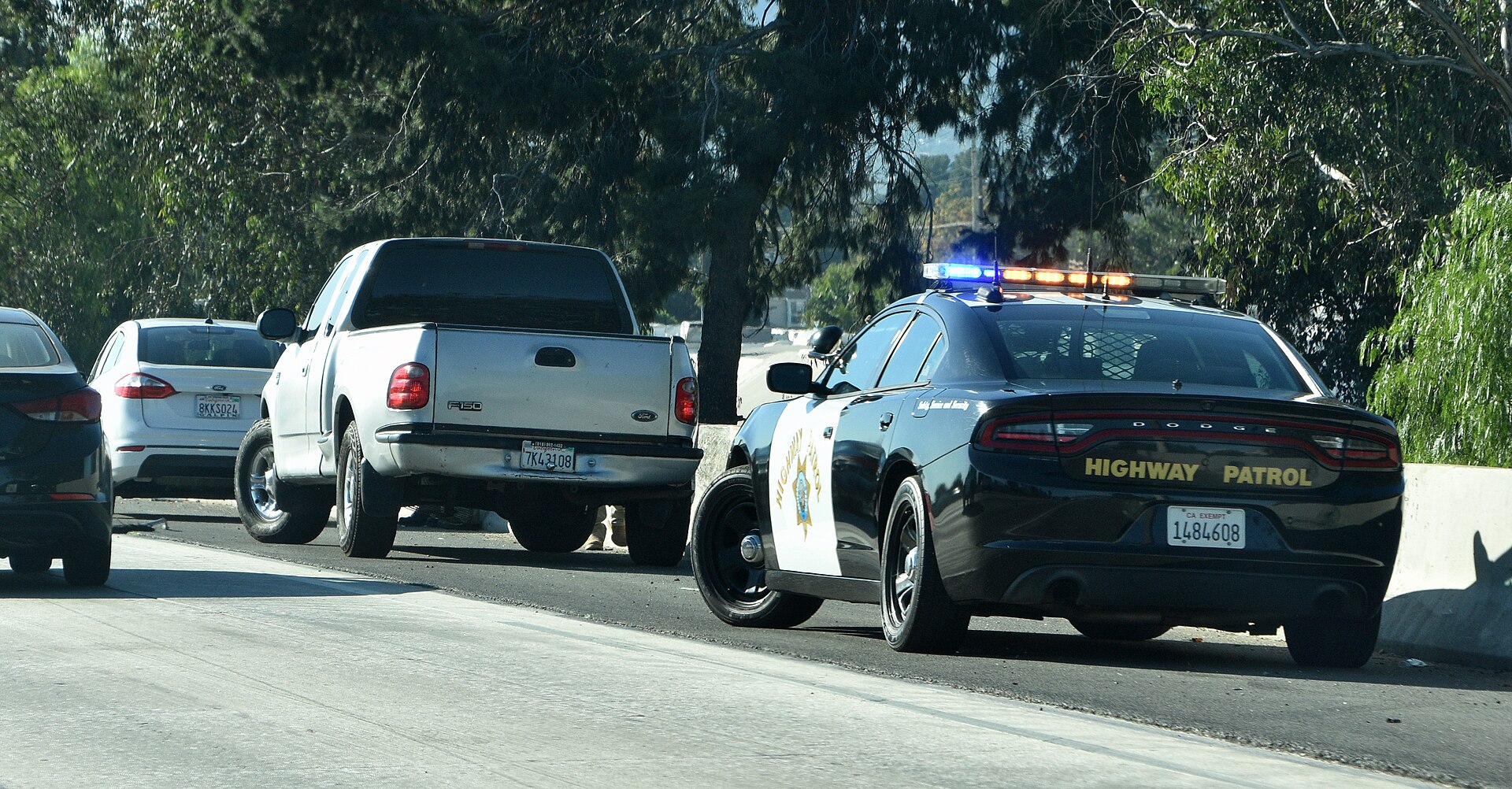
Eighteen drivers and riders picked up loud exhaust citations in coastal Orange County on Saturday. Almost all of them will pay a fine, grumble about it, and move on with their lives. Run that identical operation four months from now and some of those same people will not be able to renew their registration.
That is the part of California’s noise enforcement story nobody is tracking, and it starts on January 1.
What actually happened on Saturday
The Laguna Beach Police Department led a one-day, multi-agency operation spanning the Orange County coastline from San Clemente to Seal Beach. Officers stopped 105 vehicles and logged 102 violations that were cited or warned, according to the department’s news release. Eighteen were loud exhaust citations. Two were exhaust emissions violations referred to a state referee. Thirty-three were speed, topping out at 95 mph in a 50 mph zone on Pacific Coast Highway near El Morro Elementary School. The loudest exhaust reading of the day was 111 dBA. Officers also worked e-bike and e-motorcycle riders.
Buyer’s guide: Best Radar Detectors in 2026
Written up as a news item, that is a routine traffic detail with big round numbers. Read as a policy signal, it is a dress rehearsal.
In January, the exhaust ticket stops being a ticket
Assembly Bill 2496, authored by Orange County Assemblymember Cottie Petrie-Norris and signed in 2022, added Section 27151.1 to the Vehicle Code. It has been sitting on the books, dormant, for four years. It becomes operative on January 1, 2027.
Here is what it does. When a court handles an illegal exhaust modification violation on a vehicle under 14,000 pounds, the court is no longer allowed to simply take the money. It shall require a certificate of compliance — an actual pass from a state referee station confirming the exhaust is legal. Produce it within three months of the violation date and the matter closes. Miss that window and the court reports the failure to the DMV. The DMV is then required to check for that hold before renewing the vehicle’s registration, and to refuse the renewal until the court confirms a certificate was issued.
California has used exactly this lever for smog since the 1980s. Fail the test, lose the tags until you pass. Starting in January, exhaust noise gets the same machinery pointed at it.
A fine is a price. A registration hold is a permission.
For eight years, the state wrote a ticket it gave you no way to cure
Here is the part almost nobody knows. In June 2018, a budget trailer bill — AB 1824, an omnibus state government measure that also dealt with voting systems — quietly amended Vehicle Code Section 40610 to bar officers from issuing a correctable “fix-it” notice for loud exhaust violations. Overnight, the cheapest, most sensible outcome in traffic enforcement — put it back to stock, show a judge, walk away — was legislated out of existence.
AB 2496 partially undid that in 2023. Cars got the fix-it option back. Motorcycles did not. The statute in force today bars the correctable notice when “the violation cited is of subdivision (a) of Section 27151 for a motorcycle.” Cars, yes. Bikes, no.
It gets stranger. The referee program that issues those compliance certificates, Section 27150.2, currently applies to vehicles under 6,000 pounds “other than motorcycles.” The replacement version, operative that same January 1, explicitly covers motorcycles for the first time and extends the program up to 14,000 pounds. The old section is repealed on the same date.
So California spent eight years citing riders for a violation it offered them no statutory way to cure. In January it finally builds the exit and posts the DMV at the door.
What 111 decibels actually means
First, a fairness note that most coverage skips: those readings come from a stationary test procedure at a specified engine speed with the microphone at a fixed distance from the tailpipe. It is not what a bystander hears from the sidewalk. It is a controlled measurement, and it is the number the law cares about.
The ceilings are set in Section 27151: 95 dBA for vehicles under 6,000 pounds. For motorcycles, Section 27202 sets 80 dBA for anything built after 1985 — a table last amended in 1982, when the reference bike was a carbureted air-cooled twin.
Decibels are logarithmic, which is where people’s intuition fails. A 111 dBA reading against an 80 dBA motorcycle standard is 31 decibels over, and that is not 39 percent louder. It is more than a thousand times the sound energy. NIOSH sets its occupational limit at 85 dBA over an eight-hour shift and halves the allowable exposure for every 3 dBA increase. Run that math to 111 dBA and the entire daily dose is used up in roughly 70 seconds. That is not a nuisance-level number. That is an industrial hearing hazard with a license plate.
There is also a federal rule almost no rider has heard of. Vehicle Code 27202.1 makes it illegal to operate a California-registered motorcycle built in 2013 or later, or fitted with a 2013-or-later aftermarket exhaust, that does not carry the EPA noise label required under Part 205 of Title 40 of the Code of Federal Regulations. The Legislature declawed it deliberately — an officer cannot pull you over for it, only cite it as a secondary infraction, and a first offense can be dismissed with proof of correction. But the sticker on your slip-on is federal paperwork, and California checks for it.
The noise cameras aren’t coming yet, and CHP is the reason
The obvious efficiency play here is automation, and the Legislature already asked. Senate Bill 1079 ordered the California Highway Patrol to evaluate sound-activated enforcement devices from at least three companies and report back. That report exists, and it is more interesting than the bill that produced it.
Three vendors were tested. One system never functioned. Prices ran from roughly $38,000 to about $194,000 before service contracts. Only one unit produced analyzable data: 328 events captured over several weeks in early 2024.
Detection was excellent. Of 324 events involving vehicle exhaust noise, the device flagged actual violations about 98 percent of the time. The false triggers were almost comically few — construction equipment twice, one horn, one set of screeching tires.
Identification is where it fell apart. License plates were readable on 57 percent of motorcycles, 67 percent of passenger cars and 91 percent of full-size pickups. At dawn, a quarter of plates were unreadable. In about 6 percent of events, officers could not determine what made the noise at all. CHP told the Legislature it does not recommend the devices as the sole basis for issuing exhaust citations, partly because a microphone cannot determine a vehicle’s weight class — and weight class is what sets the legal limit.
That single sentence explains why Orange County fields a ten-agency task force and a referee truck instead of a pole-mounted microphone. The machine can hear the violation. It cannot prove who committed it. Cities elsewhere have gone ahead anyway; we covered New York’s noise cameras when they went live, and our sister site looked at a North Carolina city taking the same swing.
The electric half of the sweep has no exit at all
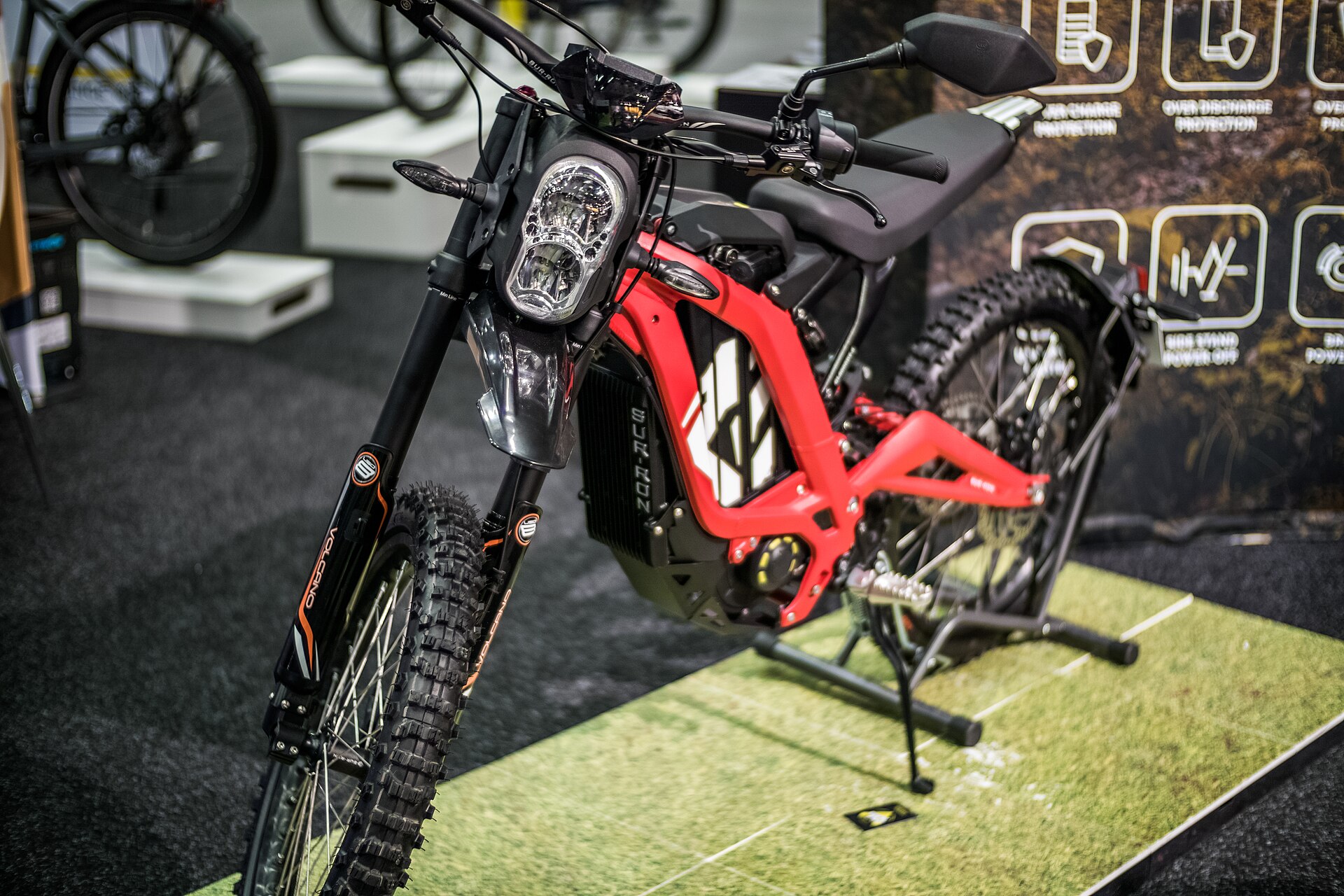
Now hold Saturday’s other target group up against all of that. Under Vehicle Code 312.5, an electric bicycle has fully operable pedals and a motor of 750 watts or less, with assistance cut off at 20 mph for Class 1 and 2 and 28 mph for Class 3. Exceed any of that and it is not an e-bike, no matter what the box said. The Attorney General and a group of district attorneys spelled it out in a joint consumer alert: out-of-class machines require DMV registration and an M1 or M2 license, and advertising them as e-bikes is a crime.
Then came SB 586. As of January 1, 2026, California recognizes a separate class of “off-highway electric motorcycle” — two wheels, handlebars, straddle seat, electric motor, no factory pedals — and treats it as an off-highway vehicle requiring a green sticker. State off-highway vehicle guidance on the new law is blunt about the consequence: these machines cannot be registered for highway use and cannot be converted to street legal.
So compare the two halves of one Saturday. The owner of the straight-piped coupe has a path, and in January it becomes a mandatory one: pull the exhaust, pay the referee, keep the registration. The teenager on a 6,000-watt e-moto has no path at any price. There is no certificate to buy, no referee to visit, no compliant configuration to build. The door that opens for exhaust in January was never cut into the wall for electric.
That is the quiet cost of legislating by vehicle category instead of by behavior, and it is going to get louder as these machines multiply. We wrote about the injury curve driving all of this when Sacramento reached for license plates as the answer.
What to actually remember
Not the 111 dBA. Not the 95 in a 50. Not the citation count, which will be a different number at the next operation.
Remember that California is relocating vehicle noise enforcement from the courthouse to the DMV counter, because the state learned decades ago that the registration sticker is the only penalty drivers reliably respect. On January 1, a loud exhaust stops being something you pay for and starts being something that can keep you from legally registering the car at all.
Whether that is proportionate for a modified muffler is a fair argument, and enthusiasts have been making a version of it for years. But the argument is now about a mechanism that is already written, already signed and already dated. The only open question is how many people find out the hard way, at a renewal counter, in the spring.
So where do you land? Is a registration hold a reasonable tool for exhaust noise, or a penalty that has outgrown the offense — and what should states do about electric motorcycles that can never be made street legal no matter how much the owner wants to comply?
Should a loud exhaust really be able to cost you your registration? Sound off in the comments.