
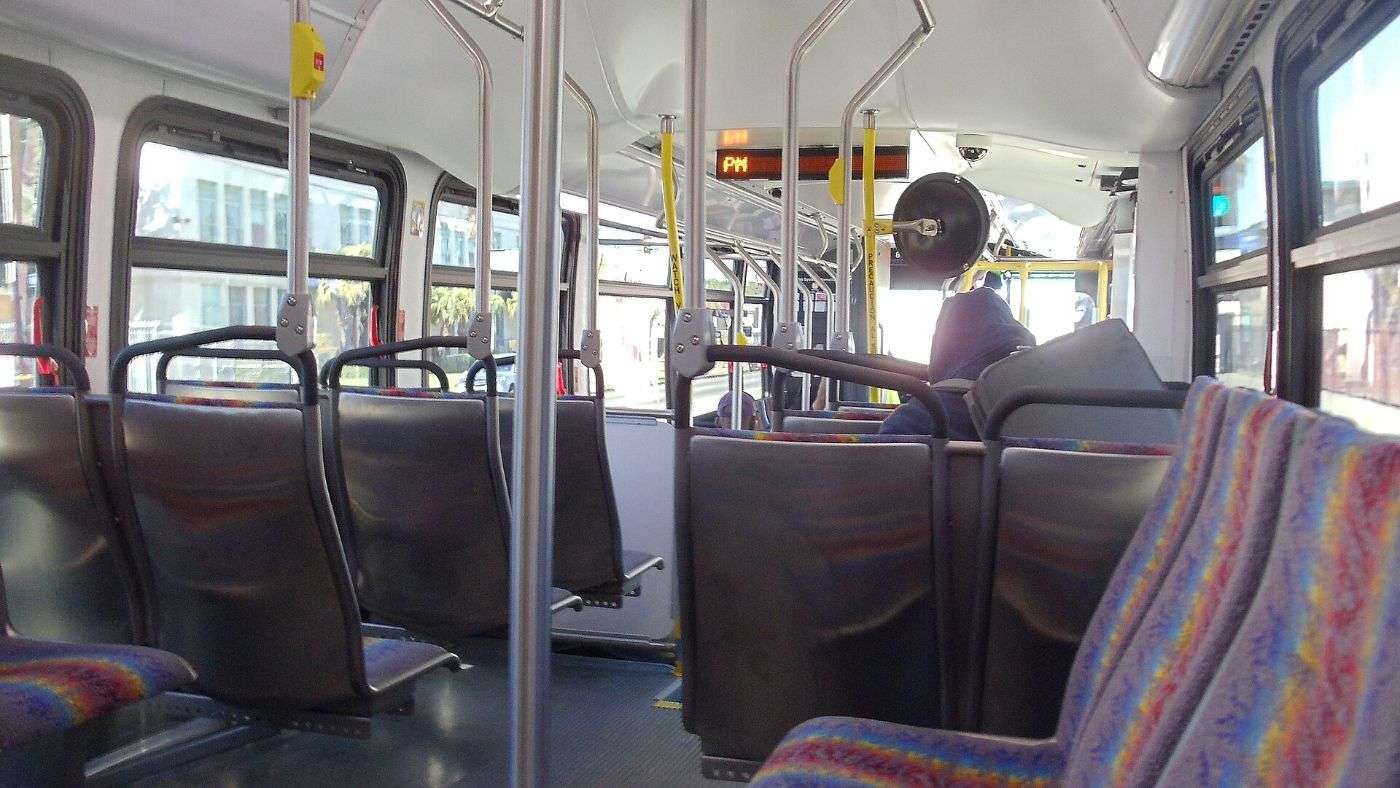
Five people died in Chatsworth on the evening of Sept. 15. Two were riding a Los Angeles Metro bus. Three were killed a short time later when a news helicopter covering that crash fell out of the sky a few blocks away.
The driver prosecutors blame for the bus crash is now charged with murder. But only for two of those deaths.
Whether she ends up answering for the other three depends on a question that has nothing to do with what she was driving or what was in her system. It comes down to what federal investigators find inside a helicopter engine.
What prosecutors say happened on De Soto Avenue
According to the Los Angeles County District Attorney’s Office, Bailee Lynn Rios, 36, of Simi Valley, was behind the wheel of a 2004 Ford Expedition when she drove into the wrong lane on De Soto Avenue, ran a red light, and broadsided a Metro bus. District Attorney Nathan Hochman said she was “under the influence of drugs” at the time, The Associated Press reported.
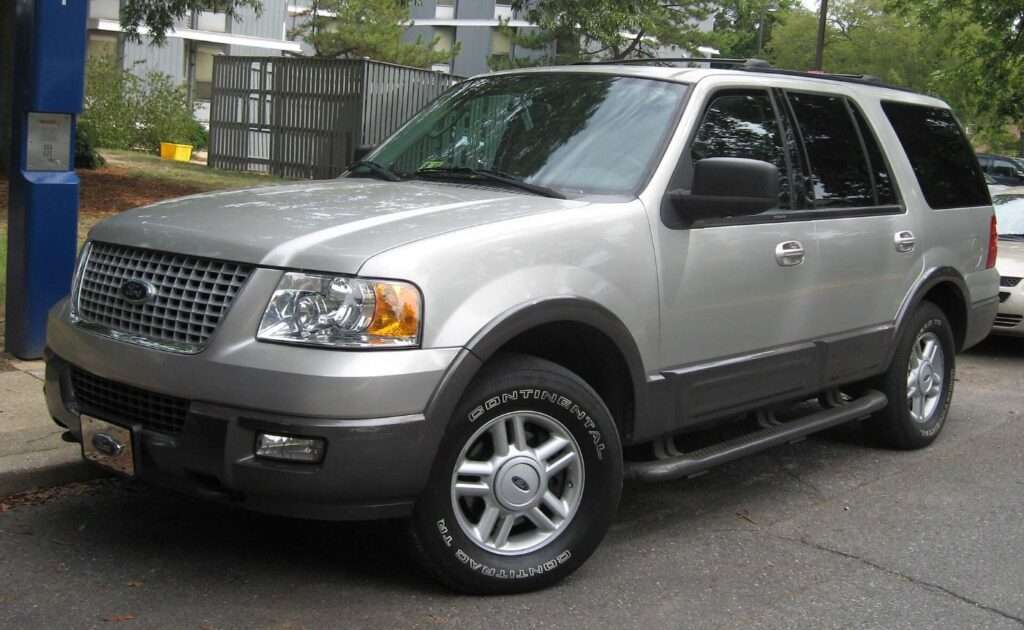
Two bus passengers were killed: Daniel Castillo, 46, and Gage Weida, 31. Six other people were hurt. Firefighters had to cut Rios out of the SUV, and ABC7 reported that investigators found narcotics inside it. The station also reported that she has prior drug offenses and a history of driving on a suspended license.
She’s charged with two counts of second-degree murder, plus DUI and reckless driving. Bail was set at about $4 million. If she’s convicted of murder, she faces up to life in prison.
The helicopter that came to cover it
Just before 7 p.m., NewsChopper4, flown for NBC4 and Telemundo 52 by contractor Angel City Air, was hovering over the scene. According to the San Fernando Valley Sun, it went down between two commercial buildings on Mason Avenue near Nordhoff Street.
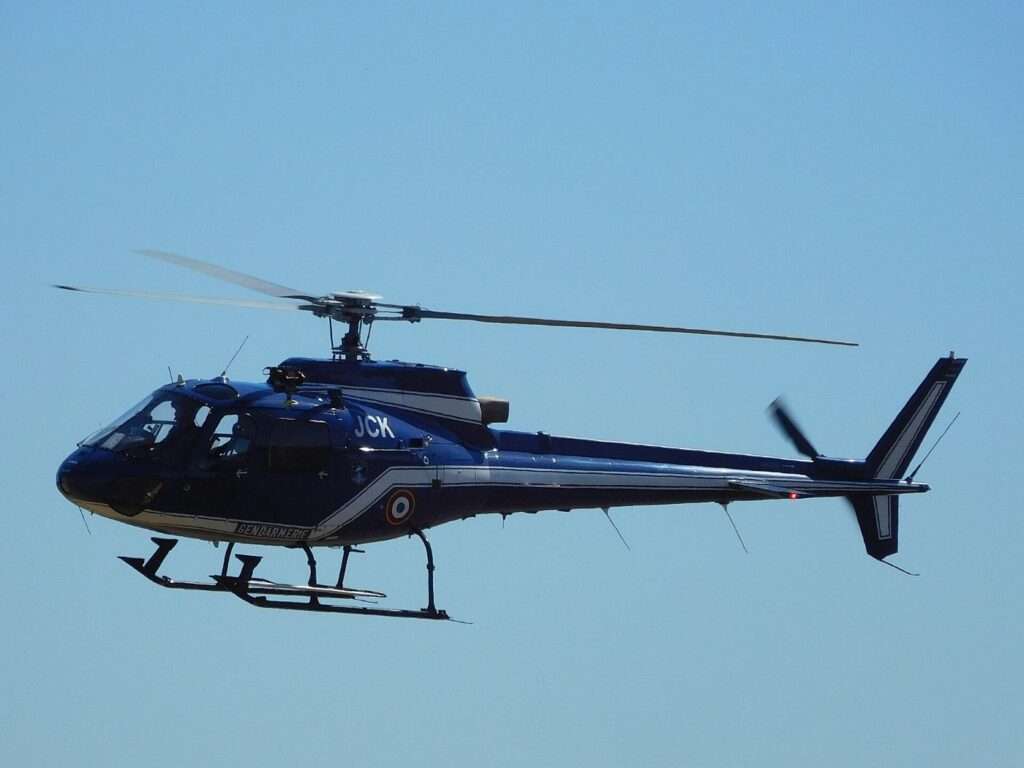
Reporter Eliana Moreno, 38, and pilot George Marciniw were killed, along with Edy Gutierrez Mejia, 29, who was on the ground. Two other people on the ground were hurt.
The aircraft was an AS350 B2. Video from the helicopter’s own camera captured what sounds like the engine winding down and a low rotor RPM warning horn before the pilot tried to autorotate, NBC Los Angeles reported. NTSB investigator Fabian Salazar called that footage “probably the most important piece of evidence” so far. A preliminary report is due in about 30 days. The final one could take up to 18 months.
Why she isn’t charged for the helicopter deaths
Hochman’s office has said it will wait for the federal investigation before deciding whether to file charges connected to the helicopter crash, NBC Los Angeles reported. He also called the bus crash “absolutely preventable.”
That wait isn’t the DA ducking the question. It’s how causation works in a criminal case.
To hold someone responsible for a death, prosecutors generally have to show two things. First, the death wouldn’t have happened without what the defendant did. Second, it was a foreseeable result, and nothing else came in between that broke the chain. The first part is easy here. No bus crash, no helicopter over Chatsworth that night. The second part is where it gets hard.
If the NTSB finds the helicopter lost power because of a mechanical failure, a defense lawyer is going to argue that the engine, not the SUV, killed those three people. A news crew flying over a crash scene is normal. A helicopter engine quitting is not something a driver on De Soto Avenue could have seen coming. That’s the kind of thing courts call an intervening cause, and it can cut the legal line between a defendant and a death.
On the other hand, if investigators find something about the conditions of that coverage contributed, the argument could look different. Nobody outside the investigation knows yet, which is exactly why charging those deaths now would be premature.
The part of California law most drivers don’t know
The murder charge itself is worth understanding. In California, prosecutors can charge an impaired driver with murder, not just manslaughter, if they can show “implied malice.” That means the driver knew how dangerous it was and did it anyway. The theory goes back to a 1981 California Supreme Court case called People v. Watson, which is why lawyers call these “Watson murders.”
Proving what a driver knew is usually the tough part, so the state builds the proof in advance. Under California Vehicle Code Section 23593, anyone convicted of DUI gets a written warning that if they drive impaired again and kill someone, they can be charged with murder. That warning later becomes Exhibit A.
Based on what’s been reported so far, Rios’s prior record involves drug offenses and a suspended license, not a prior DUI. If that holds, prosecutors may have to prove implied malice without that signed warning, using her history and what she did that night instead. That makes this case worth watching even before anyone gets to the helicopter question.
Where things stand
Rios still hasn’t been arraigned. She missed court three times for medical reasons, and on one of those days she was brought to the San Fernando courthouse by ambulance on a gurney, NBC Los Angeles reported.
There’s a bigger conversation here about technology that’s supposed to stop impaired drivers before they ever pull out. We’ve written about the federal impaired-driving tech mandate that was supposed to be in every new car by now. A 2004 Expedition was never going to have any of it.
Five families are dealing with the aftermath of one night in Chatsworth. So here’s the hard question: if a crash sets off a chain of events that kills people who were never part of it, should the driver who started it be held responsible for all of it?