
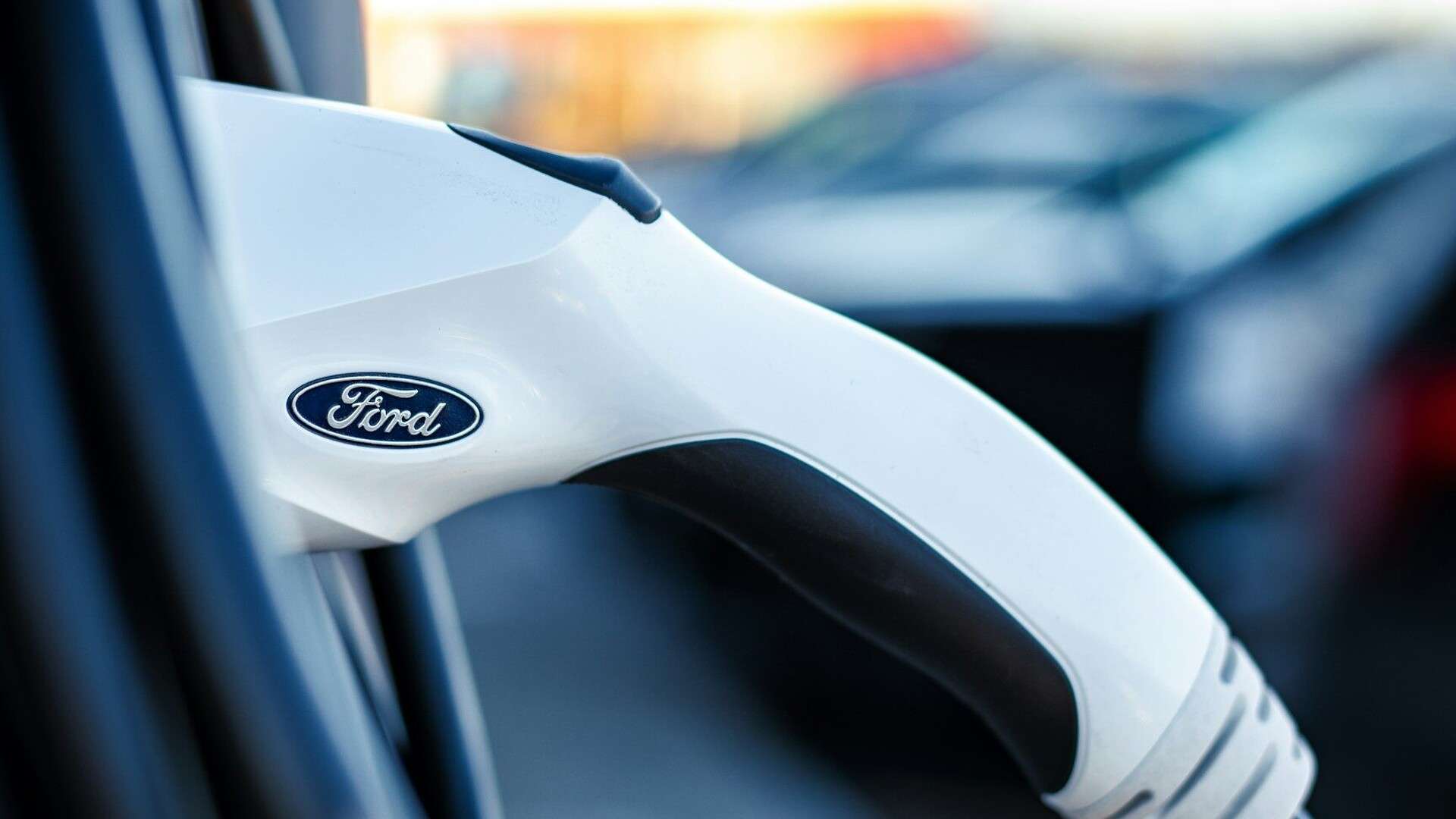
Ford’s third-quarter sales release covers a lot of ground. It talks up retail share, Super Duty production, Bronco records, and software subscriptions. What it doesn’t include anywhere in the narrative is an electric-vehicle sales number. The only EV mention is a sales incentive near the end. When a company that once built its future around “Model e” leaves EV totals out of the headlines, the tables are worth reading closely.
The year-ago comparison is brutal, and partly self-inflicted
Start with the baseline. In the third quarter of 2025, Ford posted a new quarterly sales record with 30,612 sales of EVs, and the F-150 Lightning delivered a third quarter record 10,005 pickups. That quarter was artificially inflated, and anyone who sold cars at the time knows why. Under federal law, the New Clean Vehicle Credit, Previously-Owned Clean Vehicle Credit, and Qualified Commercial Clean Vehicle Credit are not available for vehicles acquired after Sept. 30, 2025, according to the IRS guidance page. Buyers rushed to sign before the cutoff, pulling future demand into that quarter. Ford U S Q3 2025 Sales Release +2
So some of this year’s drop is a hangover from last year’s party. The problem for Ford is that the hangover isn’t wearing off.
What Ford’s monthly tables show
Two-thirds of the way through the quarter, Ford’s August sales tables already told the story. EV sales were 2,197 for August, down 79.4 percent, after July came in at 2,065 units, down 74.9 percent. 1 FORD MOTOR COMPANY AUGUST 2026 U.S. SALES August % Year-to-Date % 2026 2025
Related Articles
- A Stolen Identity Financed the Corvette. A Second One Wrote the Down Payment Check.
- One Stolen-Car Stop, Two Las Vegas Police Investigations: One for the Officer’s Gun, One for the Car
Combined, that’s 4,262 EVs across July and August, against 18,900 in the same two months of 2025. That’s a 77% decline before September even started.
The Mustang Mach-E did most of the remaining work. It sold 1,863 in July and 1,989 in August. That’s 3,852 across two months versus 12,534 a year earlier, a drop of about 69%. Year to date through August, Mach-E sales were 15,484 against 34,319 in 2025. 1 FORD MOTOR COMPANY JULY 2026 U.S. SALES July % Year-to-Date % 2026 2025 +3
The Lightning has effectively disappeared from the showroom. It recorded 141 sales in July and 148 in August. Ford’s 2026 production-by-plant table in the same document lists plants from Flat Rock to Ohio Assembly but no line for the electric F-150 at all. Draw your own conclusions. q4cdnq4cdn
The supply side doesn’t match the demand side
Here’s the detail most people skip. Ford’s Cuautitlan plant in Mexico built 24,974 Mach-Es from January through August. U.S. Mach-E sales over the same stretch were 15,484. Some of that gap is export volume, since the Mach-E is sold globally, so it isn’t all piling up on American dealer lots. Still, U.S. dealers were holding 5.5 thousand Mach-Es at the end of August, according to the gross stock table. That’s roughly two and a half months of supply at the July-August sales pace. q4cdnq4cdn
Ford’s response is incentives. The Q3 release says Ford Power Promise has been extended through the fourth quarter for customers who purchase or lease a new 2026 Mustang Mach-E. Eligible customers can choose between a complimentary home charging station with standard installation or $1,500 in bonus cash. q4cdn
Where the electrons went instead
Ford’s electrified story didn’t die. It changed shape. The release highlights that the Maverick Hybrid set a third-quarter sales record with 27,793 trucks, up 59.6%. Hybrid buyers get better fuel economy without range anxiety or charger installs, and they never depended on a federal credit. Ford appears to be selling what people are actually asking for. q4cdn
Even Ford’s legal boilerplate acknowledges the risk. Among the forward-looking cautions in the Q3 release: The impact of government incentives on Ford’s business has been and could continue to be significant. q4cdn
What this means if you’re shopping or already own one
You have leverage as a new Mach-E buyer. Ford has stock, a factory still building cars, and an incentive extended through year-end. Stack the Power Promise cash against dealer discounts and negotiate hard. The Mach-E needs you more than you need it.
Related Articles
- Wrecked Rolls-Royce Phantom V Lands Iowa Lawyer in Federal Prison
- Texas Restoration Shop Owner Got 60 Years for Theft. His Appeal Says 28 Customers Had Contract Disputes.
Lease math deserves extra scrutiny. Ford’s own release lists lower-than-anticipated residual values on leased vehicles as a risk for Ford Credit. When demand for a new model drops this hard, used values usually follow, especially now that the used-EV credit is gone too. A lease shifts that depreciation risk to the lender. Buying means you carry it. q4cdn
Lightning owners shouldn’t panic. Low sales don’t void your warranty or end Ford’s service obligations. But expect a thin used market when it’s time to sell, and keep your service records and battery-health documentation organized. Those papers will matter to the next buyer.
The bottom line
The tax-credit cliff explains the size of the year-over-year drop. It doesn’t explain why Ford’s EV sales are still sliding nine months later, or why the quarterly release would rather talk about Super Duty production. Ford is quietly betting on hybrids and trucks, and its own numbers make that bet look smart.
If Mach-E lots keep filling up, is the price drop coming, or is Ford content to sit on them?
Top photo: Andrew Miller via Unsplash.