
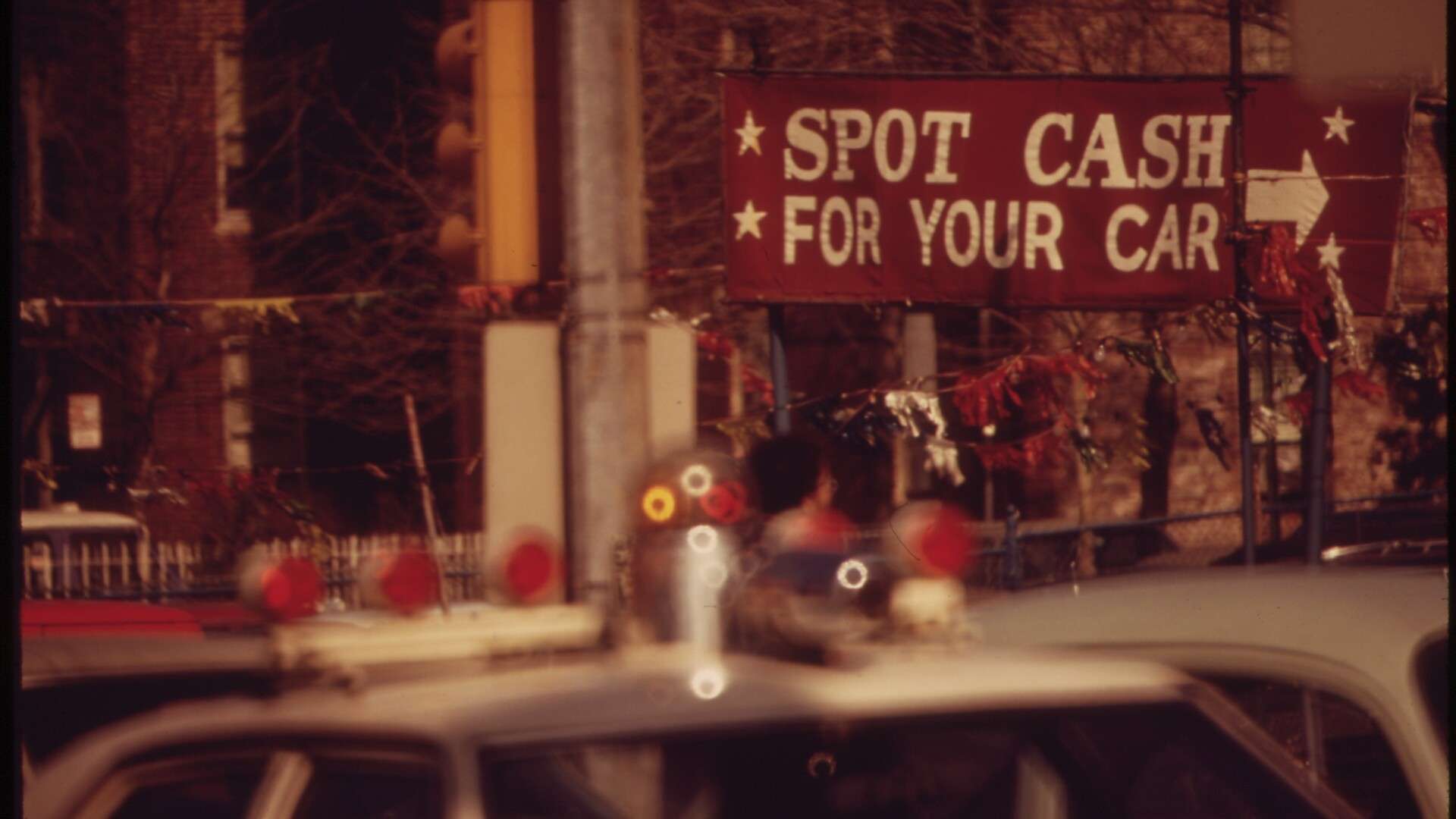
New York City’s consumer-protection department says that in June 2026, CarGurus labeled a 2018 Honda at Elite Mitsubishi a “Great Deal” at $2,212 below market. The listing’s disclaimer, according to the city, itemized mandatory charges that left the buyer paying $1,473 above market. That Honda is the example the city leads with in its announcement of its CarGurus lawsuit, and it shows how a price rating can be wrong without any of its arithmetic being wrong.
What the city filed
The Department of Consumer and Worker Protection (DCWP) filed the summons and verified complaint in New York County Supreme Court on October 5, 2026, as Index No. 454290/2026, and announced the case on October 15. It pleads three causes of action under the city’s Consumer Protection Law: that CarGurus knowingly published misleading “Great Deal” and “Good Deal” ratings and fee badges, knowingly published inaccurate “below market” savings figures, and falsely represented that it enforces its own pricing guidelines. The city says it counted more than 2,000 violations. It is asking for a permanent injunction, restitution, investigation costs, and civil penalties of $3,500 per knowing violation, or $350 to $2,500 per violation if the court does not find knowledge.
Everything here is the city’s allegation. A court has not ruled, and the city’s release carries no response from CarGurus.
How $2,212 under market becomes $1,473 over
According to the complaint, a CarGurus rating compares a dealer’s asking price with the site’s Instant Market Value, its own estimate of what a comparable car should sell for. Below that estimate, a listing gets a Good or Great Deal label and a dollar figure for the gap. The city’s argument is that the asking price is where the rating goes wrong. Dealers can put fees, down-payment requirements and trade-in conditions in a description or disclaimer box, and the complaint says the rating is computed on the asking price alone.
The Honda’s asking price was $16,174. The complaint lists $3,685 in additional charges: $1,995 for prep and destination, $995 for conveyance and $695 for administration, on top of a $175 documentation fee shown behind the listing’s “includes dealer fees” badge. Adding the $3,685 gives $19,859. A car priced $2,212 under market at $16,174 implies a market value of $18,386, which is my subtraction and not a number from the complaint. The gap between $19,859 and $18,386 is the $1,473 the city reports.
The complaint’s 2019 Audi Q5, listed January 6 at the same dealer for $14,999 and rated $2,818 below market, carried the same three charges, again $3,685 in total. The city puts that one $867 above market. A flat per-car charge does not scale with the car, so it bends the ranking more on cheaper cars: by my arithmetic, $3,685 is about 23 percent of the Honda’s asking price and about 25 percent of the Audi’s. Both discounts, $2,212 and $2,818, were smaller than the stack.
The chatbot allegation is three paragraphs long
The city’s headline puts an AI chatbot next to the ratings. In the complaint, the chatbot appears in paragraphs 63 through 65. They say a user can ask it for lists of Great Deals and Good Deals in New York City, and that the results leave out each listing’s disclaimer and vehicle description, so the fees stay hidden unless the shopper opens every listing. The complaint points to an exhibit for support. As I read it, none of the three causes of action names the chatbot, and the complaint does not explain how the tool assembles its lists. What it describes is a summary view that carries the rating and drops the fine print, which is where the city says the real price sits.
The case lands soon after the city’s October 1 enforcement policy statement on artificial intelligence, which says companies cannot escape responsibility under city law by pointing to the technology they used. The city’s release cites it for the proposition that the Consumer Protection Law covers chatbot representations.
Why a city is doing this
The federal rule aimed at this kind of pricing no longer exists. The Fifth Circuit vacated the FTC’s Combating Auto Retail Scams Rule on January 27, 2025, in National Automobile Dealers Association v. FTC, because the commission skipped a required advance notice step, and the FTC withdrew the rule effective February 12, 2026. What remains is case-by-case enforcement. The FTC’s December 27, 2024 complaint against Lindsay Automotive Group said 88 percent of buyers in a 2020–2023 sample paid more than the advertised price, by an average of more than $2,000. The Lindsay case later ended in a settlement with full refunds. The Auto Wire covered another dealer-fee case, Manchester City Nissan’s $4 million FTC settlement, in August.
New York already has a dealer-side rule. The complaint cites 6 RCNY § 2-103(i), which requires a licensed second-hand dealer’s advertised price to include all charges connected with the sale. CarGurus does not sell the cars, so the city is not enforcing that rule against it. The theory is that publishing a bargain rating built on numbers that leave out those charges is itself a deceptive trade practice.
Three years of letters and a mid-2026 fix
According to the complaint, DCWP sent CarGurus a cease-and-desist letter on July 27, 2023, covering the Great Deal labels, hidden fees and the company’s guidelines. CarGurus answered through counsel on September 15, 2023, the date from which the city counts knowing violations. A second letter followed on May 8, 2025. On April 30, 2026, CarGurus added Fee Disclosure Badges to listings, and on June 24 it announced that starting July 14, listings without disclosed fees would be labeled “No Rating” and moved lower in search results. The city alleges that the badges rely on dealer-reported fees that often omit the charges in the disclaimers, and that the changes did not touch the Great Deal and Good Deal labels.
The third cause of action rests on CarGurus’s own “Guidelines for Dealer Pricing and Marketing,” which the complaint quotes as requiring that prices must be full cash prices available to any shopper. The city says the company publicizes that standard without enforcing it. If the court accepted the 2,017 savings-figure counts and applied the top penalty, the total would be $7,059,500. That is my multiplication, not a figure the city has claimed, and the statute leaves the amount to the court.
What shoppers can check, and what to watch
On any listing, open the disclaimer or description before trusting the rating, and ask the dealer for an out-the-door price in writing that includes dealer fees, any required down payment and any trade-in condition, since those are the items the complaint says sit below the rating. The city’s advertised-price rule covers licensed dealers in New York City; rules elsewhere vary and the federal one is gone. Our used-car buying guide covers the rest of the process.
In the case, watch how CarGurus answers the complaint, and whether the city’s total-price junk fee rule, proposed in July, ends up applying to listing platforms as well as sellers.
When a listing site stamps “Great Deal” on a car, who should answer for the final price: the dealer who set the number, or the platform that graded it?