
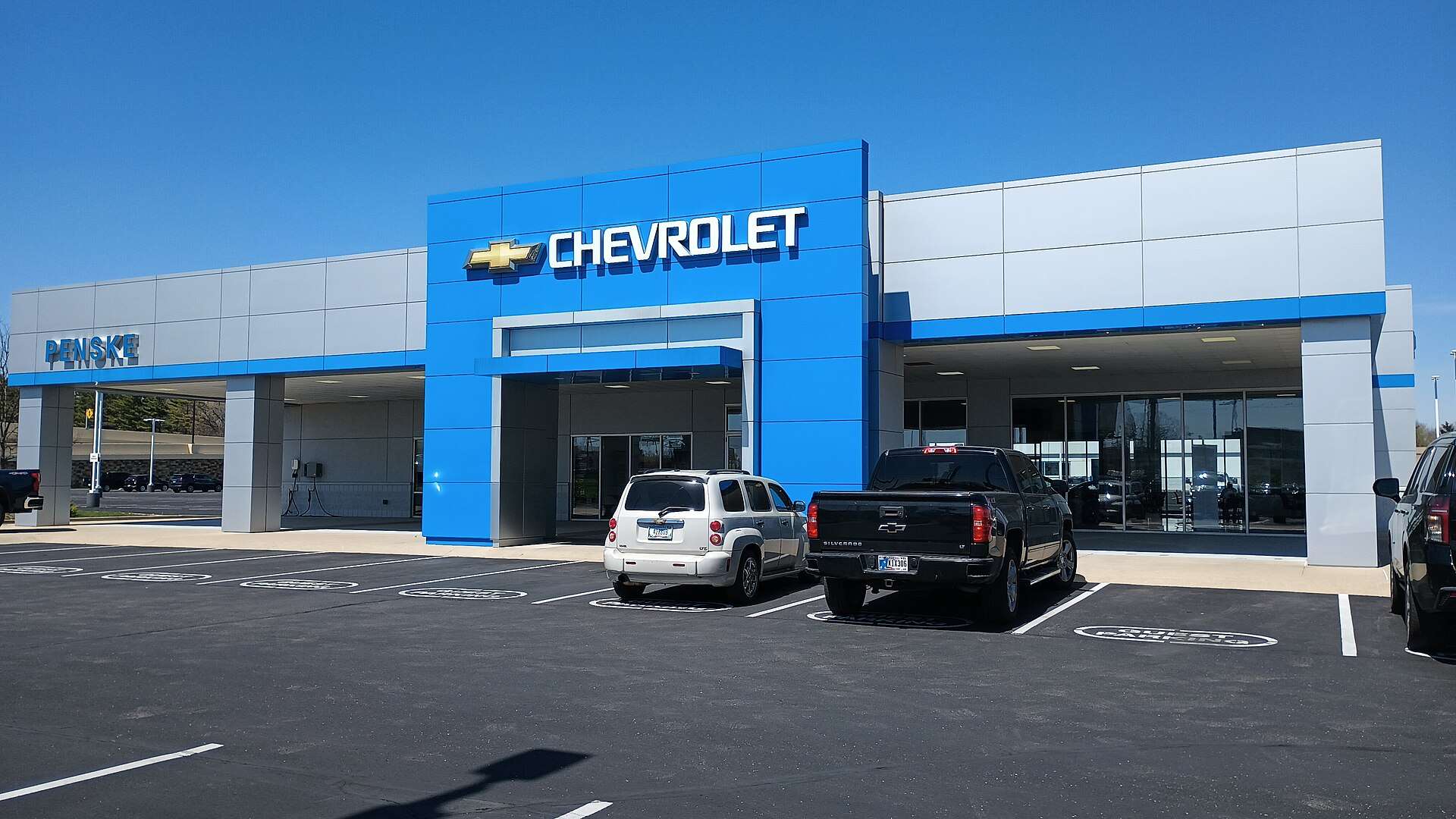
Roger Penske already controls one of the world’s largest car and truck retailers. Now he’s taking it off the stock market. Penske Automotive Group (PAG) has agreed to a buyout by its two biggest shareholders, Penske Corporation and Japanese trading house Mitsui & Co. Outside investors will receive $212 a share in cash, and the stock will leave the NYSE. The merger filing has the surprise: the lenders include the finance arms of Toyota and Mercedes-Benz, two of the brands PAG sells.
Small premium, controlled outcome
This was never really an auction. Penske Corp. and Mitsui first offered $210 a share in July. At the time, they and their affiliates held 72.6% of the stock, according to the company’s July disclosure. After three months of review by a special committee, the price rose by $2.
Related Articles
- Gas Up 34%, Insurance Down 5%: September’s CPI Moved the Cost of Driving From the Policy to the Pump
- CHP Impounded a Street-Racing Nissan GT-R for 30 Days, Then Soundtracked the Evidence With “Break My Stride”
PAG’s deal announcement puts the premium at 8.84% over the Oct. 14 close and 8.6% over the price before the July offer. The company also cites premiums of 20.09% and 26.17% over the 60- and 90-day volume-weighted averages. Companies often lead with those longer averages when the headline premium is small. The deal values PAG at about $16.3 billion including debt.
Because the buyers already own nearly three-quarters of the company, the meaningful approval is the second vote. The deal needs a majority of all outstanding shares, which the insiders already have. It also needs a majority of votes cast by “disinterested stockholders” under Delaware law. That group excludes the buyers, PAG officers and board members who are not on the special committee. A special committee combined with a minority-holder vote is the protection Delaware controllers use to defend these deals in court. In practice, the outside shareholders decide whether the deal closes.
Breakup fees apply in both directions. PAG would owe $383 million if it accepted a better offer. The buyers would owe $488 million if they failed to close. A rival bidder seems unlikely when two holders control 72.6% of the shares and have signed voting agreements.
Follow the money
Mitsui’s announcement shows how the cost is split. About 18.3 million public shares are being bought out, for roughly $3.9 billion. Mitsui commits up to $1.6 billion in equity and Penske Corp. up to $600 million. Mitsui puts in nearly three times as much money as the Penske side, yet Penske’s stake rises from about 52.1% to 64% and Mitsui’s from 20.3% to 36%. Penske keeps control while contributing the smaller check.
The remainder is debt. JPMorgan, Bank of America and Wells Fargo committed up to $1.8 billion. PAG also amended its main U.S. credit line, which is not provided by those banks. Its lenders are Mercedes-Benz Financial Services, Toyota Motor Credit and Daimler Truck Financial Services, the captive finance arms of the brands PAG sells. The filing notes that these lenders’ affiliates supply PAG’s vehicles and parts and provide floor-plan and consumer financing.
The amendment allows the revolver to grow from $1.5 billion to as much as $2.4 billion. Up to $400 million of that increase can be borrowed without collateral, above a limit based on assets plus 35% of the goodwill and franchise value of PAG’s U.S. dealerships. In other words, automakers’ lending arms are counting the value of the dealer franchises as part of the credit behind the buyout. Those lenders also formally consented to the change of control.
What goes private with it
Dealerships are only part of what’s going private. It is one of North America’s largest Freightliner retailers, sells engines and power systems in Australia and New Zealand, and owns 28.9% of Penske Transportation Solutions. That business has more than 373,600 trucks, tractors and trailers under lease, rental or maintenance contracts. Mitsui’s filing lists PAG’s 2025 sales at $31.8 billion.
When a business that size goes private, the industry loses a regular source of public data. PAG’s quarterly reports showed new and used margins, service-department trends and heavy-truck demand. Penske will still report third-quarter results on Oct. 28, but there will be no earnings call. That may be the last detailed public look at the business.
What it means for customers
For car buyers and service customers, the near-term effect is small. Service-bay rates, warranty work and franchise agreements are not changed by a shift in shareholders. Two things to watch:
- Debt costs: The company will carry more acquisition debt, and that interest has to be covered by the dealerships’ earnings.
- Mitsui’s role: Mitsui has been an investor since 2001 and says it will pursue “collaborative projects.” The filings do not say what those projects are.
The deal is expected to close in the first quarter of 2027. If it hasn’t closed by Oct. 15, 2027, either side can walk away. Outside shareholders now hold the only vote that matters. Would $212 get yours?
Top photo: A Penske Chevrolet dealership in Indianapolis, 2023. Photo: Deathpallie325 / Wikimedia Commons (CC BY-SA 4.0)