
Yuehao Huang’s iPhone kept a running count of every kilometer he covered during a week-long family trip through Quebec and Ontario, including the parts he spent hiking. It came to about 1,400 km.
Avis’s count for the rental car alone was 28,933.
That gap, roughly 20 to 1, became an excess-mileage charge of about C$5,900, billed on top of the more than C$1,000 the Toronto resident had already prepaid, according to what Huang told CityNews Toronto’s Speakers Corner consumer segment. Avis has since called it a data entry error, apologized and said it is refunding the mileage charges. Getting there took weeks of disputes, a credit-card investigation that went Avis’s way, and, finally, a call from a TV newsroom.
The road trip Avis billed for
Take the bill at face value and the car averaged about 4,133 km a day for seven days. Spread across all 168 hours of the week, that works out to roughly 172 km/h, or about 107 mph, around the clock, with no stops for fuel, food or sleep.
In total, 28,933 km is about 17,978 miles, or a little more than 72 percent of the way around the Earth at the equator.
Huang’s version of the week is shorter. He told CityNews he flew from Toronto to Montreal on Sept. 11, picked up a rental he had prepaid, and drove visiting family to Mont-Tremblant, Ottawa and back into Quebec. “That’s it,” he said.
He also pointed out that a car actually driven nearly 29,000 km in a week would have needed an oil change somewhere along the way.
“Charges are valid”
According to Huang’s account, he disputed the bill as soon as he saw it and sent Avis his evidence. Avis agreed to investigate. When he followed up weeks later with no refund, he says, he was told to resubmit the complaint.
He also filed a dispute with American Express, which contacted Avis. Huang told CityNews that the answer came back the day before his interview, and that Avis had told Amex the “charges are valid.”
CityNews then contacted Avis and received a statement within a day. The company said a review confirmed “a data entry error resulted in the customer being incorrectly charged for excess mileage,” apologized for the frustration and delay, and said it was processing a refund. It added that it is reinforcing procedures with its teams to prevent similar problems.
Avis did not say what the incorrect entry was, or how a figure implying a week at triple-digit highway speeds got through its billing system and an initial review of the card dispute.
Avis has done this math before
Huang’s week is not even the fastest impossible trip on an Avis bill in Canada.
In August 2022, CTV News Toronto reported that Vancouver resident Giovanna Boniface rented a GMC Yukon Denali from Avis at Toronto Pearson for three days. She said she drove about 300 km between the airport, downtown Toronto and Kitchener. Avis billed her for 36,482 km at 25 cents per kilometer, more than C$8,000 on top of the roughly C$1,000 she had paid for the rental.
Over 72 hours, that distance implies an average of about 507 km/h, or 315 mph, for three days straight. That is faster than the 490.484 km/h (304.773 mph) a pre-production Bugatti Chiron derivative reached on a German test track in 2019, in a run Bugatti billed as breaking the 300-mph barrier.
Boniface’s refund, like Huang’s, came after reporters contacted Avis. In that case, the company apologized and refunded the charge but did not say what caused the error.
The photo Huang didn’t take
Huang said he photographed the odometer when he returned the car but not when he picked it up, and that a picture at the start would have made the dispute much simpler. His advice to other renters is to take one at both ends, no matter how much you trust the company.
A few other habits make a bad mileage bill easier to fight:
- Photograph the dashboard at pickup and drop-off. Get the odometer and fuel gauge in the same frame, and keep the original files, which carry a timestamp and often a location.
- Ask for a closed-out return receipt. A receipt that shows the mileage in and the final total at the counter is harder to revise later than a bill emailed days afterward.
- Check your card a few days after the rental. Both Huang and Boniface discovered the extra charges after they had returned their cars, not at the counter.
- Save your phone’s location history. Huang’s iPhone tally was evidence of how far he actually traveled, even with hiking included.
- Dispute in writing, and escalate. File with the rental company and your card issuer, keep every reply, and in Quebec, where Huang’s rental began, the province’s Office de la protection du consommateur handles consumer complaints.
A multinational rental company’s billing system was overruled by a smartphone that couldn’t tell the difference between driving and walking, and still came in about 27,500 km lower. If a charge implies a customer drove at 107 mph for a week straight, should it be allowed to reach their card before a person has looked at it?
Sources: CityNews Toronto, interview with Yuehao Huang and Avis statement (Oct. 19, 2026); CTV News Toronto (August 2022); Bugatti press release (2019).
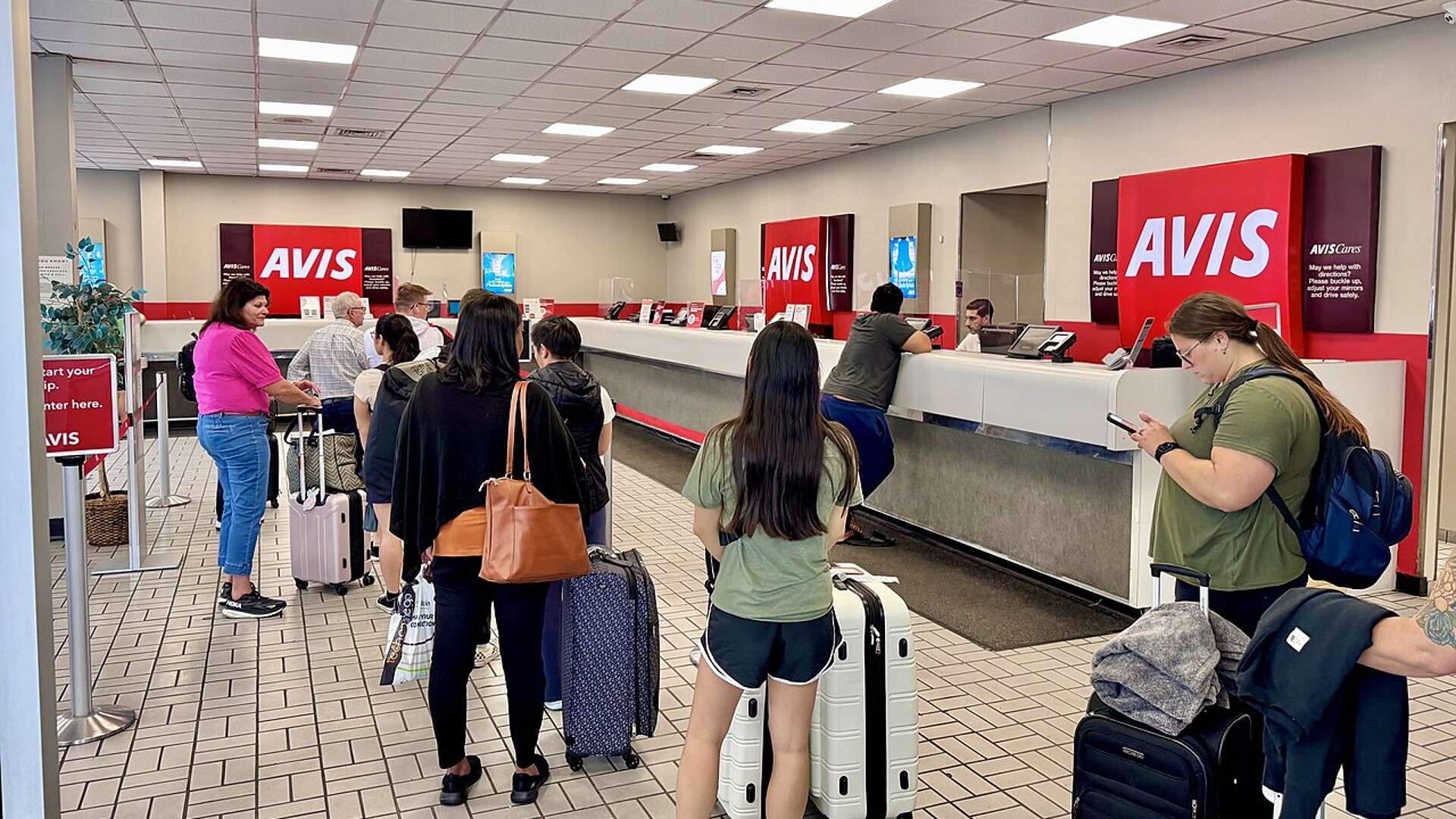
Lead image: Harrison Keely via Wikimedia Commons, licensed under CC BY 4.0. Image is illustrative and does not show the location involved.
