
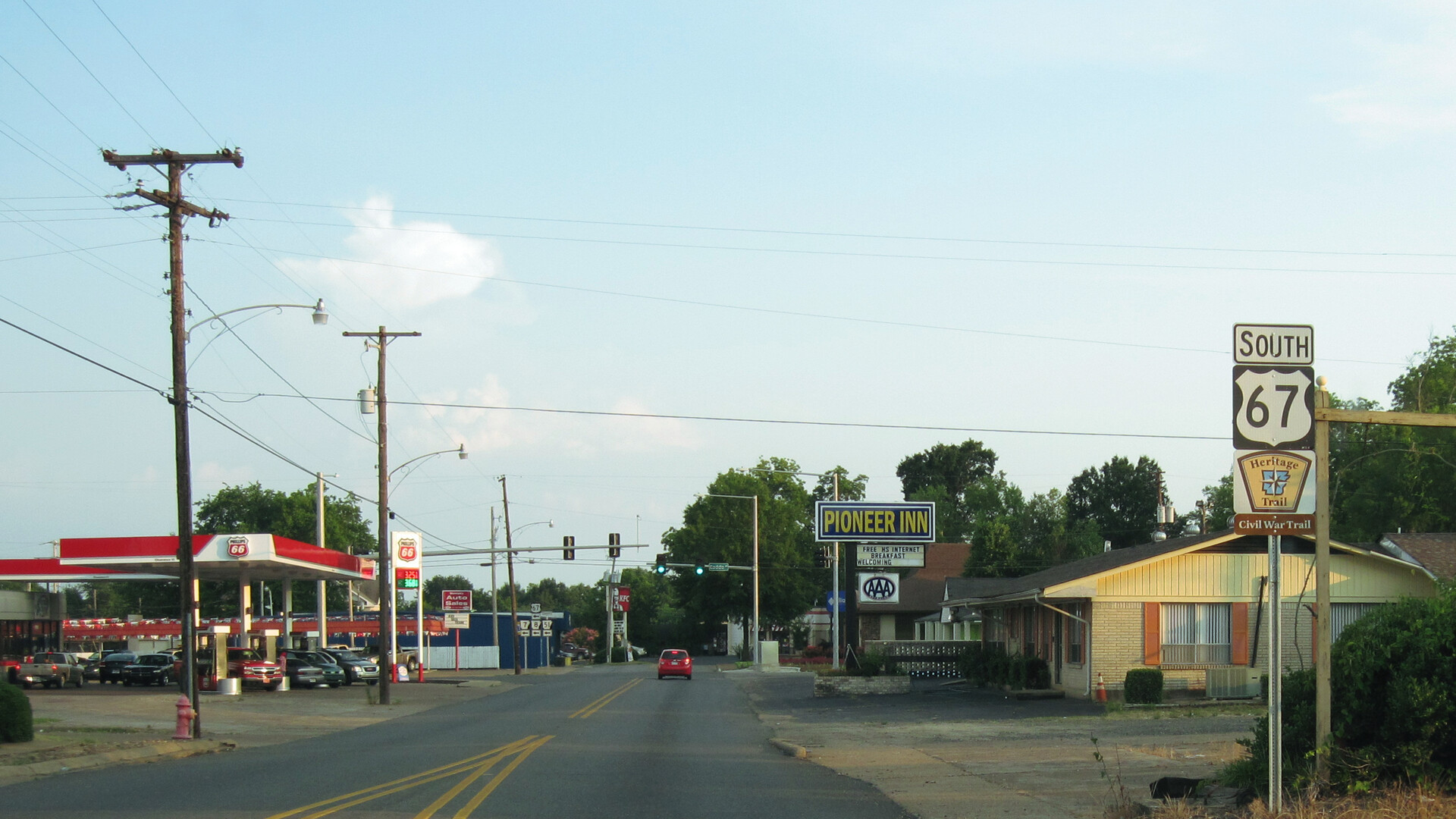
An Arkadelphia, Arkansas, officer stopped a driver going 50 mph in a 30 mph zone at Pine and 11th streets at 1:58 a.m. on Monday, Nov. 2, according to police reports summarized by The Arkadelphian. The paper’s account says the 45-year-old driver, from Subiaco, was agitated, yelled profanities at the officer, and said he was on the phone with Elon Musk and needed to get to Miami, Florida.
The Musk call got the item noticed. The arrest rests on a probation search waiver that let officers go through the car without a warrant or any suspicion, and on an Arkansas DWI law that treats impairment from a drug the same as impairment from alcohol, whether or not a drug turns up in the vehicle.
What police say happened after the speeding stop
Once the officer had the driver’s license and registration, the report says, he learned the man was on probation with an active search waiver. Officers searched the vehicle and found no drugs. They said his speech patterns pointed to a stimulant, and the driver admitted using methamphetamine within the previous two hours. He was arrested for DWI-drugs, reckless driving, and failure to present proof of insurance.
Those are police allegations, not findings. A court docket was not available in the sources reviewed, and the public reporting carries no statement from the driver or a lawyer. The Auto Wire is not naming him; none of the charges has been tried.
What a probation search waiver lets an officer do
Arkansas courts attach a standard search condition to probation. In the state’s Uniform Terms and Conditions of Probation, it is Condition 11: the probationer must submit his person, residence, motor vehicles, and any other area or property under his control to search and seizure at any time, day or night, with or without a search warrant, by a community correction officer or any certified law enforcement officer. The waiver is not limited to the probation officer. A patrol officer who runs a license and finds it can act on it.
Arkansas Code § 16-93-106 backs the condition. In the version FindLaw publishes, effective Jan. 1, 2024, the waiver covers the person, residence, vehicle, and other property, including a cellphone or other electronic device. A search must be conducted in a reasonable manner, but it does not need to rest on suspicion that the person has committed a crime. Supervised probation requires the signature.
The Arkansas Supreme Court tied that reasonableness language to the Fourth Amendment in State v. Bailey, 2024 Ark. 87, decided May 16, 2024. The court held that officers searching a probationer’s residence under a waiver need reasonable suspicion that he lives there, not probable cause, and it reversed a suppression order. That ruling is about whether the place searched is the probationer’s, not about why the officer chose to search. A driver without a waiver is in a different position, because an officer needs consent, a warrant, or probable cause to search the car. With the waiver, a challenge would have to attack how the officers searched, not why.
Why an empty car did not end the DWI charge
Arkansas defines intoxicated in § 5-65-102 as being influenced or affected by alcohol, a controlled substance, or another intoxicant, or a combination, to the point that the driver’s reactions, motor skills, and judgment are substantially altered and he is a clear and substantial danger of injury or death to himself or others. The measure is the driver’s condition, not what is in the car. The same section says legal entitlement to use a drug is not a defense, so a prescription would not change the analysis either.
The summary of the report does not mention a blood or urine test. As described, the proof rests on the officer’s observations of the driver’s speech, the driver’s own statement about methamphetamine, and a car traveling 20 mph over the limit in a 30 zone. Prosecutors would have to show impairment at the statute’s level, and the same week’s blotter shows how common the charge is locally: a Clark County deputy arrested a 32-year-old on DWI-drugs and other counts after, the report says, the driver reversed into the deputy’s patrol car.
What a conviction would cost
A first DWI conviction in Arkansas is an unclassified misdemeanor with 24 hours to one year in jail, and a judge may order public service instead if the written order gives reasons. The fine under § 5-65-112 runs from $150 to $1,000. Those are first-offense figures, and the reports do not say whether he has a prior DWI. Reckless driving and the proof-of-insurance charge are separate counts with their own penalties.
What happens next
Nothing moves fast on a misdemeanor DWI. The part worth watching is the probation court, which handed him that waiver in the first place and can look at a new arrest on its own. The reports do not say what the underlying offense was. For related Auto Wire coverage, see a case where a driver blew zeros on a breath test and was arrested for DUI anyway and a Waukegan ninth DUI arrest.
Should a probation search waiver let any officer search a driver’s car on a routine speeding stop with no suspicion at all, or should the officer have to state a reason first?