
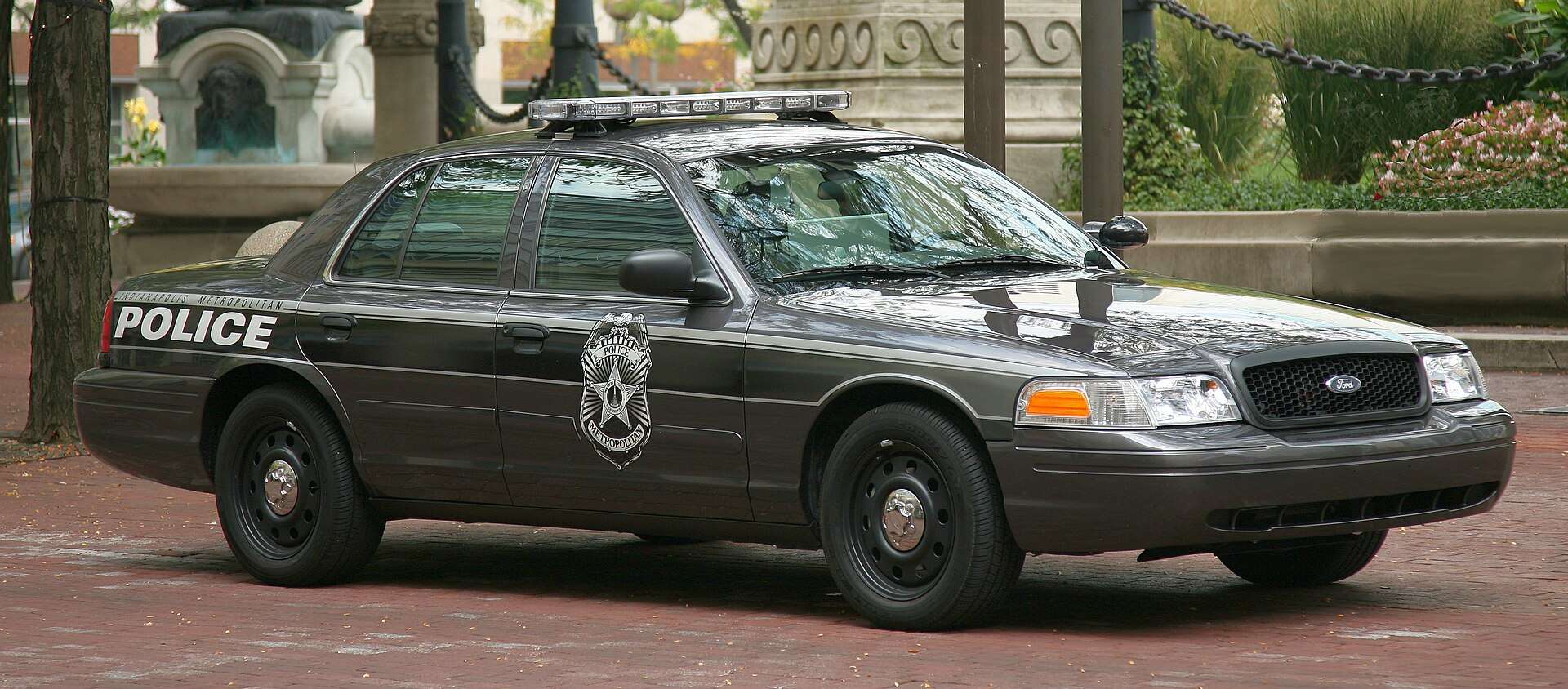
Indianapolis police went to the 2800 block of North Euclid Avenue on Sunday to recover one stolen vehicle. On Tuesday they came back with a search warrant, and the Indianapolis Metropolitan Police Department says officers left with 16 stolen vehicles in various stages of being parted out, parts linked to five more stolen vehicles, and $3,900 in cash, according to WRTV’s report on the department’s announcement.
IMPD arrested Anthony Scott Owens, 55, on preliminary charges of corrupt business influence and auto theft, WRTV reported. A preliminary charge is the one police list at booking; the Marion County prosecutor decides what is filed in court. The reports I found give no court date, bond amount or attorney for Owens, and he has not been convicted of anything. What follows about the scene is IMPD’s account.
A stolen-car pickup that turned into a warrant
IMPD said officers saw activity during Sunday’s recovery that was consistent with a chop shop, meaning a place where stolen vehicles are broken down and the parts sold. Police said they got the warrant after learning that stolen vehicles had been recovered from the same location before and that vehicles there were being stripped. The earlier recoveries matter legally. A search warrant requires probable cause, and an address with a history of stolen cars gives police more to put in front of a judge than one officer’s impression from one visit.
Sixteen is the number of vehicles recovered; the five others are known only through parts. The reports I read do not give makes or models, say how many had been reported stolen in Indianapolis, or say whether any have gone back to their owners.
Why a racketeering charge sits beside the auto-theft charge
Corrupt business influence, Indiana Code 35-45-6-2, is the state’s racketeering statute. It is a Level 5 felony and reaches a person who knowingly or intentionally takes part in an enterprise’s activities through a pattern of racketeering activity. It also covers using racketeering proceeds to buy into or run an enterprise, and acquiring or keeping control of one through such a pattern. Theft is on the statute’s list of racketeering activity, and a pattern means at least two related incidents not one-offs, with the latest falling within five years of an earlier one, under the definitions in IC 35-45-6-1. A lot holding 16 stolen vehicles hands prosecutors an easy argument on “pattern.” Proving an enterprise, and Owens’s part in it, is the harder work.
The grade of felony changes with the charge. Under IC 35-43-4-2, theft of a motor vehicle or a component part of one is a Level 6 felony regardless of value, so a stolen bumper carries the same grade as a stolen truck. A Level 5 felony carries a fixed term of one to six years, with a three-year advisory sentence, and a fine of up to $10,000, under IC 35-50-2-6. Charging the operation instead of each theft changes the sentencing range a conviction would carry.
Police in other cities have gone after the organizers behind stolen-car operations too, such as the Houston theft ring police said had $3 million in luxury cars delivered to it.
Where the $3,900 goes
IMPD said the cash is being held for forfeiture. In Indiana that is a civil case against the property, brought by the county prosecutor under IC 34-24-1. After a seizure made incident to an arrest or search, the prosecutor has seven days to file an affidavit of probable cause with the court, and if the court finds no probable cause the property goes back to its owner, according to IC 34-24-1-2. If the cash was taken Tuesday, that deadline falls on Nov. 17. The prosecutor then has 21 days to file the forfeiture action if the owner made a written demand for the property’s return, and 90 days if not, according to the Indiana courts’ summary of the 2018 law that set those clocks.
At the hearing, the prosecutor must show by a preponderance of the evidence that the property is subject to seizure, a lower bar than the beyond-a-reasonable-doubt standard in the criminal case, under IC 34-24-1-4. If the state wins, the statute sends one-third of the proceeds, after any outside attorney fees, to the prosecutor’s forfeiture fund. Of the remainder, 85% goes to the state general fund, the agency’s unit of government or a drug task force fund, as the court decides, to offset investigation expenses, and whatever is left goes to the common school fund. Chicago’s handling of one seized car, which ended with the city’s tow contractor buying it, is the subject of an earlier Auto Wire story.
Indiana’s forfeiture law has also reached the U.S. Supreme Court. In Timbs v. Indiana, the state sought to keep a Land Rover that Tyson Timbs bought with $42,058.30 in life insurance proceeds, and in 2019 the Court held that the Eighth Amendment’s ban on excessive fines applies to the states.
What to watch next
The next documents are the prosecutor’s charging filing, which will show whether Owens is charged with corrupt business influence or only with theft counts, and the forfeiture affidavit for the cash. A racketeering count would have to identify the enterprise and the incidents that make up the pattern, and that is where the details of the 16 vehicles and the parts from five more would surface in a public record.
Should prosecutors charge an operation like this under Indiana’s racketeering law and its Level 5 penalty, or stick to individual theft counts and let the sentences stack on their own?