
Ford Mustang
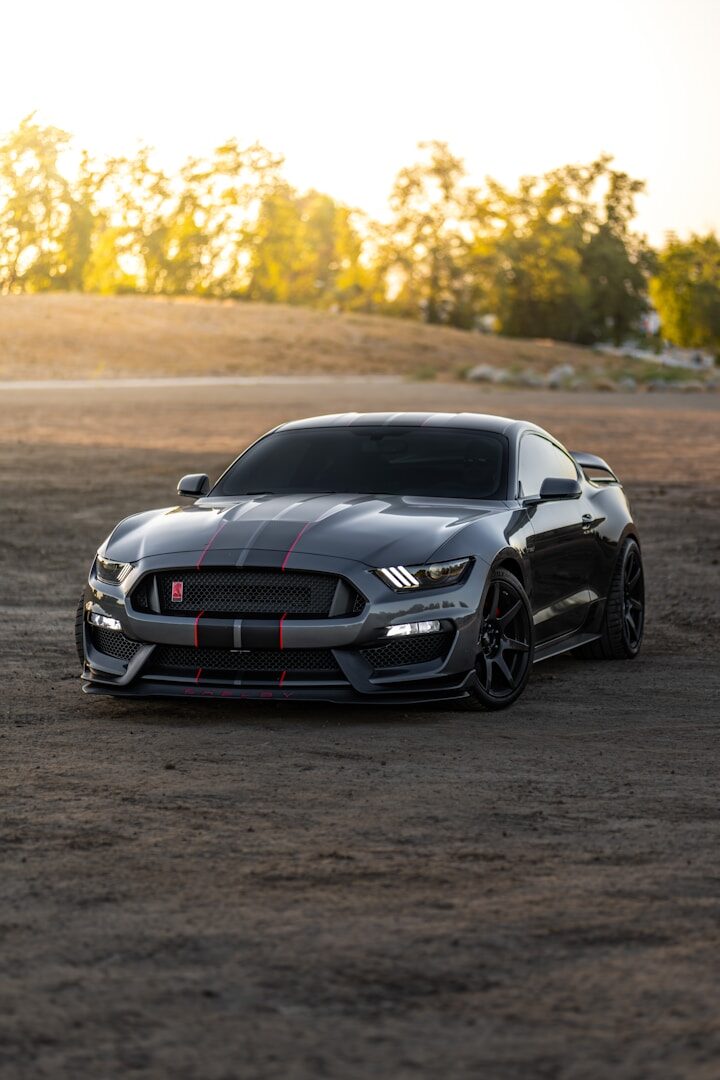
The Ford Mustang is one of the most iconic nameplates in automotive history. Now in its seventh generation, the Mustang remains America’s last traditional two-door pony car still sold with a naturally aspirated V8 and a true manual gearbox. Few cars carry as much cultural weight: the Mustang has appeared in films, music, and motorsport for six decades, and it continues to define the idea of an attainable, rear-wheel-drive performance car. This guide covers the current Mustang lineup in depth, including its history, powertrains, performance, interior, technology, safety, trims, pricing, competitors, and reliability, along with a detailed FAQ to answer the questions shoppers ask most.
Throughout this guide, specifications are drawn from manufacturer information and independent testing by established outlets. Performance and fuel-economy figures can vary by model year, transmission, and equipment, so where a number cannot be confirmed with confidence we say so directly rather than guess. Always verify the latest details with Ford or an authorized dealer before making a purchase decision.
Overview
The current Mustang, known internally by the chassis code S650, launched for the 2024 model year and carries forward into the latest model years largely unchanged in its core mechanicals. Ford offers it as a fastback coupe and a convertible across three primary trims: the turbocharged four-cylinder EcoBoost, the V8-powered GT, and the track-focused Dark Horse. A limited-production, road-legal race car called the Mustang GTD sits at the very top of the range as a halo model.
What makes the current Mustang historically significant is its context. The Chevrolet Camaro ended production after the 2024 model year, and the Dodge Challenger in its long-running form was also discontinued. That leaves the Mustang as the sole survivor of the classic American pony car segment it created in 1964. For enthusiasts, this gives the seventh-generation car a particular weight: it is simultaneously a modern sports car and the last of a breed, still offering a naturally aspirated V8 and a manual transmission when most rivals have abandoned one or both.
Vehicle History
The Mustang debuted in April 1964 and was an immediate sensation, selling far beyond Ford’s projections and effectively inventing the “pony car” class of affordable, sporty, long-hood coupes. The first-generation cars of the 1960s grew larger and more powerful as the decade progressed, culminating in legendary performance variants tied to Ford’s racing programs.
The 1970s brought the smaller, more economical Mustang II, a response to changing fuel prices and emissions regulations. The Fox-body era of the 1980s and into the early 1990s reestablished the Mustang as a performance value, with lightweight bodies and available V8 power that made it a favorite among enthusiasts and tuners. The car was thoroughly modernized through the 1990s and 2000s, and the 2005 fifth generation embraced a retro design that explicitly referenced the classic 1960s cars.
The sixth generation, introduced for 2015, was the first Mustang engineered for global markets with independent rear suspension across the lineup, broadening its appeal well beyond North America. The seventh-generation S650 builds on that foundation. Through all of these eras, the Mustang has retained its defining layout: a front-mounted engine driving the rear wheels, in an attainable package that prioritizes driver engagement.
Latest Generation
The seventh-generation S650 Mustang is an evolution of its predecessor rather than a clean-sheet redesign, riding on an updated version of the previous platform. Ford focused its investment on areas enthusiasts notice most: sharper, more aggressive exterior styling, a dramatically modernized interior, retuned powertrains, and expanded driver-focused features.
The most visible change is inside the cabin, where Ford replaced the previous mix of analog and digital displays with twin screens housed under a single curved panel angled toward the driver. The decision to retain the 5.0-liter V8 and continue offering a manual transmission was deliberate and central to the car’s identity, positioning the Mustang as a driver’s car for buyers who value mechanical engagement at a time when the broader market has shifted toward downsized turbocharged engines, automatics, and electrification.
Engine Options
The Mustang lineup centers on two engine families: a turbocharged 2.3-liter EcoBoost four-cylinder and the 5.0-liter “Coyote” V8 in two states of tune. The EcoBoost emphasizes efficiency and approachable performance, while the V8 cars deliver the traditional Mustang character that the nameplate is known for.
The EcoBoost’s 2.3-liter turbocharged four-cylinder produces 315 horsepower and 350 lb-ft of torque, with the torque available across a broad rev range thanks to turbocharging. The GT’s 5.0-liter naturally aspirated V8 is rated at 480 horsepower, rising to 486 horsepower when equipped with the active valve performance exhaust, alongside 418 lb-ft of torque. The Dark Horse uses a further-developed version of the same V8 producing 500 horsepower, making it the most powerful naturally aspirated production Mustang at its launch. At the very top, the GTD uses a supercharged 5.2-liter V8 that Ford rates at more than 800 horsepower, though those extreme figures are manufacturer claims for a low-volume halo car and have not been independently confirmed here.
Horsepower & Torque
| Model | Engine | Horsepower | Torque |
|---|---|---|---|
| EcoBoost | 2.3L turbocharged I4 | 315 hp | 350 lb-ft |
| GT | 5.0L V8 | 480 hp (486 hp with active valve performance exhaust) | 418 lb-ft |
| Dark Horse | 5.0L V8 | 500 hp | 418 lb-ft |
| GTD | Supercharged 5.2L V8 | 800+ hp (manufacturer figure, not independently confirmed) | Not independently confirmed |
Transmissions
Both the GT and Dark Horse can be ordered with a six-speed manual transmission or a 10-speed automatic, giving buyers a genuine choice between engagement and convenience. The Dark Horse pairs its V8 with a TREMEC manual when so equipped. The EcoBoost is offered with the 10-speed automatic. The continued availability of a manual gearbox on the V8 cars is a key part of the Mustang’s appeal and increasingly rare in the broader market.
Performance
Independent testing by outlets such as Car and Driver and Edmunds has recorded a Mustang GT equipped with the performance exhaust reaching 60 mph in roughly 4.2 seconds, while the Dark Horse has been timed at around 4.6 seconds in instrumented testing. The EcoBoost typically lands in the high-4 to low-5-second range to 60 mph depending on configuration and conditions. Top speed on standard models is electronically limited to about 155 mph.
Beyond straight-line numbers, the seventh-generation Mustang offers selectable drive modes that adjust throttle response, steering weight, and, where fitted, exhaust volume and suspension behavior. Higher trims and option packages add upgraded brakes, performance tires, and chassis tuning aimed at track use. As always, published acceleration figures vary with transmission, tires, surface, temperature, and test methodology, so treat them as representative benchmarks rather than guarantees for any specific car.
Fuel Economy
Fuel economy follows the expected pattern: the turbocharged four-cylinder is the most efficient, while the V8 cars trade economy for performance and character. The figures below are EPA-style estimates aggregated from published sources and may differ slightly by model year and transmission.
| Model | City MPG | Highway MPG |
|---|---|---|
| EcoBoost (automatic) | ~22 | ~33 |
| GT (automatic) | ~16 | ~24 |
| Dark Horse | 14 | 22 |
Real-world fuel economy depends heavily on how the car is driven. The V8 models in particular will return noticeably lower numbers when driven enthusiastically, and even the EcoBoost can dip below its rating under spirited use. Buyers prioritizing efficiency will find the EcoBoost the clear choice, while V8 buyers generally accept higher running costs as part of the experience.
Interior
The seventh-generation Mustang’s cabin is its biggest departure from the past. A large digital instrument cluster flows into a central touchscreen beneath a single curved glass panel angled toward the driver, giving the interior a modern, cockpit-like feel that the previous car lacked. The driver-oriented layout reinforces the Mustang’s sporting intent while bringing the cabin up to contemporary expectations for screen real estate and configurability.
Material quality is improved over the previous generation, with higher trims adding more soft-touch surfaces and upgraded upholstery. Some reviewers note that fit and finish still trail dedicated premium competitors, which is consistent with the Mustang’s value-focused positioning. Practicality is reasonable for the class: the fastback offers usable rear seats suitable for occasional passengers or extra cargo, along with a trunk that is competitive among sports coupes. The convertible trades some of that practicality for open-air driving, with a power soft top.
Technology
The Mustang runs Ford’s SYNC infotainment system on the central touchscreen, with wireless Apple CarPlay and Android Auto available on most configurations. The fully digital gauge cluster is highly customizable and can display different visual themes as well as drive-mode-specific graphics, allowing the driver to tailor the look of the instruments.
Enthusiast-oriented technology is a highlight of the current car. Selectable drive modes let the driver adjust the car’s character, and an available electronic drift brake (an electronic handbrake designed for track and skidpad use) is one of the more distinctive features in the segment. Configurable exhaust settings allow owners to dial the V8’s volume up or down, including quieter modes for early-morning departures. Higher trims add performance data displays and track-focused apps that log lap times and performance metrics.
Safety
The Mustang comes with a suite of driver-assistance features under Ford’s Co-Pilot360 banner. This typically includes automatic emergency braking, blind-spot monitoring, lane-keeping assistance, and a rearview camera, with adaptive cruise control available on higher trims or as part of option packages. These systems bring the Mustang in line with modern expectations for active safety in a sports car.
As a relatively low-volume sports car, the Mustang is not always crash-tested by every agency in every model year. For that reason, buyers should verify current NHTSA and IIHS ratings for the specific model year and body style they are considering rather than assuming a rating carries over unchanged. Standard airbags, stability control, and traction control are included, and the structure benefits from ongoing refinement across the generation.
Trim Levels
The core lineup consists of the EcoBoost, EcoBoost Premium, GT, GT Premium, and Dark Horse, with a Dark Horse Premium available, plus the halo GTD at the very top. Premium trims add upgraded interior materials, the larger digital displays, and additional comfort and convenience equipment over the base trims.
Beyond the trim ladder, Ford offers numerous appearance and performance packages. Handling-focused packages add upgraded brakes, retuned suspension, performance tires, and aerodynamic elements aimed at buyers who intend to drive on track. Appearance packages and a wide range of colors, wheels, and stripe options let buyers personalize the car. The result is a lineup that spans a broad range, from an efficient daily-driver EcoBoost to a track-ready Dark Horse and the extreme, application-only GTD.
Pricing
Pricing starts in the mid-$30,000s for a base EcoBoost and climbs steeply through the V8 trims. The GT lands in the $45,000-to-$55,000 range depending on equipment and body style, while the Dark Horse typically sits in the low-to-mid-$60,000s before options. The GTD is a different proposition entirely: a six-figure, application-only halo car priced well over $300,000 and produced in limited numbers.
Exact MSRPs shift by model year and region, and dealer pricing on in-demand trims such as the Dark Horse can vary significantly, sometimes carrying market adjustments. Options, packages, and the choice between coupe and convertible also move the price meaningfully. Because of this variability, shoppers should confirm current figures with Ford’s configurator or a local dealer before purchase rather than relying on a single advertised number.
Competitors
With the Chevrolet Camaro and Dodge Challenger discontinued, the Mustang no longer has direct domestic pony-car rivals, a remarkable situation given the segment it once shared with both. Shoppers cross-shopping the Mustang today tend to consider sports coupes such as the Toyota GR Supra, the Nissan Z, and the BMW M2, and at the higher end, the Chevrolet Corvette enters the conversation for V8 performance buyers.
| Vehicle | Layout | Notable Trait |
|---|---|---|
| Ford Mustang | Front-engine, RWD | V8 and manual still available; broad trim range |
| Toyota GR Supra | Front-engine, RWD | BMW-derived inline-six; manual available |
| Nissan Z | Front-engine, RWD | Twin-turbo V6; retro-influenced styling |
| BMW M2 | Front-engine, RWD | Premium build; strong dynamics |
| Chevrolet Corvette | Mid-engine, RWD | Higher performance ceiling and price |
Each rival takes a different approach, but the Mustang remains distinctive as an affordable, V8-available, rear-drive coupe with a manual option and genuine heritage. For many buyers, that combination, along with its convertible availability, is exactly what sets it apart.
Reliability
The Mustang’s core mechanical components are well-established. The long-running 5.0-liter Coyote V8 and the 2.3-liter EcoBoost four-cylinder are mature designs supported by a broad parts and service network, which generally bodes well for ownership and repair costs relative to lower-volume exotics.
As with any performance car, real-world longevity depends heavily on how the vehicle is driven and maintained. Cars subjected to frequent track use or aggressive driving will see more wear on brakes, tires, and drivetrain components. Prospective buyers should consult current third-party reliability data and review the specific model year’s recall and technical-service-bulletin history for the most accurate picture, since these details can change from year to year within a generation.
Frequently Asked Questions
Is the Ford Mustang still available with a V8?
Yes. The GT and Dark Horse use a 5.0-liter naturally aspirated V8, making the Mustang one of the few affordable cars still offered with a V8 engine after many rivals downsized or were discontinued.
Can you still get a manual transmission?
Yes. The V8-powered GT and Dark Horse offer a six-speed manual, with the Dark Horse using a TREMEC unit when so equipped. The EcoBoost is offered with the 10-speed automatic.
How much horsepower does the Dark Horse make?
The Dark Horse produces 500 horsepower from its 5.0-liter V8, making it the most powerful naturally aspirated production Mustang at its launch.
What is the difference between the GT and the Dark Horse?
The Dark Horse adds power (500 hp versus up to 486 hp for the GT), unique cooling and chassis tuning, upgraded components, and track-focused equipment, at a higher price point.
How fast is the Mustang GT 0-60?
Independent tests have recorded a GT with the performance exhaust reaching 60 mph in roughly 4.2 seconds, though results vary by transmission, tires, and conditions.
What is the Mustang GTD?
The GTD is a limited-production, road-legal Mustang derived from Ford’s racing efforts, with a supercharged V8 that Ford rates at over 800 horsepower and a price exceeding $300,000. It is sold on an application basis.
Is the Mustang a four-seater?
The fastback has a 2+2 layout with small rear seats suitable for occasional use or extra cargo, while the convertible offers similar seating with reduced trunk space.
What fuel economy does the EcoBoost get?
The turbocharged EcoBoost is the most efficient Mustang, with estimates of roughly 22 mpg city and 33 mpg highway. Real-world results depend on driving style.
Does the Mustang come as a convertible?
Yes. Ford offers both a fastback coupe and a soft-top convertible across the main trims, with a power-operated roof on the convertible.
What are the Mustang’s main competitors today?
With the Camaro and Challenger gone, cross-shopped alternatives include the Toyota GR Supra, Nissan Z, and BMW M2, with the Corvette as a higher-end option.
How much does a Mustang cost?
Base EcoBoost pricing starts in the mid-$30,000s, the GT runs roughly $45,000 to $55,000, the Dark Horse lands in the low-to-mid-$60,000s, and the GTD exceeds $300,000. Confirm current MSRPs with Ford.
Is the Mustang reliable?
Its Coyote V8 and EcoBoost engines are well-established designs with broad service support. As with any performance car, reliability depends on maintenance and driving style; check current third-party data for specifics.
Does the Mustang have all-wheel drive?
No. The Mustang remains rear-wheel drive across the lineup, consistent with its heritage as a traditional pony car.
What is the top speed of the Mustang?
Standard models are electronically limited to about 155 mph. Specialized and track-oriented variants may differ, so verify figures for the specific trim.
Is the Mustang good as a daily driver?
Many owners use the Mustang daily, particularly the EcoBoost and GT with the automatic. It offers usable rear seats, a reasonable trunk, modern infotainment, and driver-assistance features, though ride and running costs vary by trim.
Final Summary
The Ford Mustang endures as a symbol of accessible American performance. As the last traditional pony car standing, it offers a rare combination of V8 power, an available manual transmission, distinctive styling, and a thoroughly modernized cabin. The lineup spans a wide range, from the efficient turbocharged EcoBoost to the 480-to-486-horsepower GT, the 500-horsepower Dark Horse, and the extreme, low-volume GTD. For buyers seeking a rear-wheel-drive sports car with genuine heritage, broad trim choices, and the option of either a coupe or a convertible, the Mustang remains a compelling and singular choice. As always, verify current model-year specifications, fuel-economy ratings, and pricing with Ford or an authorized dealer before purchasing, since details can change from year to year.