
Toyota 4Runner
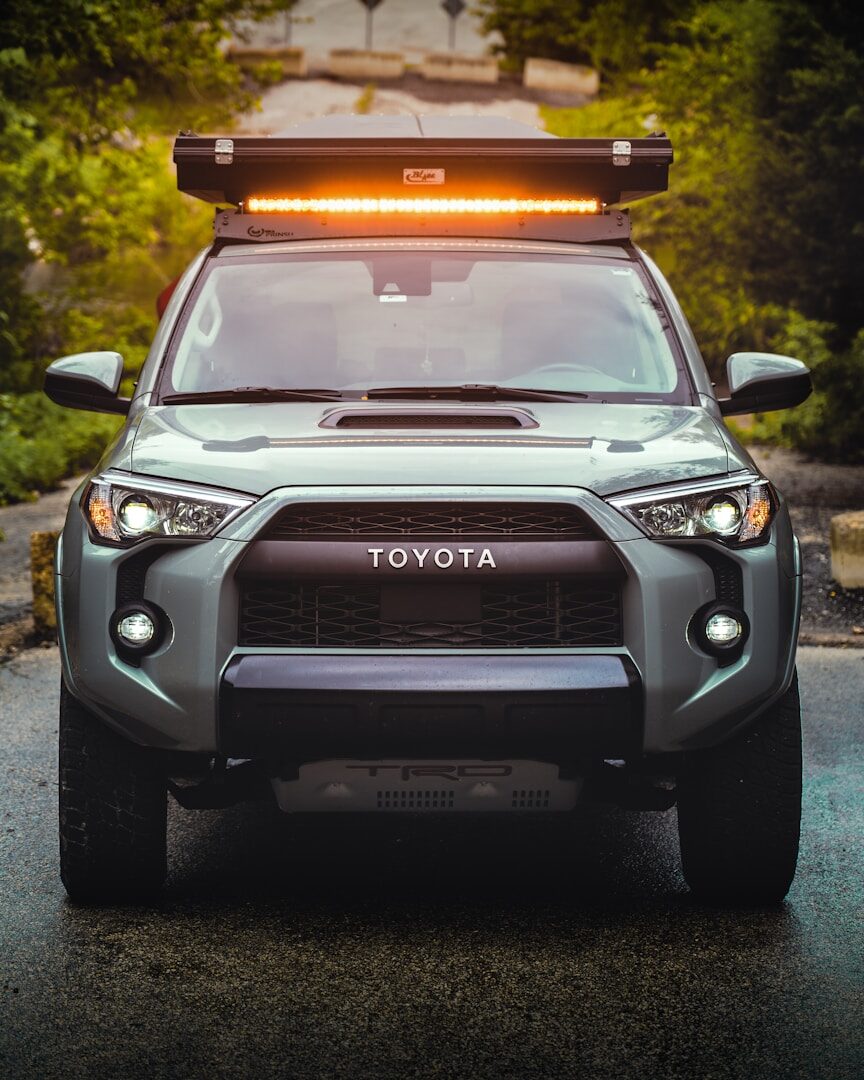
The Toyota 4Runner is a legendary body-on-frame midsize SUV with a long reputation for off-road capability and durability. After many years on the same platform, the 4Runner was fully redesigned as an all-new sixth generation for the 2025 model year, adopting turbocharged and available hybrid power, a modern interior, and the shared TNGA-F truck platform, while retaining the rugged, trail-ready character that built its loyal following. This guide covers the current 4Runner in depth, including its history, engines, performance, fuel economy, interior, technology, safety, towing, trims, pricing, competitors, and reliability, along with a detailed FAQ.
Specifications throughout are drawn from manufacturer information and independent testing. Figures vary by trim, drivetrain, and configuration, so where a number cannot be confirmed with confidence we say so directly. Always verify current details with Toyota or an authorized dealer before purchasing.
Overview
The sixth-generation 4Runner is a midsize, body-on-frame SUV built on Toyota’s TNGA-F global truck platform, which it shares with the Tacoma pickup, the larger Tundra, and the Land Cruiser. The redesign brought a turbocharged 2.4-liter four-cylinder in place of the old V6, an available i-FORCE MAX hybrid, a thoroughly modernized interior, and a long list of trims spanning street-oriented, luxury, and serious off-road models.
The 4Runner’s enduring appeal rests on its genuine off-road capability, durability reputation, and strong resale value. The new generation modernizes the formula significantly while adding off-road-focused trims like the TRD Pro and the overlanding-oriented Trailhunter at the top of the range.
Vehicle History
The 4Runner debuted in the 1980s as a rugged, SUV version of Toyota’s compact pickup, and it grew over the decades into a respected midsize off-road SUV. The fifth generation, in particular, enjoyed an exceptionally long production run, becoming beloved for its old-school toughness, simplicity, and reliability even as rivals modernized around it.
For 2025, Toyota finally replaced that long-serving model with an all-new sixth generation. The new 4Runner moves to the TNGA-F platform, adopts modern turbocharged and hybrid powertrains, and brings a contemporary interior, representing the most significant overhaul of the nameplate in many years while preserving its core identity as a capable, durable trail SUV.
Latest Generation
The sixth-generation 4Runner shares much of its engineering with the latest Tacoma, including its platform and powertrains. It is offered across a broad trim range, from the value-oriented SR5 to luxurious Limited and Platinum trims and dedicated off-roaders. The move to a modern platform improves on-road manners and refinement while maintaining off-road hardware on the appropriate trims.
Off-road-focused trims such as the TRD Off-Road, TRD Pro, and the overlanding-oriented Trailhunter add hardware like upgraded suspension, locking differentials, and recovery and adventure equipment. The Trailhunter, in particular, is built for overlanding with components such as Old Man Emu shocks and a high-mount air intake, while the TRD Pro is tuned for more aggressive off-road performance.
Engine Options
The sixth-generation 4Runner shares its turbocharged powertrains with the Tacoma, replacing the old naturally aspirated V6 with more modern and powerful options.
The standard engine is the i-FORCE turbocharged 2.4-liter four-cylinder, producing 278 horsepower and 317 lb-ft of torque. The available i-FORCE MAX hybrid pairs the turbo four with an electric motor for a combined 326 horsepower and a strong 465 lb-ft of torque, giving the 4Runner more power and low-end response than ever before. The i-FORCE MAX hybrid is standard or available on higher and off-road-focused trims, including the Trailhunter and TRD Pro.
Horsepower & Torque
| Engine | Horsepower | Torque | Availability |
|---|---|---|---|
| i-FORCE 2.4L Turbo I4 | 278 hp | 317 lb-ft | Standard |
| i-FORCE MAX 2.4L Turbo Hybrid | 326 hp combined | 465 lb-ft | Available; standard on some off-road trims |
Both engines pair with an eight-speed automatic transmission. Rear-wheel drive is offered on some trims, with part-time or full-time four-wheel-drive systems available or standard depending on the model, including off-road-oriented four-wheel-drive hardware on the trail trims.
Performance
The turbocharged engines give the new 4Runner noticeably stronger and more accessible performance than the outgoing V6, with the i-FORCE MAX hybrid’s 326 horsepower and 465 lb-ft of torque providing confident acceleration and effortless low-end pull. Reviewers note that the new 4Runner is well-mannered on pavement, a meaningful improvement over the previous generation, while remaining a tall, body-on-frame SUV rather than a car-like crossover.
Off the pavement, the 4Runner’s capability shines on the appropriate trims. Depending on the model, available hardware includes an electronic locking rear differential, a disconnecting front stabilizer bar, multi-terrain select, crawl control, and upgraded suspension, with the TRD Pro and Trailhunter adding the most serious off-road equipment for technical trails and overlanding.
Fuel Economy
As a tall, body-on-frame SUV, the 4Runner is not designed primarily for efficiency, though the turbocharged engines and the hybrid help. Reviewers have noted that the base engine’s fuel economy is not class-leading, while the i-FORCE MAX hybrid improves efficiency and adds power. Exact EPA ratings vary by drivetrain and configuration and should be verified for the specific trim.
| Engine | Efficiency Notes |
|---|---|
| i-FORCE 2.4L Turbo | Base engine economy is not class-leading; verify EPA rating |
| i-FORCE MAX Hybrid | Improves efficiency while adding power; verify EPA rating |
Real-world fuel economy depends on drivetrain, tires, terrain, and driving style, and off-road tire and equipment packages typically reduce efficiency. Confirm EPA ratings for the exact engine and drivetrain combination you are considering.
Interior
The sixth-generation 4Runner’s interior is a major step forward, addressing the previous model’s dated cabin. It features a modern dashboard with available large touchscreens, a redesigned layout, and improved materials, while keeping rugged, durable surfaces appropriate to its off-road mission. Higher trims add more premium finishes and comfort features.
Reviewers note that the new 4Runner offers more interior space than before, though some point out that rear-seat space and certain packaging compromises remain, partly due to the available hybrid hardware. An available third row is offered on some configurations, expanding passenger capacity. Overall, the cabin is far more contemporary and competitive than the outgoing model.
Technology
The 4Runner offers Toyota’s latest infotainment system on available touchscreens, with wireless Apple CarPlay and Android Auto, an available digital instrument cluster, and available connected services. Higher trims add premium audio and additional convenience technology.
Off-road technology is a highlight on the trail trims, including multi-terrain select, crawl control, available cameras to help spot obstacles, and hardware such as a disconnecting front sway bar on certain models. These tools make the 4Runner’s considerable capability more accessible and reflect its dual role as a daily driver and trail vehicle.
Safety
The 4Runner comes with Toyota Safety Sense, a suite of driver-assistance features that typically includes automatic emergency braking, lane-departure alert with steering assist, adaptive cruise control, and automatic high beams, with blind-spot monitoring available. This brings a strong active-safety package to the lineup.
As with any vehicle, buyers should review current NHTSA and IIHS ratings for the specific configuration and model year they are considering, particularly since the sixth generation is an all-new design. Standard airbags, stability control, and a rearview camera are included, and the new platform brings structural improvements over the previous generation.
Towing & Payload
The sixth-generation 4Runner is rated to tow up to approximately 6,000 pounds when properly equipped, an improvement that makes it capable of pulling small trailers, campers, boats, or off-road toys. This towing capacity is competitive for a midsize body-on-frame SUV.
Towing capacity and payload vary by trim, drivetrain, and configuration, and the addition of hybrid hardware and off-road equipment can affect figures. Buyers planning to tow should confirm the exact rating for their chosen configuration, factor in payload, hitch type, and trailer weight, and never exceed the published limits.
Trim Levels
The 4Runner lineup is broad. Trims have included SR5, TRD Sport, TRD Sport Premium, TRD Off-Road, TRD Off-Road Premium, Limited, and Platinum, plus the off-road-focused TRD Pro and the overlanding-oriented Trailhunter at the top. SR5 emphasizes value, TRD Sport leans toward on-road style, Limited and Platinum add luxury, and the TRD Off-Road, TRD Pro, and Trailhunter add serious off-road hardware.
The Trailhunter is purpose-built for overlanding, with components such as Old Man Emu position-sensitive shocks and a high-mount air intake, and it uses the i-FORCE MAX hybrid. The TRD Pro is tuned for more aggressive off-road performance. Because trim availability and equipment shift by model year, confirm the current lineup with Toyota when shopping.
Pricing
The 4Runner starts around $40,770 for a base SR5 (before destination) and climbs significantly through the lineup. The hybrid i-FORCE MAX models begin in the low-to-mid-$50,000s, with independent listings placing a hybrid trim around $52,490 to $54,085, and the top off-road trims such as the TRD Pro and Trailhunter reach into the high-$60,000s, with listings near $68,850 for a loaded Trailhunter.
Reviewers note that the top trims approach Land Cruiser territory in price, which affects their value proposition. Drivetrain, engine, and trim all move the price significantly. Because the range is wide, confirm current MSRPs and package pricing with Toyota or a dealer before purchase.
Competitors
The 4Runner competes in the rugged midsize SUV segment. Its rivals include the Ford Bronco, Jeep Wrangler, the related Toyota Land Cruiser, and to some extent the Jeep Grand Cherokee and other midsize SUVs, depending on the buyer’s priorities.
| Vehicle | Type | Notable Trait |
|---|---|---|
| Toyota 4Runner | Body-on-frame SUV | Durability reputation; hybrid available; broad trims |
| Ford Bronco | Body-on-frame 4×4 | Removable panels; turbo engines |
| Jeep Wrangler | Body-on-frame 4×4 | Removable panels; solid axles; heritage |
| Toyota Land Cruiser | Body-on-frame SUV | Related platform; more premium positioning |
The 4Runner’s traditional strengths, its durability reputation, strong resale value, and now a modernized platform with an available hybrid, keep it a strong contender, though rivals like the Bronco and Wrangler offer removable panels and the related Land Cruiser overlaps in capability.
Reliability
The 4Runner has long enjoyed an outstanding reputation for reliability and durability, a major reason for its loyal following and strong resale value, with the previous generation especially renowned for longevity. The all-new sixth generation introduces significant new technology, including turbocharging and hybridization, so its long-term track record is still being established.
As with any all-new design, prospective buyers should review the specific model year’s recall and technical-service-bulletin history and consult current third-party reliability data. Toyota’s broad dealer and service network and general engineering reputation are points in the 4Runner’s favor.
Frequently Asked Questions
Is the 2025 4Runner all-new?
Yes. The 2025 Toyota 4Runner is an all-new sixth generation, built on the TNGA-F platform shared with the Tacoma, with new turbocharged and hybrid powertrains and a modernized interior.
What engines does the new 4Runner have?
The standard engine is a turbocharged 2.4-liter four-cylinder (i-FORCE) with 278 horsepower, and an available i-FORCE MAX hybrid produces 326 combined horsepower and 465 lb-ft of torque.
Does the 4Runner come as a hybrid?
Yes. The i-FORCE MAX hybrid pairs the turbo four with an electric motor for 326 horsepower and 465 lb-ft of torque, available on higher trims and standard on some off-road models.
What is the 4Runner Trailhunter?
The Trailhunter is an overlanding-focused trim with components such as Old Man Emu position-sensitive shocks and a high-mount air intake, powered by the i-FORCE MAX hybrid.
What is the difference between TRD Pro and Trailhunter?
The TRD Pro is tuned for more aggressive off-road performance, while the Trailhunter is built specifically for overlanding with adventure-oriented suspension and equipment. Both sit at the top of the off-road hierarchy.
How much can the 4Runner tow?
The sixth-generation 4Runner is rated to tow up to approximately 6,000 pounds when properly equipped, which is competitive for a midsize body-on-frame SUV. Confirm the exact rating for your configuration.
Is the 4Runner good off-road?
Yes, especially in TRD Off-Road, TRD Pro, and Trailhunter form, which add features like a locking rear differential, a disconnecting front sway bar, multi-terrain select, and upgraded suspension.
Does the 4Runner have a third row?
An available third row is offered on some configurations, expanding passenger capacity, though packaging compromises mean it is best suited to occasional use.
How much does the 4Runner cost?
Pricing starts around $40,770 for a base SR5, with hybrid models beginning in the low-to-mid-$50,000s and top off-road trims like the TRD Pro and Trailhunter reaching into the high-$60,000s. Confirm current pricing with Toyota.
How is the new 4Runner’s fuel economy?
Reviewers note the base engine’s fuel economy is not class-leading, while the i-FORCE MAX hybrid improves efficiency and adds power. Verify EPA ratings for the specific configuration.
How does the 4Runner compare to the Bronco and Wrangler?
The 4Runner counters the Bronco and Wrangler with its durability reputation, strong resale value, available hybrid, and modernized platform, while those rivals offer removable doors and roofs that the 4Runner does not.
Is the new 4Runner interior improved?
Yes. The sixth-generation 4Runner’s interior is a major upgrade, with modern displays, better materials, and more space, addressing a key weakness of the long-running previous model.
Does the 4Runner share parts with the Tacoma?
Yes. The sixth-generation 4Runner shares the TNGA-F platform and turbocharged and hybrid powertrains with the latest Tacoma pickup.
Is the 4Runner reliable?
The 4Runner has an outstanding reliability reputation historically. The all-new sixth generation introduces new turbo and hybrid technology, so its long-term record is still being established; check model-year-specific data.
Does the 4Runner hold its value?
The 4Runner has historically been known for excellent resale value, a major part of its appeal, though resale always depends on condition, mileage, and market conditions.
Final Summary
The sixth-generation Toyota 4Runner modernizes a legendary off-road SUV with turbocharged power, an available i-FORCE MAX hybrid producing 326 horsepower and 465 lb-ft of torque, a thoroughly updated interior, and the capable TNGA-F platform shared with the Tacoma. It preserves the durability reputation, resale strength, and genuine trail capability that built the nameplate while addressing the previous model’s dated cabin and powertrain. With a broad lineup spanning the value-oriented SR5, luxurious Limited and Platinum trims, and trail-focused TRD Pro and Trailhunter models, the 4Runner appeals to a wide range of adventurers. For buyers seeking a durable, capable midsize SUV with strong heritage and a new hybrid option, it is a compelling choice, though top trims have grown pricey. As always, verify current specifications, towing ratings, fuel economy, and pricing with Toyota or an authorized dealer before purchasing.