
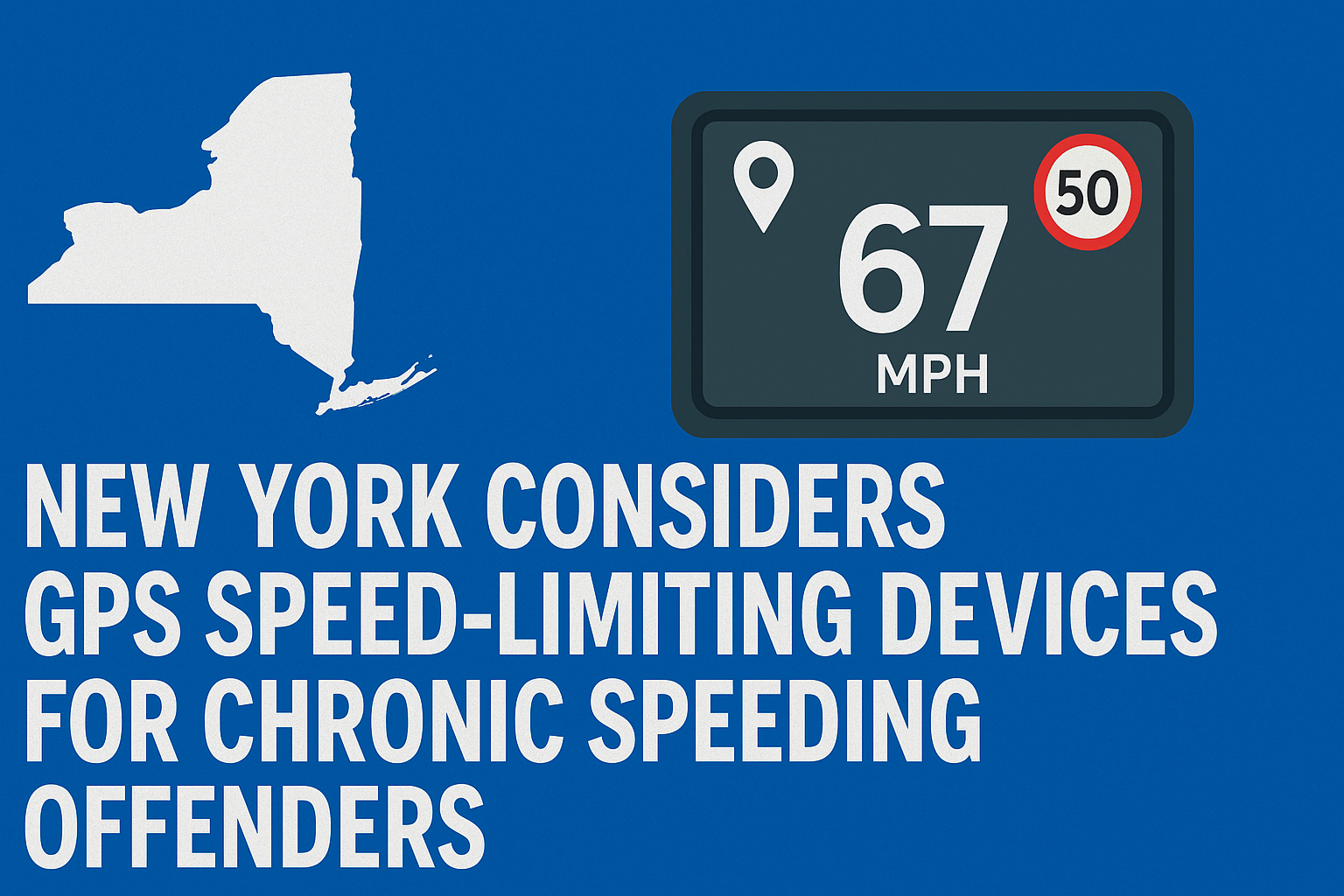
A New Approach to Chronic Speeding
New York lawmakers are advancing a proposal that would install GPS-based speed-limiting devices in the vehicles of the state’s most persistent speeding offenders. The bill, known as the Stop Super Speeders Act, targets drivers who have accumulated significant violation histories rather than occasional speeders.
Who Would Be Affected
Under the proposal, drivers who have accumulated at least 11 license points within two years, or 16 red-light and speed camera tickets within one year, would be required to install the device. The system uses GPS data to identify local speed limits and automatically restricts the vehicle’s speed if the driver attempts to exceed the limit by more than 5 mph.
An Emergency Override, With Limits
The proposal includes a limited emergency override for situations like passing another vehicle, though the system is designed primarily to prevent sustained speeding rather than accommodate routine driving maneuvers. Drivers required to install the device would also bear the cost, estimated at around $1,000.
Who Supporters Say This Targets
Supporters describe the bill as targeting a small group of the most persistent speeding violators on New York roads. Estimates suggest between 3,000 and 4,000 vehicles could be affected if the measure becomes law. The state Senate has already passed the bill, leaving it one Assembly vote away from advancing further.
Enforcement Questions Remain
Critics of the proposal have raised practical concerns about enforcement, including the possibility that affected drivers could simply use a different vehicle without the device installed to avoid the restriction.
A Shift Toward Technology-Based Enforcement
Regardless of where lawmakers and the public land on the proposal, it represents a notable shift in how New York is considering addressing repeat traffic offenders, relying on vehicle-based technology rather than traditional citations alone. Whether the approach proves effective at curbing chronic speeding, or simply prompts affected drivers to look for workarounds, remains to be seen if the bill becomes law.