
Somewhere on the Dalton Highway this winter, a loaded semi will lose power at forty below zero — not because the engine failed, but because a sensor decided its emissions system wasn’t behaving. That scene never made it into the federal indictment against Mackenzie “Mac” Spurlock. It’s also the only way to understand why he was indicted at all.
Check out: 10 Best Car Detailing Products in 2026: Must-Have Auto Detailing Supplies
This month President Trump granted Spurlock a full and unconditional pardon, erasing a federal conviction that began with a 2022 raid on his diesel repair shop in Wasilla, Alaska. U.S. Sen. Dan Sullivan, who announced the pardon, called it “righting a grave injustice.” Nine other people convicted of similar conduct reportedly received pardons in the same round. Treated as a headline, this is a clemency story. Looked at closely, it’s evidence that a federal emissions system built around Los Angeles smog problems has been failing quietly in Arctic conditions for more than a decade — and it took criminal convictions to get anyone in Washington to notice.
What Actually Happened in Wasilla
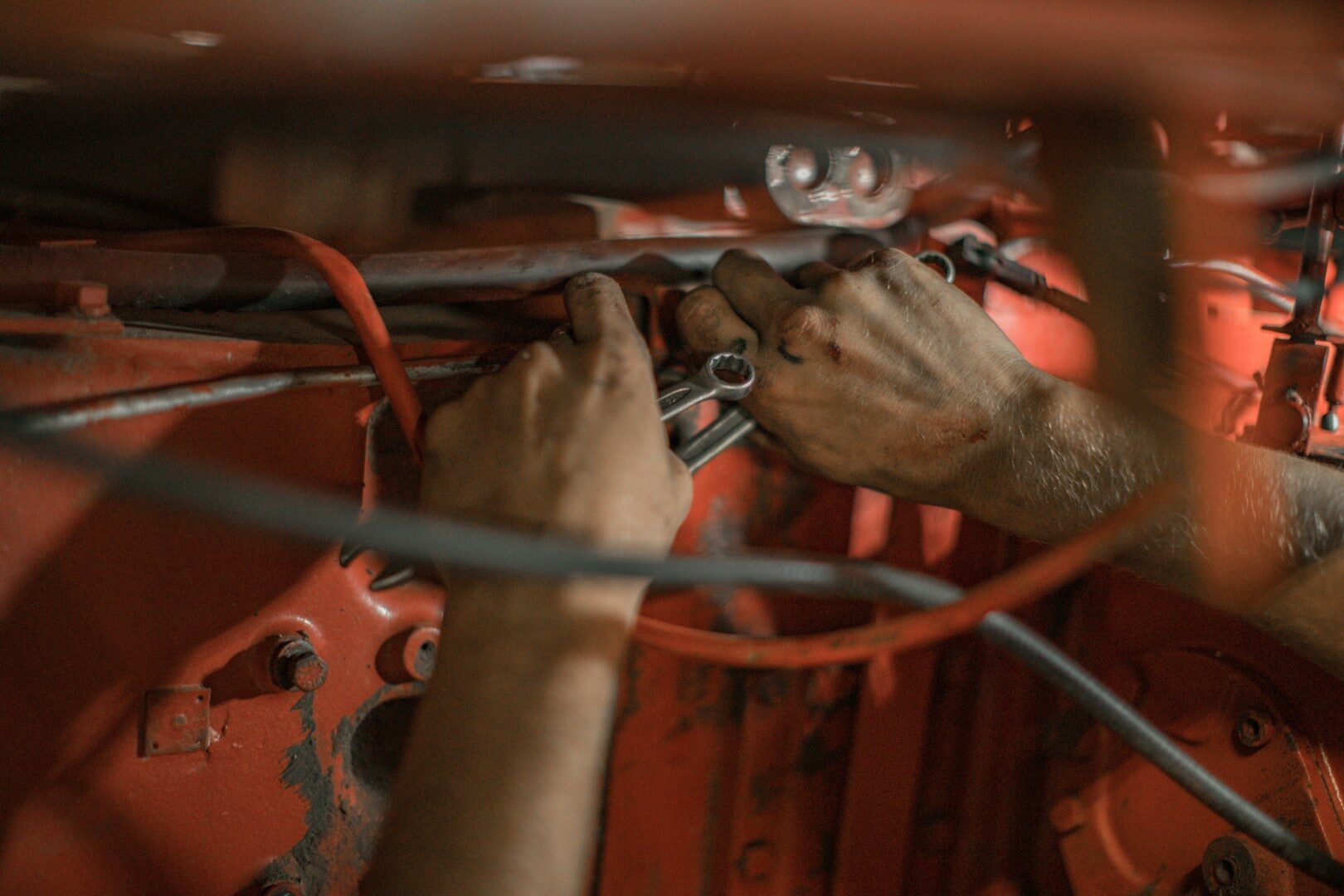
Spurlock, a six-year veteran of the Alaska Air National Guard who worked as an aerospace propulsion technician, owned Matanuska Diesel LLC. In June 2022, roughly 30 armed EPA agents and personnel from other federal agencies, some flown in from California, Washington, and Oregon, raided his shop. Prosecutors accused him of modifying diesel emissions-control systems on trucks and heavy equipment so the vehicles wouldn’t derate or shut down in extreme cold. He was convicted, lost his civil rights as a felon, and became a rallying point for Alaska’s congressional delegation.
Here’s what most car owners don’t know: tampering with emissions equipment isn’t a citation, it’s a federal felony. The Clean Air Act treats defeat devices and tampering the same way it treats other environmental crimes, which is why a small-town diesel shop drew the kind of raid usually associated with drug labs or fraud rings, not a repair bay. That distinction, misdemeanor versus felony, civil fine versus prison time, is the entire reason Spurlock needed a president to fix his record instead of a judge reducing a fine.
The Engineering Problem Nobody Prosecuted
The systems Spurlock was accused of modifying exist because of a 2010 EPA rule that pushed heavy-duty diesel engines toward selective catalytic reduction, or SCR, using diesel exhaust fluid instead of relying solely on exhaust gas recirculation. At the time, SCR was considered the smarter engineering path: it let manufacturers cut nitrogen oxide emissions without sacrificing as much fuel economy or engine longevity as EGR-only designs. It became the industry standard on nearly every heavy-duty diesel built in the last fifteen years.
The tradeoff is that DEF freezes at about 12 degrees Fahrenheit, and the tanks, lines, and heaters built to prevent that are engineered around temperatures far milder than what a truck sees on the Dalton Highway in January. When the system can’t maintain the right temperature or detects a fault, it’s designed to derate power or block a restart entirely. The same fail-safe meant to stop cheating can just as easily strand a truck 200 miles from the nearest tow. Sullivan has repeatedly cited trucks losing power during blizzards on that exact stretch of highway as the reason the rule needs to change.
This Was Never Just an Alaska Problem
Spurlock isn’t the first mechanic pardoned for this. In November 2025, Trump pardoned Troy Lake, a Wyoming mechanic convicted for nearly identical modifications at his shop near Cheyenne. That case was championed by Sen. Cynthia Lummis, who also happens to be the co-sponsor of the bill meant to fix the underlying regulation. That’s the real signal here: the same lawmakers pushing for pardons are also writing the legislation, which means clemency is functioning as a pressure valve while Congress works out a permanent answer.
The Wasilla and Cheyenne cases are also just the visible edge of a much larger enforcement effort. The Department of Justice has separately pushed Apple and Google to identify more than 100,000 users of a diesel tuning app in a related Clean Air Act investigation, a scale that makes clear this isn’t a couple of overzealous field offices, but a coordinated national crackdown on emissions-system modifications, with small independent shops caught in the same net as software developers.
It’s also worth remembering why regulators became this aggressive in the first place. Volkswagen’s Dieselgate scandal showed the government that manufacturer-level emissions cheating could go undetected for years, embarrassing EPA in the process. The agency’s response since then has leaned toward treating tampering, at any scale, as a serious crime rather than a paperwork violation, a posture that arguably wasn’t built with an Alaska winter in mind.
The Actual Fix Is a Bill, Not a Pardon
Sullivan and Lummis introduced the Cold Weather Diesel Reliability Act, S. 3135, last November, which would force the EPA to revise diesel emissions rules for cold-weather operation and create a year-round exemption from DEF system requirements for vehicles operating primarily in cold climates. Rep. Nick Begich has a companion bill in the House, which had a hearing in front of the Energy and Commerce Committee’s environment subcommittee in June. None of this is a free pass. Loosening DEF requirements means more NOx reaching the atmosphere in those regions. That’s the actual tradeoff Congress has to weigh, not whether Mac Spurlock deserved his pardon.
For truckers, fleet operators, and independent diesel shops working above the 55th parallel, that tradeoff is not abstract. Right now, the choice is between a system that can leave a truck dead in a whiteout and a modification that can send a shop owner to prison. Neither option is something an insurance adjuster or a fleet safety manager should have to explain after the fact. It’s part of the same repair-rights and regulatory-relief momentum showing up elsewhere in Washington this year.
A pardon can erase a federal conviction. It cannot rewrite a regulation. Until S. 3135 or something like it becomes law, the next truck that goes dark in a blizzard on the Dalton Highway won’t have a pardon waiting for it. It’ll just have a very cold wait for a tow truck.