
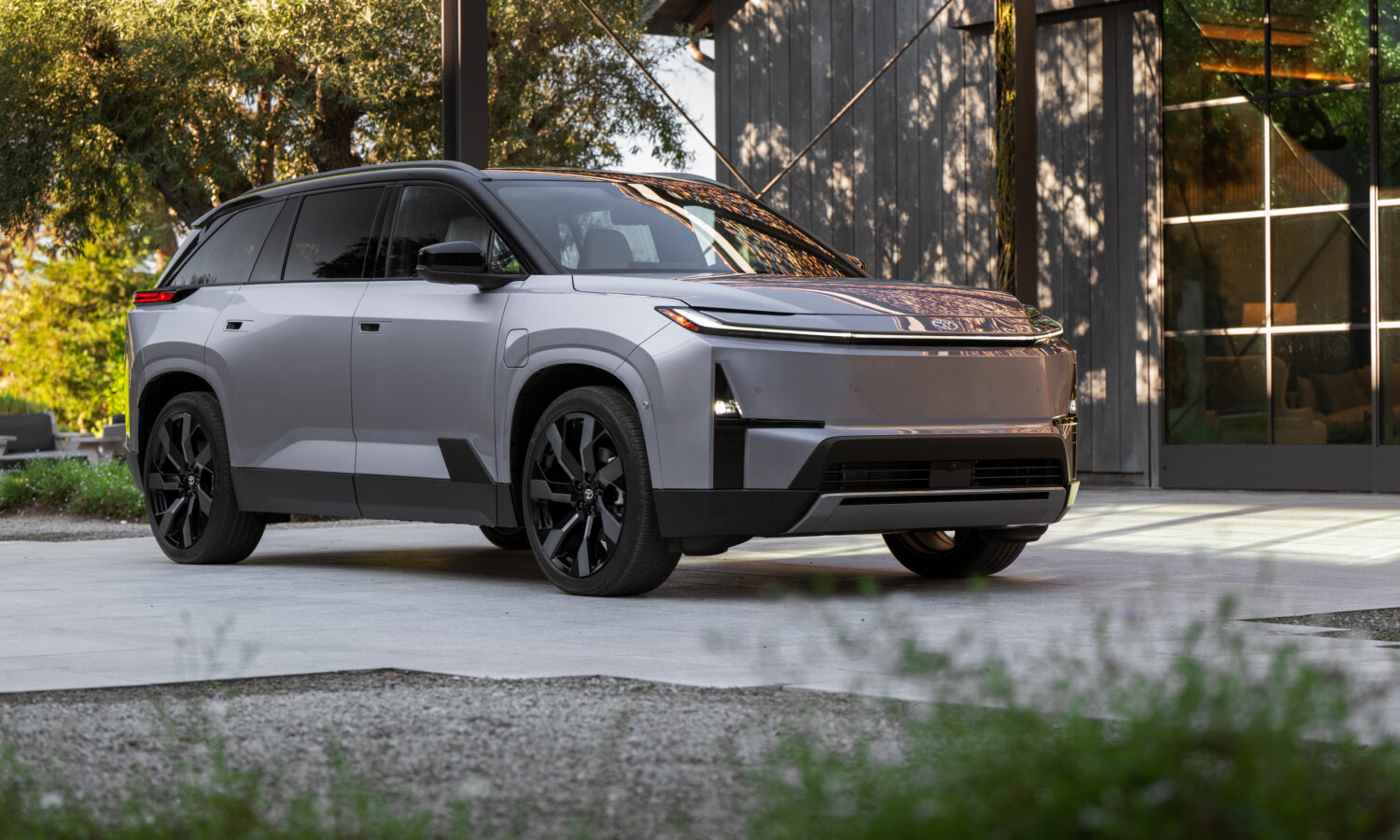
Buried a few paragraphs into Toyota’s own press materials, though, is the reason this delay is worth a second look. The 2027 Highlander is the first battery-electric vehicle Toyota has ever built at its Georgetown, Kentucky plant. Its battery packs come from a $13.9 billion factory in Liberty, North Carolina that only recently started shipping product. And the same underpinnings are about to reappear wearing a Lexus badge and a Subaru badge, on two vehicles neither company builds itself.
An eight-week delay for “final adjustments” doesn’t sound like news. It might be the most candid thing Toyota has said about this program yet.
What actually happened
A Toyota spokesperson confirmed to Car and Driver that production of the 2027 Highlander will slip by a minimum of eight weeks, pushing the on-sale date from late 2026 into early 2027. The current gas and hybrid Highlander, unaffected by any of this, keeps rolling off the line through the end of the year, so dealer lots won’t go empty.
The vehicle being delayed is a genuinely new thing for Toyota: the automaker’s first three-row battery-electric SUV for the U.S. market, offered with a 77.0-kWh or 95.8-kWh battery, up to 338 combined horsepower, and a 320-mile range estimate on the larger pack, riding on a modified version of Toyota’s TNGA-K architecture, reengineered to carry a battery pack low in the floor instead of a transverse four-cylinder up front.
None of that is what got delayed. What got delayed is everything underneath it.
Wait, really? Toyota has never built an EV in Kentucky before
Toyota Motor Manufacturing Kentucky has been stamping out Camrys, Avalons, and RAV4s in Georgetown since 1988. It’s one of the most experienced assembly plants in North America, and none of that experience includes a battery-electric vehicle. Building a BEV on a line designed around fuel tanks and exhaust systems means new high-voltage safety protocols for line workers, new fixtures for installing a battery pack that weighs more than a small car by itself, and a workforce doing a job it has never done at volume before.
Car companies generally don’t advertise this part. It isn’t a design story or a horsepower story. It’s a labor and tooling story, and it’s the latest entry in Toyota’s broader pattern of doubling down on U.S. assembly, following a similar bet on trucks in San Antonio.
Wait, really? The batteries are coming from a plant that didn’t exist a year ago
Toyota’s newly opened battery plant in Liberty, North Carolina is a $13.9 billion bet on building EV batteries domestically instead of importing them. It’s also brand new, which matters more than it sounds like it should. Ramping a new cell line is notoriously difficult; the first year of any new battery plant tends to carry the highest defect rates and the least predictable yields, long before it reaches the consistency an automaker needs for a nationwide launch.
Pairing a brand-new assembly line with a brand-new battery supplier, in the same model year, is about as much risk as a manufacturing plan can carry without adding a third variable. Toyota added a third variable anyway: this architecture is also the donor platform for the Lexus TZ and the Subaru Getaway, which means whatever slows down in Kentucky or North Carolina doesn’t stay contained to one nameplate. Toyota isn’t the only automaker discovering that new EV plants rarely ramp on schedule.
Toyota’s spokesperson had no comment to share on how the delay affects the TZ. Subaru hadn’t responded about the Getaway by the time the news broke. That silence is its own answer: when one platform feeds three brands, a hiccup at the source becomes three separate problems on three separate timelines.
Toyota has been burned by this exact playbook before
This isn’t Toyota’s first attempt at learning this lesson. The bZ4X, Toyota’s first mass-market EV, launched in 2022 and was pulled off the road within weeks over a wheel hub defect that could let a wheel detach while driving, an almost unthinkable failure for a company built on a reputation for boring reliability. More recently, Toyota and Subaru have both faced lawsuits over batteries degrading in the bZ4X and its Solterra twin, the last vehicle these two companies co-developed on a shared EV platform.
Set against that history, an eight-week pause reads less like corporate hedging and more like a company that has already paid for the alternative once. Toyota didn’t just say a car would be late. It said, in effect, that it would rather hold three brands’ launch dates than repeat a mistake it already made in public.
What it means for owners and buyers
For most shoppers, the immediate effect is simple: the 2026 Highlander Hybrid isn’t going anywhere until January, and a delayed EV sibling usually means better deals and more inventory on the gas-and-hybrid version in the meantime. For buyers eyeing the electric Highlander specifically, there’s an old and still-useful piece of wisdom worth remembering: the safest model year to buy any all-new vehicle is rarely the first one, and that’s doubly true when the plant, the battery supplier, and the platform are all new at once. An extra eight weeks of validation, before the first customer VIN ships, is Toyota buying itself room to catch problems on its own line instead of in someone’s driveway.
There’s also a quieter insurance and repair question hiding inside th
What to remember
Toyota didn’t delay a crossover. It delayed the riskiest handoff in its American manufacturing history: a converted assembly line building its first EV, batteries from a plant that just opened, and two other brands’ badges riding on the outcome. “Final adjustments” was never really about the Highlander. It was about making sure Kentucky, North Carolina, Lexus, and Subaru all arrive at the same finish line without anyone finding out the hard way that they weren’t ready.