
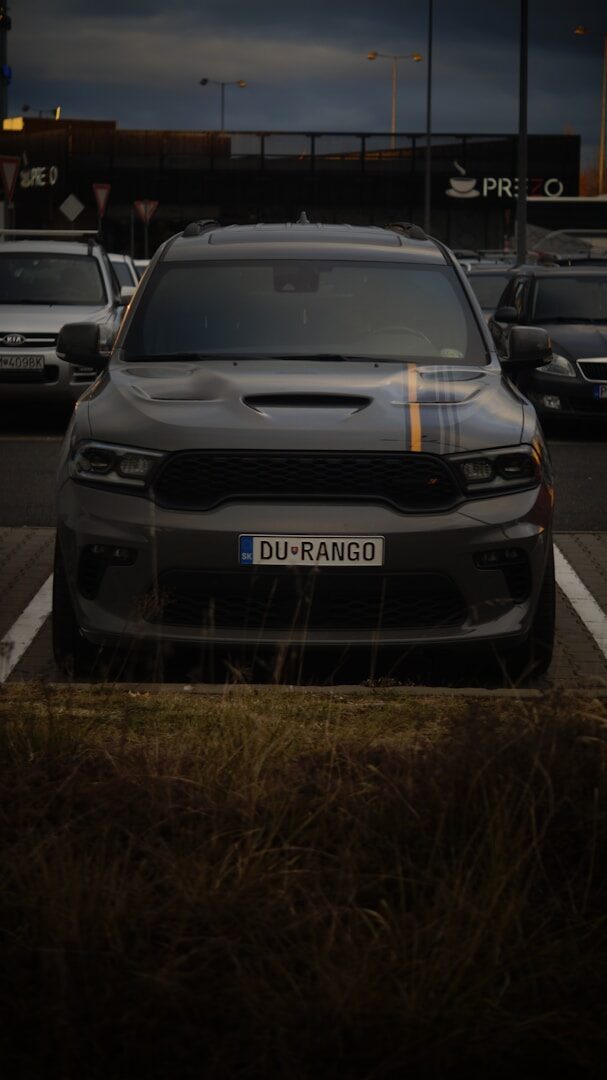
Dodge Sold Out the 392 Durango Before Lunch. The Interesting Part Is Why.
Dodge says the dealer order books for the 2026 Durango R/T 392 Launch Edition emptied in six hours. That’s the number the brand led with when it celebrated production at Detroit Assembly Complex–Jefferson on July 21. What Dodge conspicuously didn’t say is how many orders that took — and that gap is worth sitting with for a second before anyone declares the V8 saved.
“Sold out in six hours” describes dealer allocation, not retail demand. Automakers set an allocation pool for a launch trim, dealers grab it, the pool closes. A small pool empties fast. A large one empties slower. Without a unit count, six hours is a marketing metric, not a market signal. Dodge CEO Matt McAlear framed it as proof that “enthusiasts are eager for the return of legendary 392 HEMI® V-8 power in a three-row muscle SUV,” and he’s probably right — but the six-hour figure isn’t the evidence. The sales ledger is.
What the Actual Numbers Say
Stellantis’ first-half sales report is more revealing than the launch hype. Durango moved 18,275 units in Q2 2026 against 20,698 a year prior — down 12% on total volume. Yet Stellantis simultaneously reported Durango retail sales up 9%. Both are true, and the reconciliation is fleet: rental and commercial volume fell off a cliff while individual buyers stepped up. Retail units carry fatter margins and don’t wreck residuals two years later at the auction block, so this is the good kind of decline.
Related Articles
- NamX HUV Hydrogen SUV: What Its Own Spec Sheet Actually Says
- Ford ‘Fixed’ the Explorer and Aviator’s Collapsing Seats Last Year. It Didn’t, So Now There’s a Sequel
Year to date, Durango sits at 38,575 versus 34,399 — a 12% gain, and Dodge’s best first half since 2006.
Now look at the rest of the Dodge showroom. The brand sold 21,818 vehicles total in Q2, down 15%. Durango accounted for 18,275 of them. That’s roughly 84% of an entire American performance brand riding on one 15-year-old three-row SUV. The all-electric Charger Daytona managed 294 units for the quarter, down 88% year over year. The gas Charger did 2,911. Hornet did 300.
Strip away the muscle-brand mythology and Dodge is, at this moment, a Durango company with a Charger side project. That context matters more than any six-hour stat, because it explains why a 392 landed in the R/T at all: Stellantis needed the one nameplate that’s working to keep working.
The Engineering Move Underneath the Marketing
The R/T 392 isn’t a new engine program. It’s a parts-bin decision executed well. Dodge took the 6.4-liter that used to live exclusively in the SRT 392 and made it standard on a trim that previously ran the 5.7. The March order announcement puts it at 475 horsepower and 470 lb-ft against the 2025 R/T’s figures — a gain of 115 hp and 80 lb-ft, which back-solves the outgoing 5.7 R/T to 360 hp. Zero to 60 drops from 6.2 seconds to 4.4, and Dodge claims an NHRA-certified 12.9-second quarter mile.
More consequential for actual owners: standard towing climbs to 8,700 pounds. On the prior car that number required the Tow N Go package. Making it standard means the R/T 392 arrives with the heavy-duty cooling, axle ratio, and hitch hardware baked in rather than optioned — a meaningful change if you’re shopping used in four years, because you no longer have to decode a build sheet to know what you’re getting.
One warning on that 8,700 figure, since brochures never explain it: that’s a maximum trailer weight measured against gross combined weight rating, and every passenger, cooler, and roof box you add eats into it. Load a third row full of people and a cargo area full of gear, and your real ceiling drops substantially. A weight-distributing hitch and functioning electric trailer brakes aren’t optional accessories at that mass — most states mandate independent brakes above a surprisingly low threshold, so check your own statute before you hook up a 7,000-pound travel trailer and find out the expensive way.
What This Thing Will Cost You to Own
The standard hardware list is genuinely aggressive: adaptive damping suspension, red Brembo calipers with six pistons front and four rear, an electronic limited-slip rear axle, and 20-by-10-inch wheels wearing 295-section Pirelli Scorpion Zero run-flats. That’s SRT-grade equipment on a $49,995 window sticker.
It’s also SRT-grade consumables. Run-flat tires in a 295 width on a 20-inch wheel are a specialty order, not a Costco impulse buy, and they generally cost more and last less than a conventional touring tire. Six-piston Brembo pad-and-rotor jobs price out well above what a Durango GT owner pays. The optional Premium model at $57,595 adds two-piece rotors — better heat management, meaningfully higher replacement cost when they wear. And adaptive dampers are a four-figure repair once the warranty lapses.
Related Articles
- Melbourne Busted a License Plate Knockoff Factory. America’s Toll Cameras Have the Same Blind Spot
- Wisconsin Gives Car Thieves a Legal Escape Hatch From a Felony. A Stolen Cadillac Chase (and a Loose Dog) Show Exactly How to Blow It
None of that is a reason not to buy one. It’s a reason to build the maintenance budget before signing, because the gap between a $49,995 R/T 392 and a $43,675 GT HEMI AWD is much wider over 100,000 miles than the sticker suggests.
Insurance is the other line item shoppers underestimate. Carriers rate on loss history by vehicle symbol, and high-output Dodge products have historically posted rough collision and theft numbers. A 475-hp SUV that undercuts the Hellcat by $30,000 is going to attract a demographic that actuaries have opinions about. Get a real quote before the test drive, not after.
The Regulatory Loophole Nobody Mentions
Here’s the part that makes the whole business model work: a 475-horsepower three-row Dodge pays no federal gas guzzler tax, while a far more efficient sports sedan might. The EPA’s own guidance is explicit — the tax applies only to passenger cars, and trucks, minivans, and sport utility vehicles are excluded because those categories were essentially nonexistent when Congress wrote the Energy Tax Act of 1978.
A 48-year-old drafting assumption is the reason you can buy a big-inch naturally aspirated V8 in a family hauler with no excise penalty attached. That exemption, not any breakthrough in combustion, is the structural advantage keeping the Durango viable. It’s also the single regulatory thread most likely to be pulled at some point, and any owner betting on long-term residual strength should keep it in mind.
The Practical Read for Buyers
The Launch Edition is a 2026 model-year designation, and Stellantis has already opened 2027 Durango order books. If you missed the six-hour window, that’s an allocation problem, not an extinction event — but a “Launch Edition” badge on a one-year run is exactly the kind of thing that earns a modest premium on the used market five years out, particularly on the cars that stay unmodified and lightly towed.
If you’re shopping the segment: the value case here isn’t horsepower per dollar. It’s that Dodge has stopped charging SRT money for SRT hardware. Whether that lasts depends less on enthusiast passion than on how long the tax code stays asleep.