
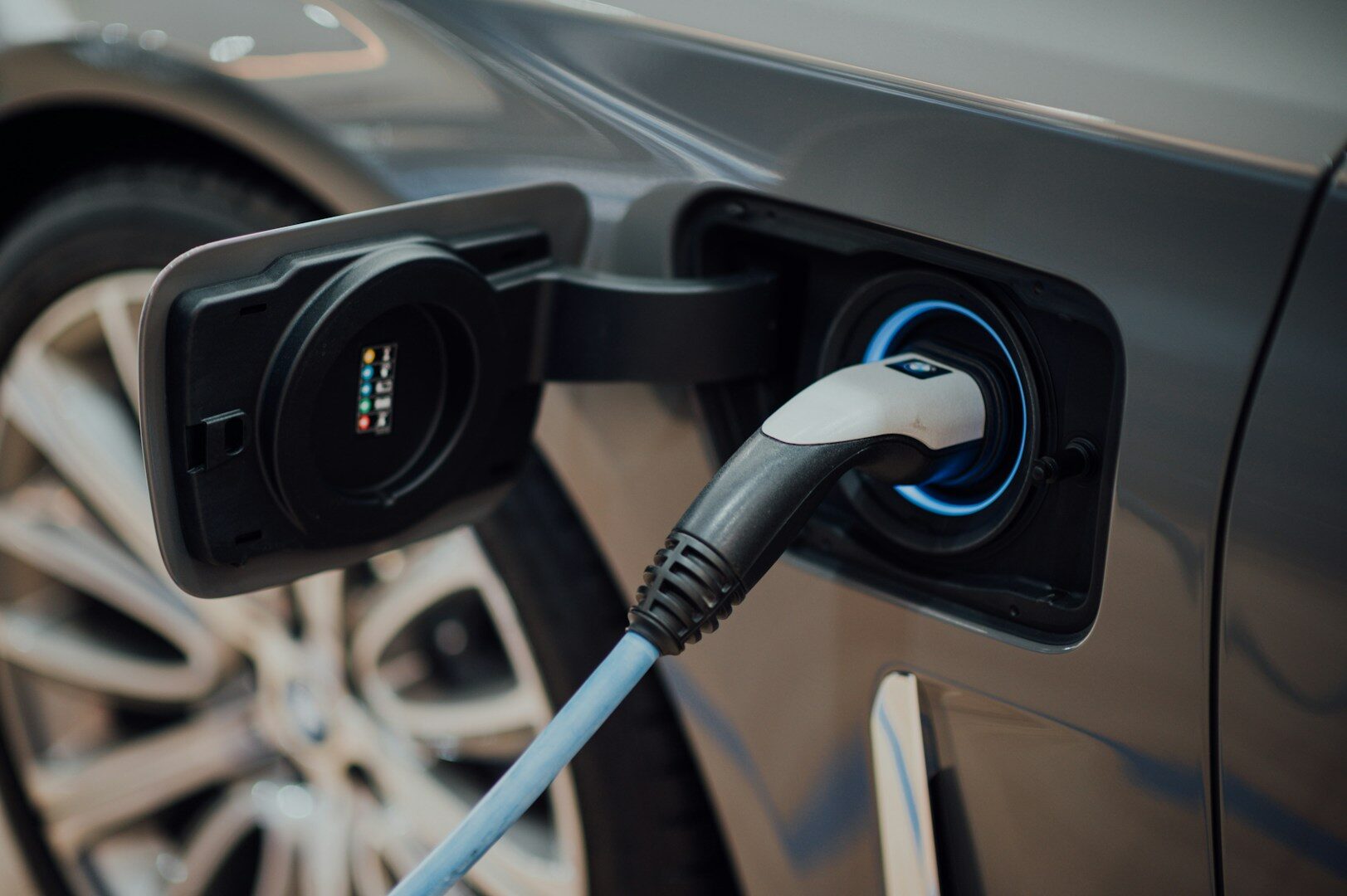
Somewhere in Michigan and Northern California, a handful of GM electric vehicles are already sending electricity backward, out of the battery and into the grid. That is not really the news this week. The news is that GM has built more than 250,000 vehicles capable of doing exactly that, and almost none of them ever will, at least not anytime soon.
On July 27, GM published the results of a study it commissioned from the energy consulting firm E3, arguing that vehicle-to-grid technology could become a $7 billion market by 2030, and that letting an EV push power back out is worth 5 to 15 times more than simply timing when it charges. The release came bundled with a firmware update opening V2G to existing GM Energy customers, plus pilot work with DTE Energy in Michigan and a longer-term plan with PG&E in Northern California. Read as a product update, it sounds like a car company teaching its cars a neat new trick.
Read as anything else, and it looks like something different: a policy argument, backed by paid research, aimed at an audience that has never bought a car in its life.
A month before the study dropped, GM Energy vice president Wade Sheffer published an open letter addressed, in his words, “to America’s utility executives and energy policymakers.” Not to customers. Not to Cadillac or GMC owners. To the people who write utility tariffs and approve interconnection permits. The letter asked for three things: easier customer enrollment in utility programs, modernized rate structures that actually pay owners for exported electricity, and a simpler path through the interconnection paperwork standing between a bidirectional charger and a live grid connection. Strip away the talk of distributed energy assets, and the letter says something much simpler. GM has already built the hardware. What it does not have is fifty states’ worth of utilities willing to let that hardware plug in on terms worth using.
That is the real story here, and it is not a technology problem.
Most American utilities are regulated monopolies that earn their profit on a guaranteed rate of return on capital investment, not on how efficiently they run the grid. Build a new substation or upgrade a transformer bank, and a utility recovers that cost from ratepayers, plus a built-in profit margin on top. That is precisely the kind of spending the E3 study says V2G could help avoid or delay. A technology that helps a utility avoid capital spending is, under the traditional regulatory model, a technology that quietly works against that utility’s own earnings. GM’s letter is not just asking for better paperwork. It is asking regulators to rewire the incentives so utilities actually want a tool that their business model currently has little reason to love.
Even GM’s own numbers hint at how far away real scale still is. The company likes to point out that its vehicle-to-home fleet could theoretically power roughly 120,000 homes for up to a week. Read the fine print attached to that claim, though, and it is described as an “illustrative, theoretical estimate” built on the total rated battery capacity of the fleet, not real-world usable capacity, actual driving patterns, weather, or battery aging. It is a napkin calculation, not an operations plan.
Even in GM’s flagship real-world pilot, the numbers stay humble. GM projects that by 2030, a little over 52,000 of its EVs will be actively enrolled in PG&E’s grid-balancing programs, in one part of one state. That is roughly a fifth of the bidirectional-capable fleet GM already has on American roads today, inside the utility territory GM itself chose to showcase. Extrapolate that ratio nationally, and the distance between a distributed national power plant and actual enrolled cars gets very large, very fast.
There’s an irony buried in Sheffer’s letter that GM never quite says out loud. Part of the demand strain it wants EV batteries to help relieve is coming from the same tech boom that spent the last few years cheering on electrification. The letter cites the surging demands of AI datacenters alongside heat waves as reasons the grid is under pressure. Electric cars, once blamed for straining local grids themselves, are now being recruited to help bail out a grid strained partly by data centers built to train chatbots. The Auto Wire has covered this same pressure from the power-generation side, when Rolls-Royce’s power systems division expanded a Minnesota plant to build diesel generators for data centers, not anything with four wheels attached.
GM is not alone in noticing that a parked EV is a wasted asset. Toyota has been running its own bidirectional pilot, and the pitch is identical: a car that can power a house is worth more than one that can’t. What makes GM’s version notable is the scale of the commitment. GM says every future EV it builds will ship with bidirectional capability standard, not as a premium option. That is a real cost decision. The power electronics needed to safely push current back out of a battery pack, rather than just pull it in, add complexity GM will now build into every EV it makes, whether or not the buyer ever plugs it into a wall the other way.
For owners, the practical version of this story looks less like a lobbying fight and more like a home renovation project. Bidirectional charging requires GM Energy hardware, an electrician-installed transfer setup, and, per GM’s own letter, an interconnection approval from the local utility, the same bureaucratic process that has frustrated rooftop solar customers waiting on net-metering agreements for years. None of that is free, and none of it moves quickly. It is also worth remembering that a battery pushing current out to a house or a grid cycles differently than one that only ever gets driven and charged, a variable worth asking a dealer about directly before enrolling in anything, rather than assuming it away.
It is also worth weighing this against GM’s broader mood on EVs lately. This is the same company that has spent much of 2026 quietly redirecting factory investment, including a recent $430 million upgrade at two plants, toward gas engines and hybrids while EV sales growth cools nationally. Talking up a $7 billion future market for the EVs it already sold is a low-cost way to stay part of the electric conversation while the bigger checks go elsewhere.
None of this makes vehicle-to-grid a bad idea. The engineering case is real, and the E3 numbers, commissioned or not, land close to what independent researchers have estimated for years. But the announcement this week was never really about technology. GM finished building the batteries years ago. What it published this week was a permission slip, dressed up as a study, addressed to fifty states’ worth of regulators who haven’t caught up yet.